Shelves are more than storage surfaces — when styled well, they become showcases of personality, taste, and design sensibility in a living room. A carefully curated shelf can add layers of texture, height, color, balance, and even a story to your space. Whether you have built‑in shelves, a freestanding bookcase, floating wall shelves, or a media console with shelf space, decorating them thoughtfully can transform a plain wall into a focal feature that ties the room together.
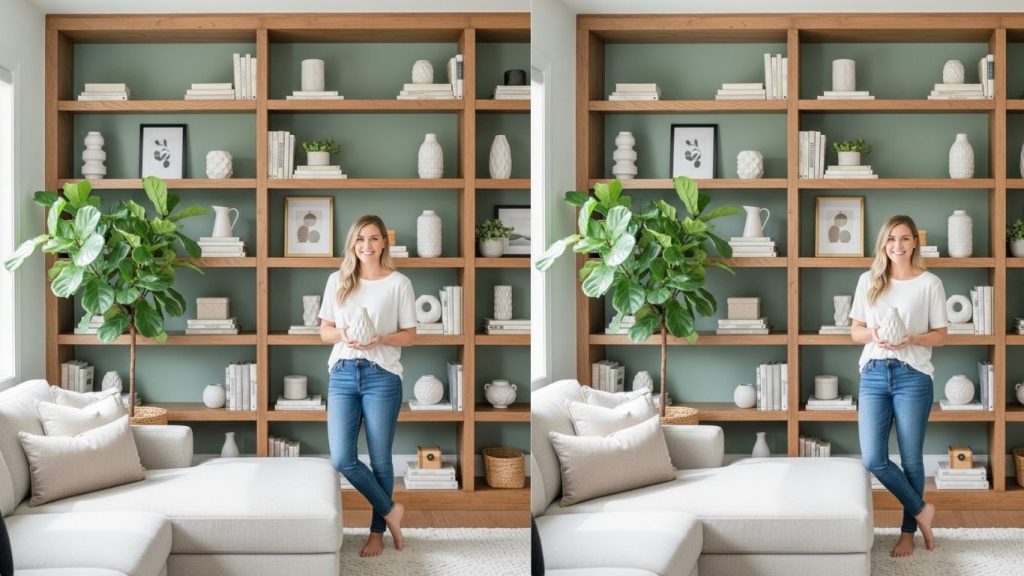
That said, shelf decor requires a sense of balance. Too many items create clutter; too few leave the shelf feeling empty. The art lies in blending functional pieces (books, storage baskets, plants) with decorative objects (art, ceramics, frames) — all organized thoughtfully to create rhythm, contrast, and visual flow.
Below you’ll find a curated guide with 15 shelf decor living room ideas that range from minimalist and modern to cozy and eclectic. Before diving into these ideas, here are five essential items worth purchasing to help you get started with shelf styling.
5 Items to Buy for Stylish Shelf Decor
1. A set of neutral woven baskets or boxes
Woven baskets or fabric-lined storage boxes help you store items out of sight while adding organic texture to your living room. They fit well on lower shelves and keep clutter hidden without sacrificing style. Baskets in neutral tones like beige, taupe, or grey complement a variety of interior styles and provide warmth. Use them to store magazines, remote controls, blankets, or kids’ toys. Their soft, natural materials balance hard surfaces like wood and metal, helping your shelf decor feel curated and calm rather than chaotic.
2. Collection of decorative vases and ceramic objects
Vases, ceramic bowls, or sculptural ceramic objects add elegance and artistic charm when arranged thoughtfully. Use a mix of shapes — tall vases, squat bowls, and mid‑size ceramics — to create visual interest. Choose pieces in a consistent color palette that matches your living room decor. Fill some vases with dried flowers or pampas grass for texture; leave others empty to emphasize their form. These objects simplify shelf styling while elevating the space with timeless design.
3. A small table lamp or shelf‑size accent lighting
Good lighting is often overlooked on shelves. A small lamp, LED strip light, or shelf‑mounted accent light adds warmth, depth, and ambience after dark. Lighting highlights decorative pieces, casts soft shadows, and emphasizes textures. It also helps draw attention to certain shelf zones, creating depth as well as focal points. A warm-toned bulb brings coziness to wooden or neutral shelves, making them feel inviting rather than bland.
4. A stack of curated coffee table or art books
Books are essential for shelf styling. Choose books with clean, attractive covers — neutral tones, color-coordinated spines, or monochrome designs — to maintain aesthetic cohesion. Use them for height variation: stack a few to raise a decorative object or lean a small frame against the wall. Books add intellectual and personal character to the room while functioning as design tools for balance and layers.
5. A few indoor plants or greenery
Plants breathe life into shelf decor. Small potted plants — succulents, ferns, pothos — or trailing vines introduced on higher shelves soften hard edges and add natural color. Plants also break monotony, add organic texture, and bring freshness to the room. Place them in ceramic, glass, or woven pots that align with your decor palette. When grouped with ceramics, books, or framed photos, plants help create a curated, lively look that feels both stylish and relaxed.
Why Shelf Decor Matters
Well-styled shelves improve a living room in three main ways: function, aesthetics, and atmosphere. Functionally, shelves offer storage and organization. Aesthetically, they provide opportunities for layering, color, and rhythm. Atmospherically, they reflect your personality — your memories, interests, and style identity. Whether your shelves are packed with books, decorative pieces, or a mix of both, the way you display items tells a story and shapes the feel of your living room. Good shelf decor balances practicality with beauty.
Now, let’s dive into the 15 shelf decor living room ideas you can use to create a space that feels curated, cozy, and uniquely yours.
shelf decor living room ideas
1. Balanced Mix: Books + Decorative Objects + Plants
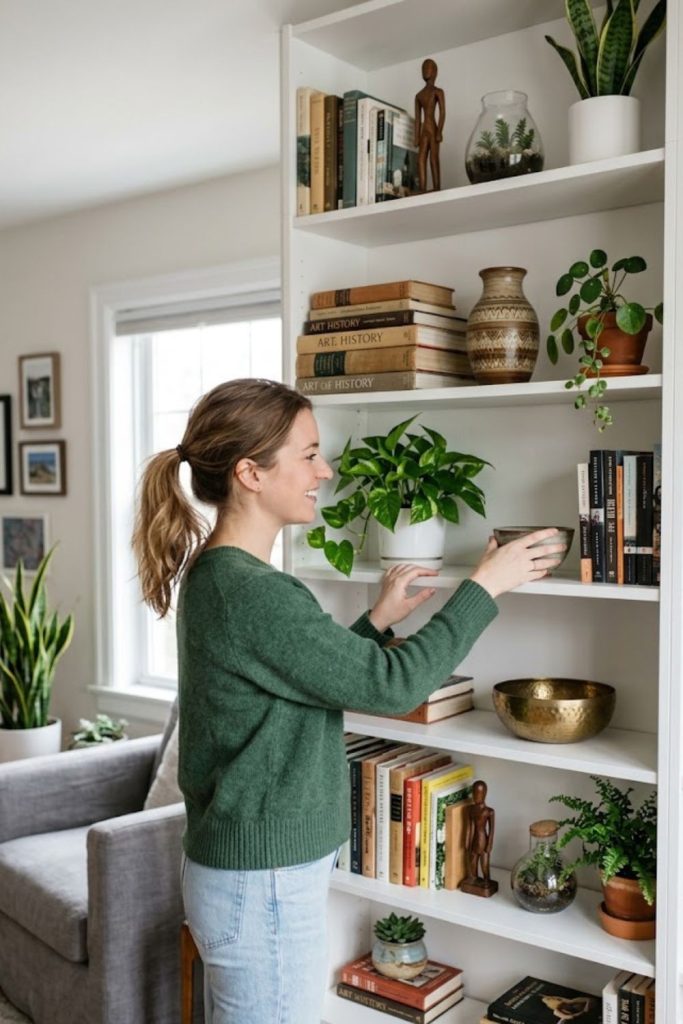
A classic styling technique is to mix books, decorative objects, and plants on each shelf rather than grouping similar items together. For example: on one shelf place a stack of horizontally laid books on the left, a mid‑size vase or ceramic sculpture in the center, and a small potted plant on the right. On the next shelf swap the order — perhaps a plant on the left, books laid vertically on the right, and a decorative bowl in the middle. This alternating balance creates rhythm and keeps the eye moving pleasantly through the wall. The combination of hard covers, soft greenery, and sculptural objects adds texture and depth, making the shelf feel dynamic but still organized.
2. Use Neutral Baskets for Hidden Storage at Lower Shelves
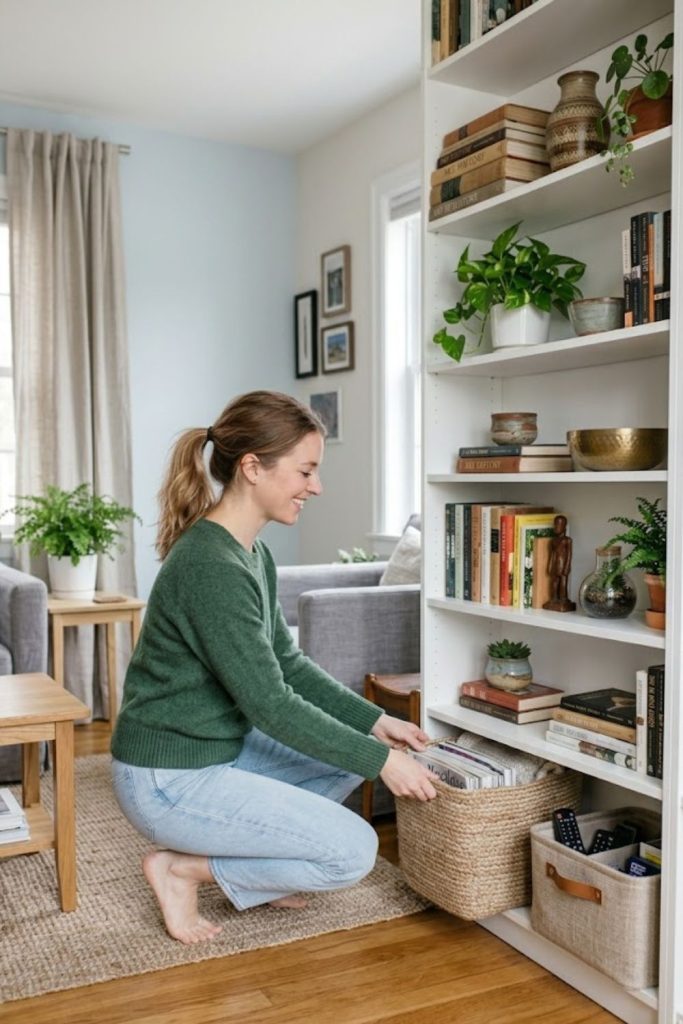
Lower shelves often become clutter magnets — remotes, blankets, toys, or magazines. Instead of letting mess accumulate, use a woven basket or fabric box to store these unnoticed items. Choose baskets in neutral tones that match the room palette so they blend seamlessly. Not only does this maintain the living room’s visual calm, but it also reinforces a sense of organization. Mixed with other decor on upper shelves, baskets help balance utility and style. The result is a tidy, comfortable space where storage doesn’t interrupt aesthetics.
3. Create Vertical Flow With Tall and Short Items
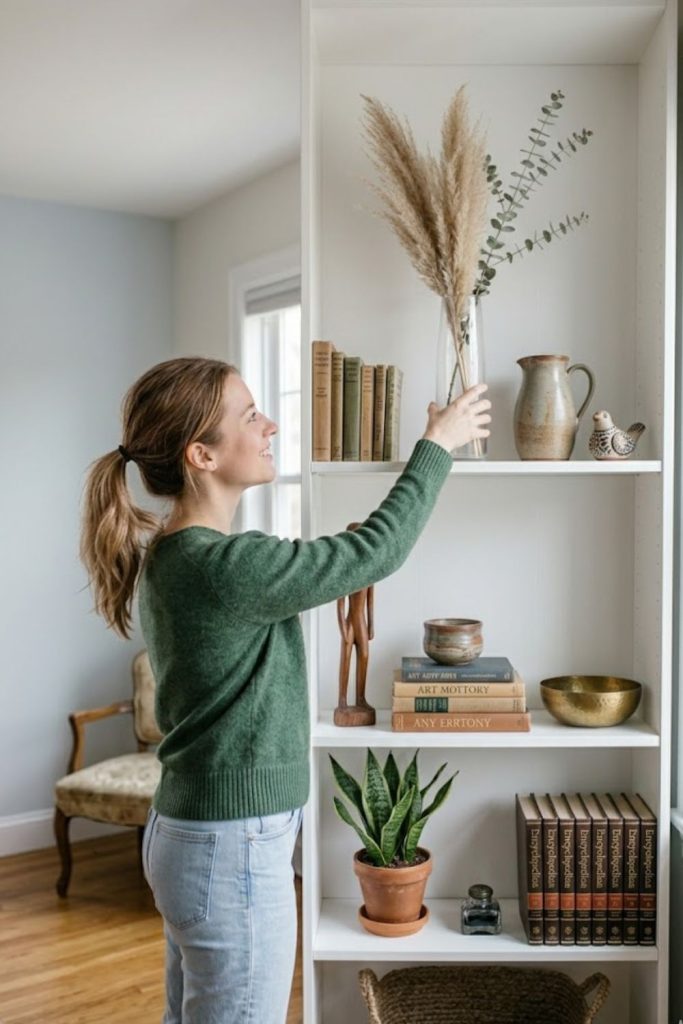
Varying heights on shelf displays adds vertical interest and helps avoid flat, monotonous arrangements. Pair tall vases or candlesticks with short books or small plants to create contrast. On a shelf, you can alternate tall, mid, and low elements — e.g., a tall ceramic vase on the left, a medium stack of books in the center, and a small decorative object on the right. This variation draws the eye up and down the shelf, giving the wall depth. When done correctly across several shelves, you get a cohesive flow that feels balanced and intentional.
4. Group Items in Threes for Visual Harmony
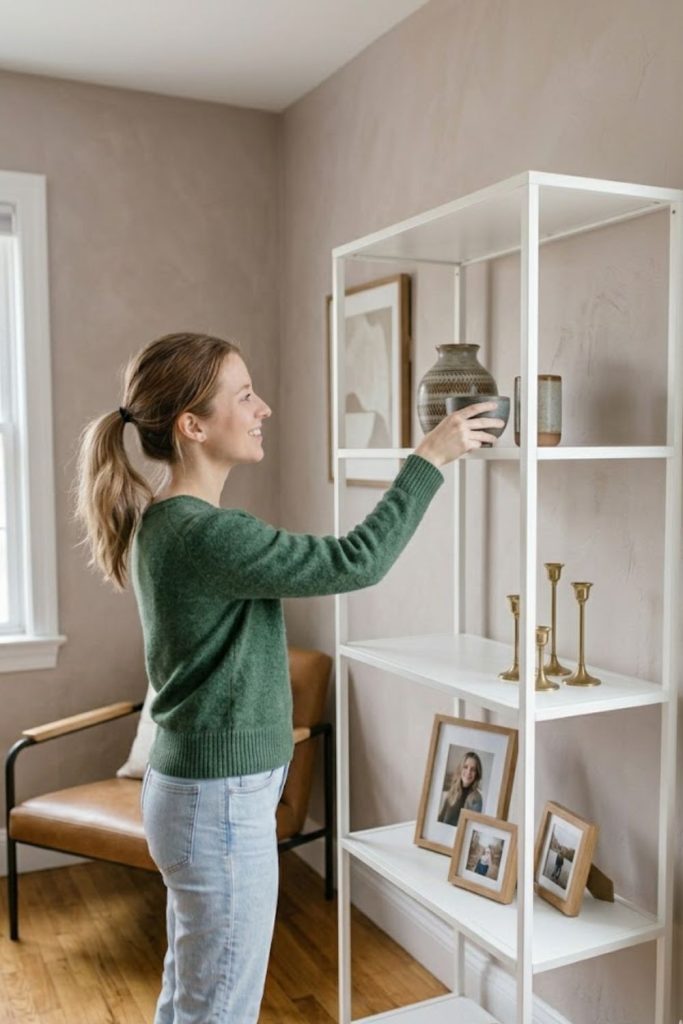
Odd numbers, especially groups of three, naturally feel harmonious to the eye. On a shelf, group similar objects — for instance, three ceramics of varying sizes or three framed photos — to create a curated vignette. Variation in size and scale prevents the group from looking too uniform. This approach works especially well when you want to highlight a set of objects rather than scatter decor evenly. A trio of objects acts like a single design unit, offering impact without clutter, ideal for minimalist or modern living rooms.
5. Lean Art or Frames Behind Objects for Depth
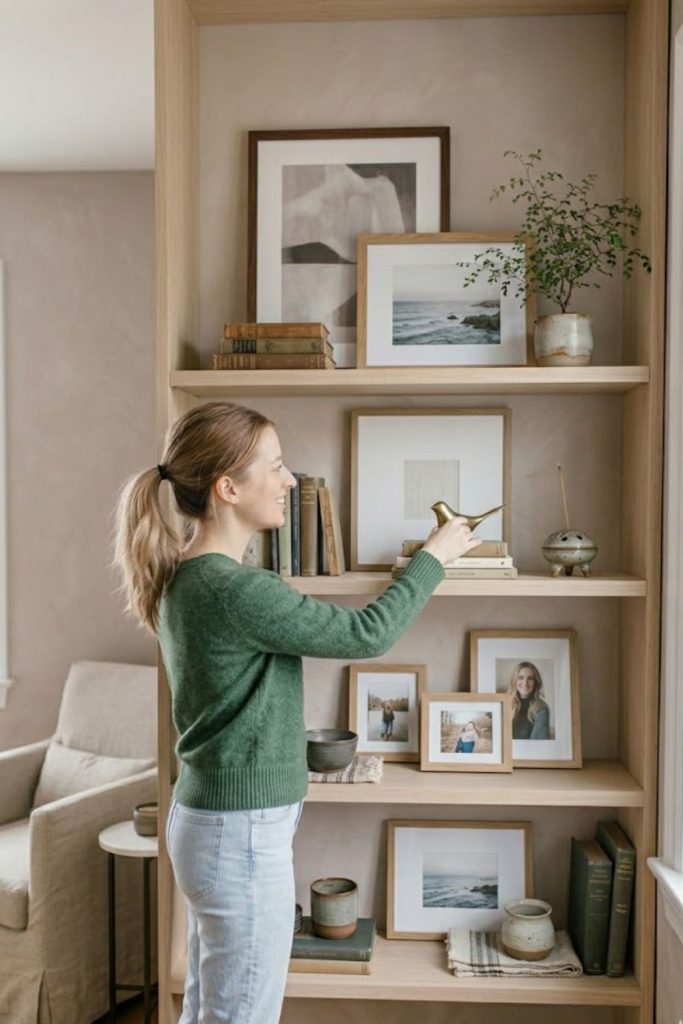
Instead of hanging every artwork, lean framed prints or photos against the back of a shelf and layer objects in front. This creates a sense of depth and a relaxed, collected vibe. A tall framed print at the back, a stack of books in front, and a small plant or decorative object in front of that gives a layered effect. Use different frame sizes and orientations — portrait, landscape, square — to add variety. This styling makes the shelf feel curated and layered, as though pieces have been collected over time rather than bought all at once.
6. Mirror or Glass-Backed Shelf Display for Light and Space
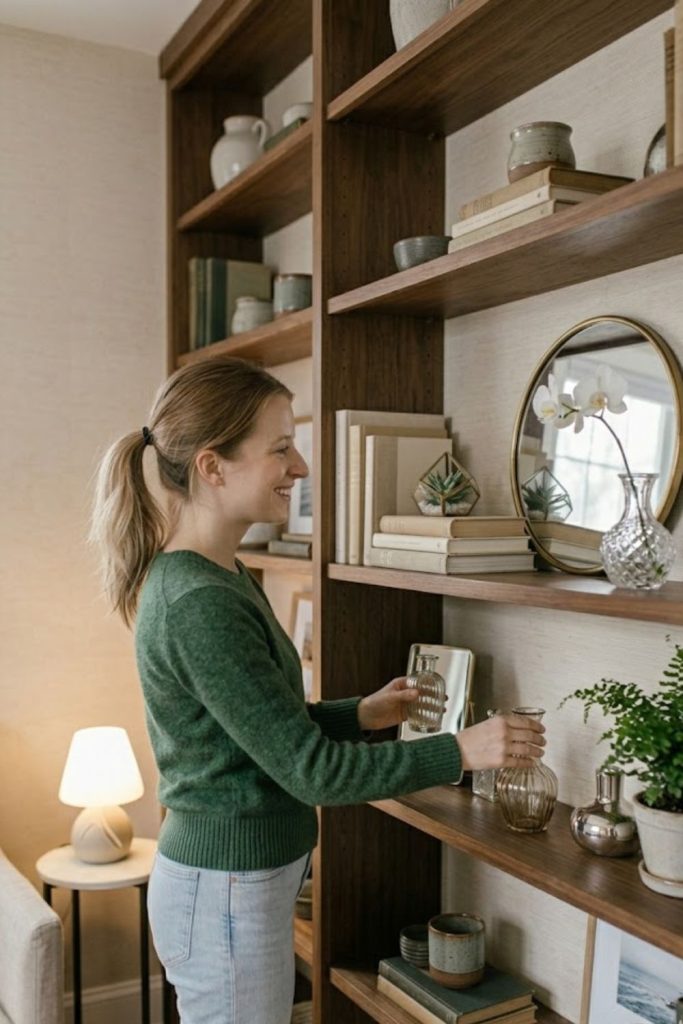
If your living room is small or low on natural light, consider styling one shelf area with mirrors or glass elements. Use glass vases, mirrored objects, or a small framed mirror instead of opaque decor. These reflective surfaces bounce light around and make the living room feel larger and airier. A mirrored vase paired with a small plant and a stack of light-colored books creates a subtle focal point without overwhelming the shelf. This approach helps lift a shelf’s aesthetic while maintaining cohesion with the room’s palette.
7. Use Art Books and Decorative Books as Design Anchors
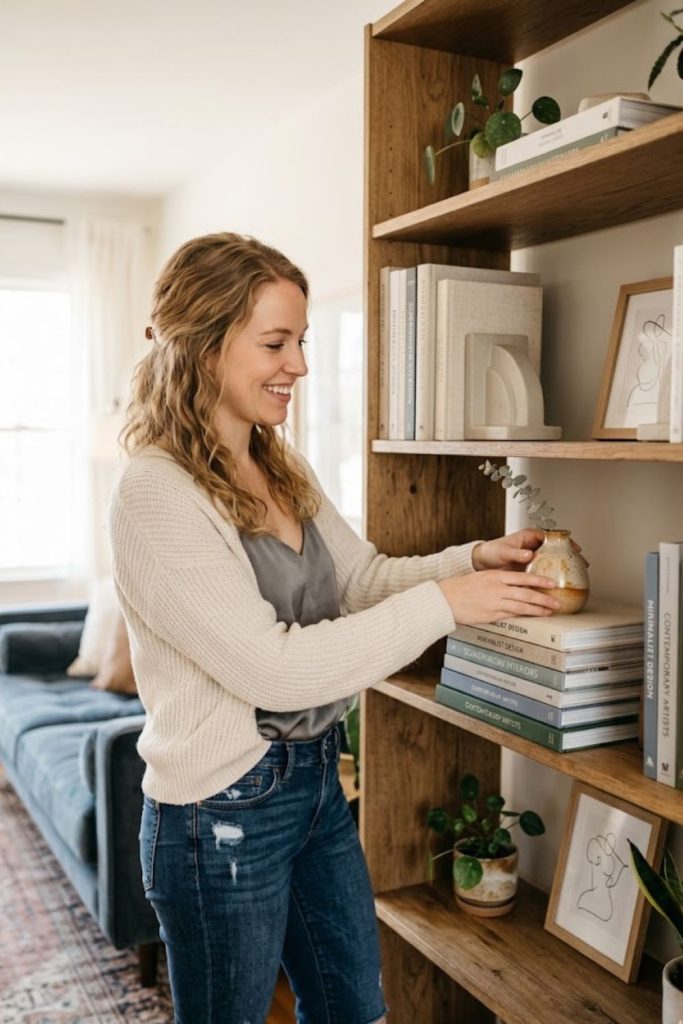
Instead of hiding books behind cabinet doors, showcase a curated selection of art books or coffee-table books on open shelves. Choose books with attractive covers or neutral colors to match your decor. Stack a few horizontally to create a base, then place a decorative object or vase on top. This elevates books from functional items to design elements. Books add intellectual character and personality; they also vary height and texture, helping build depth and balance across the shelf.
8. Incorporate Natural Texture via Woven Baskets, Wood, or Wicker Accents
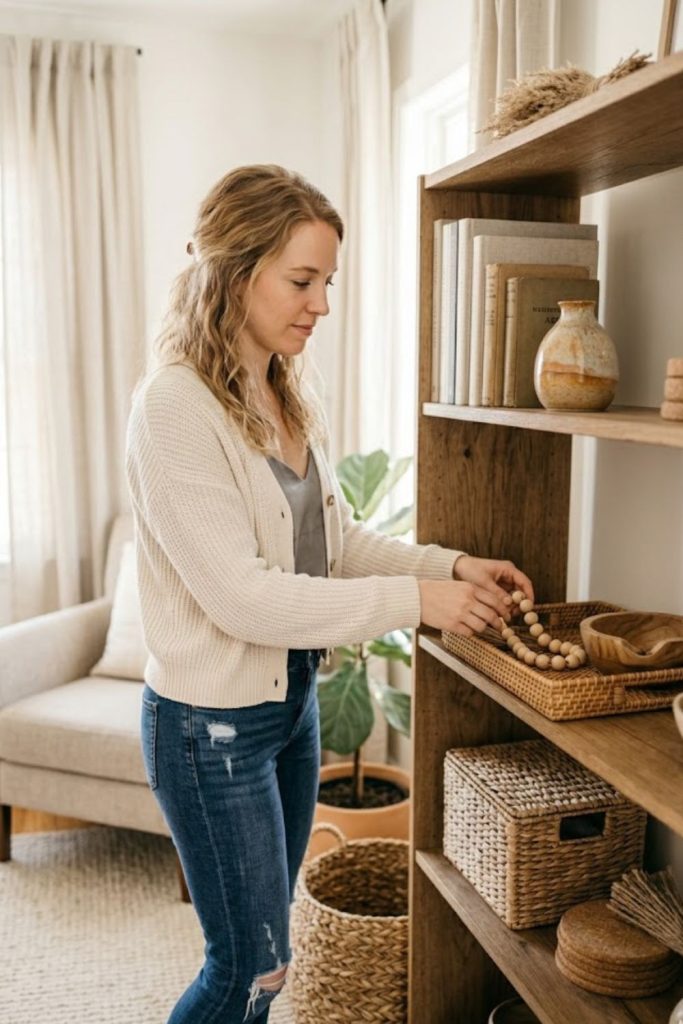
Natural materials soften hard furniture lines and stark walls. Combine woven baskets, rattan trays, wooden bowls, or wicker boxes with your shelf decor. For example, place a woven basket next to a ceramic vase and a neutral book stack to create contrast. Wicker or straw textures add warmth and a lived-in, organic feel. If your living room features wood furniture or neutral walls, woven textures harmonize elegantly, grounding the space and preventing the decor from feeling too cold or minimal.
9. Theme Your Shelves – Color, Season, or Style-Based Styling
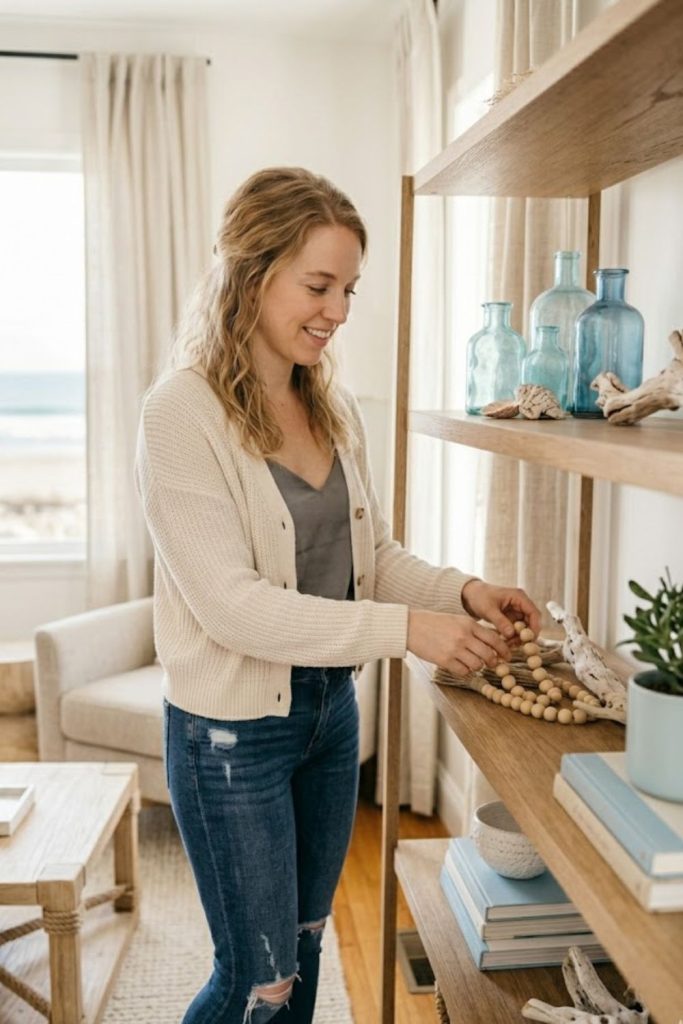
You can give your shelves cohesion by choosing a “theme” — perhaps a color palette (e.g., blues and whites), a seasonal mood (spring florals, autumn tones), or a style reference (coastal, Scandinavian, vintage). For example, a coastal-themed shelf might include sea‑glass vases, shells, driftwood, light blue books, and white pottery. A seasonal autumn theme could feature amber glass bottles, rustic candles, dried floral arrangements, and warm-toned books. Thematic styling gives your shelves a curated, intentional vibe, and allows you to refresh the look throughout the year without major changes.
10. Mix Different Shapes: Rounded Objects, Books, Sculptural Pieces
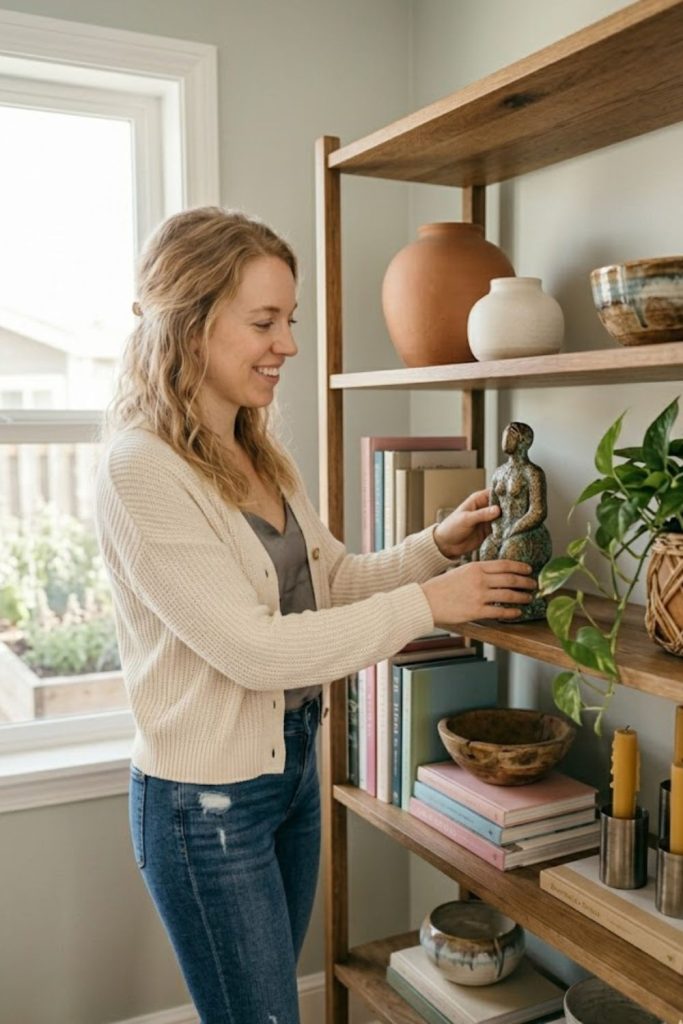
Variety in shape keeps shelf decor visually engaging. Combine rounded ceramic vases or bowls, rectangular books, cylindrical candle holders, and sculptural figurines. This mix adds rhythm and movement to a shelf wall rather than rigid uniformity. For instance, a round vase beside a stack of books beside a tall candlestick beside a leafy plant creates a dynamic silhouette. Mixing shapes also helps manage proportions — tall, thin, short, wide — so the shelf doesn’t feel monotonous.
11. Use Accent Lighting to Highlight Shelves and Decor Pieces
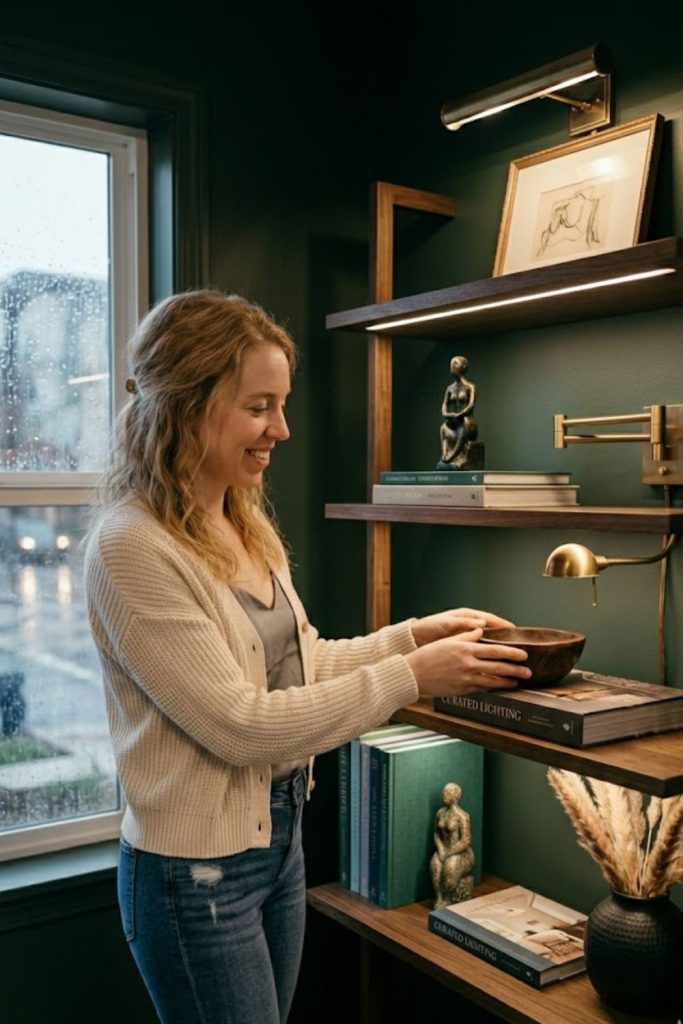
Adding subtle lighting — small LED strips under each shelf, picture lights focused on art, or a shelf-mounted lamp — enhances depth and highlight interesting pieces. Lighting casts soft shadows that add dimension and texture to objects. It’s especially helpful in evening hours or rooms with limited natural light. A well-lit shelf creates mood, draws attention to decor, and elevates the overall living room design. Lighted shelves feel curated, warm, and luxurious compared to unlit, static displays.
12. Add Greenery and Natural Elements for Freshness
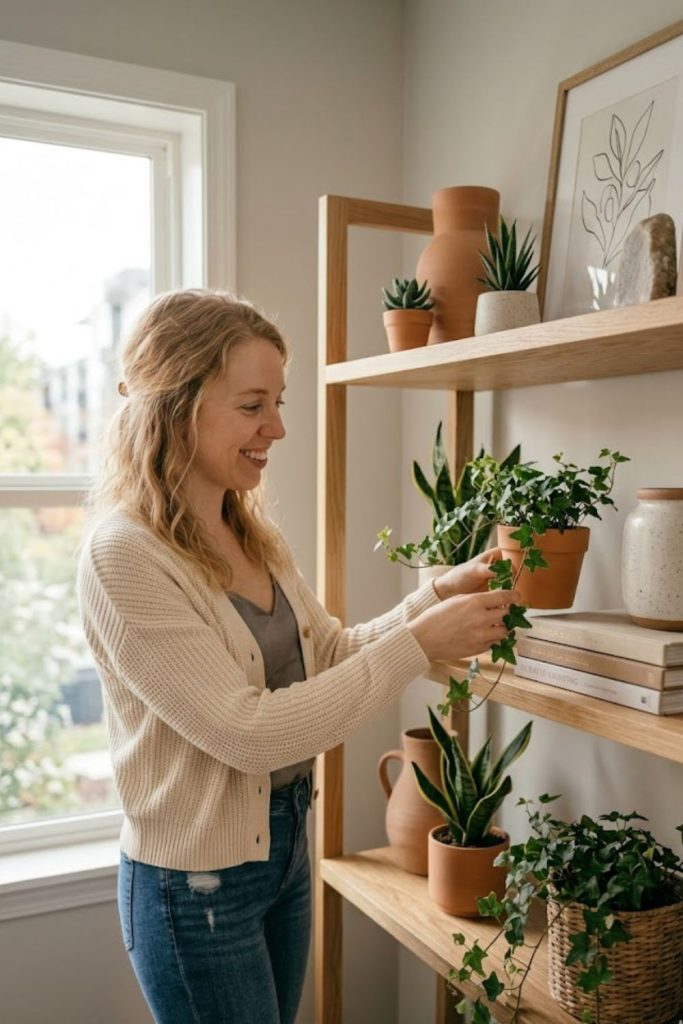
Plants instantly breathe life and freshness into shelf decor. Mix small potted plants like succulents or trailing ivy with larger ceramic vases or framed art. Greenery softens rigid lines and adds a natural pop of color. For larger shelves, a medium plant in a woven basket or ceramic pot works beautifully. Combine plants with books and ceramics for balanced styling. Natural elements like wood, stone, or greenery prevent shelves from feeling static and make the living room feel alive, cozy, and inviting.
13. Use Negative Space to Avoid Visual Clutter
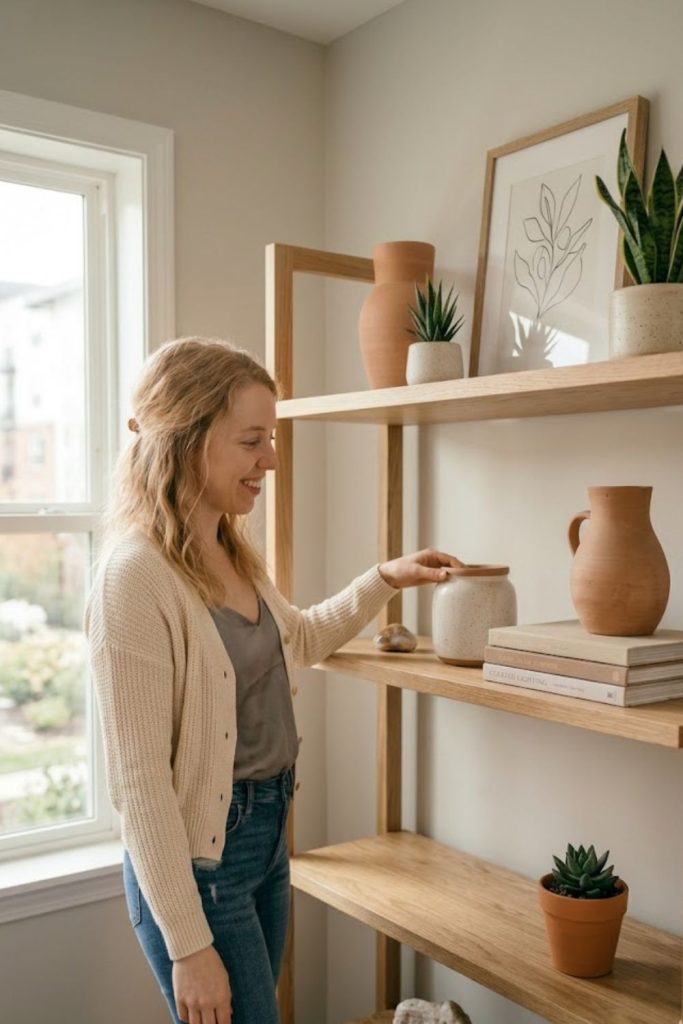
Elegantly styled shelves use space intentionally. Rather than filling every shelf, leave some open to give the eye room to rest. Negative space helps highlight key decor and prevents the display from appearing overwhelming. For example, if one shelf holds a stack of books and a vase, leave the next shelf empty or with only a minimal object. This rhythm of filled and empty creates balance and elevates the overall aesthetic. Negative space is often the difference between a shelf that feels curated and one that feels overfilled.
14. Reflect Personal Story with Meaningful Items and Artifacts
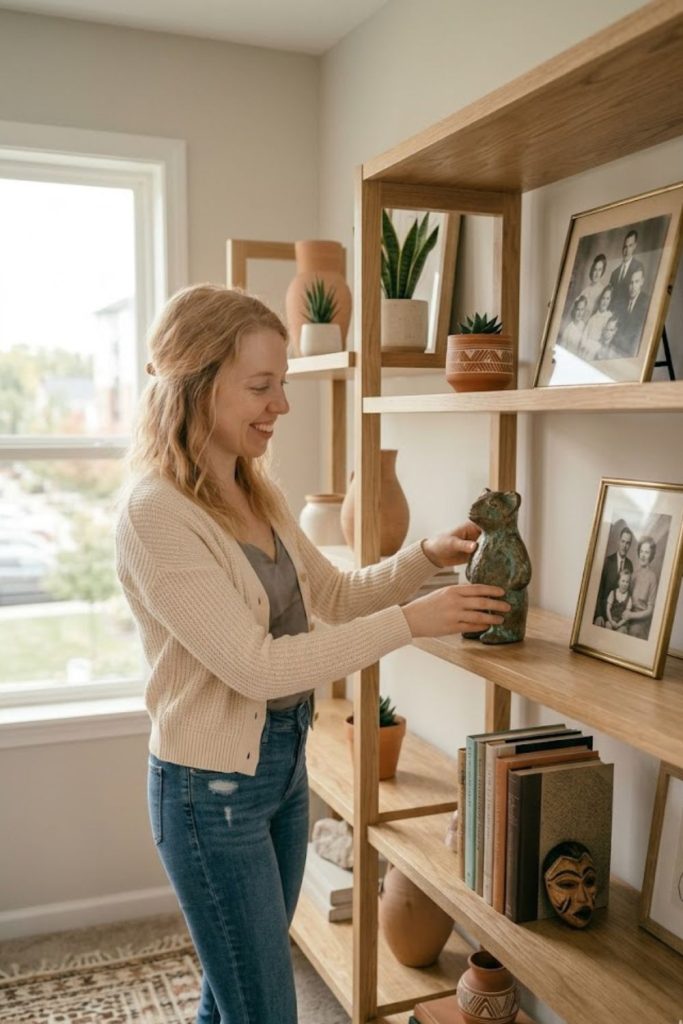
Shelves become more interesting when they tell a story — family photos, travel souvenirs, vintage finds, books you love, or art you’ve picked yourself. Mixed-in meaningful objects add personality and make the space uniquely yours. Use a few pieces as focal points: a framed photograph leaning against the wall, a small artifact from a trip, or a handmade craft. Combined with decorative books, plants and vases, these items give warmth and character, ensuring the living room feels lived-in and personal rather than staged.
15. Rotate Decor Seasonally for Freshness and Variety
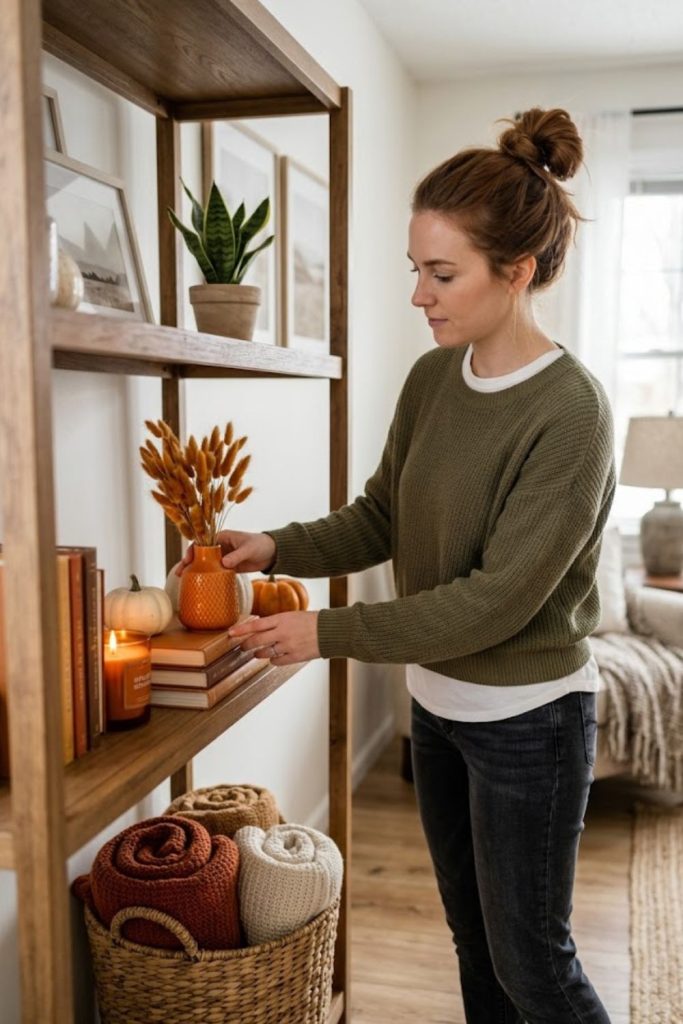
One of the joys of shelf styling is flexibility. Every few months, rotate items to refresh the look: swap seasonal decor (spring flowers, summer vases, autumn candles, winter throws), change books, repaint or replace small objects, update plants. This keeps the room feeling dynamic and adaptable. Seasonal rotation prevents style fatigue and allows the shelf to evolve with your life and the changing seasons. It’s a simple, low-cost way to keep the living room feeling current and lively.
FAQ
How do I avoid my shelves looking cluttered?
Use a mix of filled and empty shelves to create breathing room, group similar items together, vary heights and shapes, and limit each shelf to 3–5 curated elements. Negative space and intentional spacing make shelves look polished rather than messy.
What are good items to use for shelf decor besides books and vases?
Consider framed photos or art, small sculptures, candles, decorative bowls, ceramics, indoor plants, woven baskets, textured boxes, and personal artifacts. Variety in material and shape brings depth.
How often should I update or rearrange my shelf decor?
Every 3–6 months is a good rhythm — enough to feel fresh but not so often that styling becomes a chore. Season changes or simply shifting a few items keeps things interesting and lively.
How can I style shelves in a small living room without cluttering?
Use open, airy decor — light ceramics, small plants, neutral books. Keep lower shelves for storage baskets. Use vertical space and avoid oversized items. Allow empty space on at least half the shelves to keep the room feeling spacious.
Can I mix modern and vintage items on the same shelf?
Absolutely. Mixing modern pieces (minimal ceramics, glass vases) with vintage items (old books, antiques, rustic frames) makes shelves feel layered and personal. Just ensure a unifying element — color palette, material, or theme — to keep cohesion.
Final Words
Shelf decor in the living room isn’t just about storage — it’s a form of personal expression. Thoughtfully arranged shelves reflect your taste, memories, and lifestyle. Whether you lean minimal and modern, cozy and eclectic, or warm and rustic, the 15 ideas above give you a roadmap to craft shelf displays that are functional, stylish, and meaningful.
Start small: maybe a few decorative vases and books, or a plant and a tray. Over time, build layers — baskets, art, lighting, personal items. Allow your shelf to evolve with you, and let it tell the story of your home. With intention, balance, and creativity, shelf decor becomes one of the most powerful and rewarding tools in designing a living room that feels like yours.