A wall clock is more than a timepiece — in the living room it becomes art, anchor, and personality all at once. The right clock can fill negative space, balance furniture, introduce texture, and pull together a room’s color palette while still doing its primary job: telling time. From oversized statement pieces to delicate vintage finds, wall clocks adapt to every design style and budget. They can be bold focal points or subtle complements that quietly elevate the room.
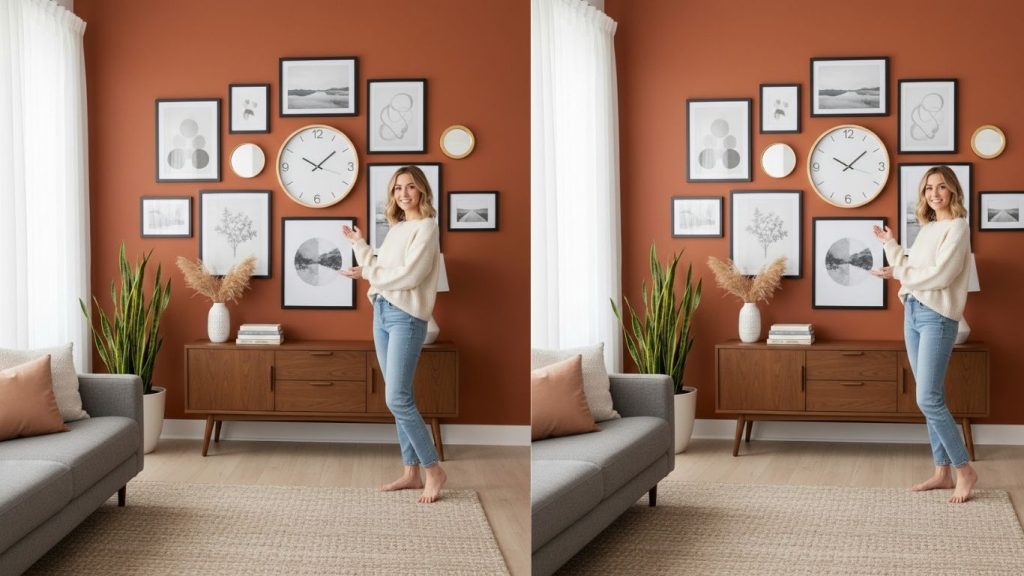
This long-form guide is written to be practical and inspirational. You’ll find five smart items to buy that make styling wall clocks easier, a short note on placement and proportion, and then 15 detailed, numbered ideas you can use today — each with styling instructions, materials recommendations, and troubleshooting tips. Whether you want a farmhouse clock above the mantel, a sculptural modern piece on a large blank wall, or a gallery that includes a clock for rhythm and movement, this post will walk you through it.
5 Items to Buy Now (each ~100 words)
1. A reliable wall anchor and hanging kit
If you want your wall clock to stay put, a good hanging kit is a must. Buy a kit that includes toggle anchors, heavy-duty screws, and a small level. Many clocks are thicker or heavier than they look — anchors rated for the wall type (drywall, plaster, or masonry) protect both the clock and your wall. Some kits include felt bumpers to keep the clock flush and prevent scratches. Investing in the right hardware means you can safely hang large or decorative clocks without worrying about slippage, damage, or misalignment down the road.
2. A laser level or small spirit level
Precision makes a huge difference when hanging a clock — especially when you’re integrating multiple pieces or creating symmetry with furniture below. A compact laser level helps you mark the exact center line and guarantees the clock hangs straight. If you already have picture ledges, shelves, or art nearby, a laser level makes alignment fast and accurate. There are inexpensive, user-friendly models that run on batteries and make the installation feel professional. For small clocks, a simple bubble level will do, but a laser is excellent when planning a gallery or centering over long sofas.
3. Wall pads and protective bumpers
Clock backs often rub against paint and plaster. Felt pads or rubber bumpers keep the clock slightly off the wall so it hangs level and won’t scuff the finish. They also reduce vibration noise for mechanical or chiming clocks. These adhesives are inexpensive and come in multiple thicknesses — choose the size that brings the face perfectly parallel to the wall. Small pads are an easy, invisible upgrade that improves both the look and longevity of a wall clock installation.
4. A clock with easy-to-change batteries and accessible movement
When choosing a clock, prioritize models with accessible battery compartments and quiet, dependable quartz movements. You’ll thank yourself when it’s time for a replacement battery or a quick time adjustment at daylight saving. Look for “silent sweep” mechanisms if you want a whisper-quiet living room, or a classic chiming movement if you want some old-world charm. A clock that’s easy to maintain saves hassle and keeps your living room looking good and running on time for years.
5. A small toolkit (screwdriver set, measuring tape, pencil)
Nothing slows down a décor project like missing tools. Keep a compact toolkit by your door for quick installs: a set of screwdrivers, a measuring tape, a pencil for marks, and a small hammer. A retractable measuring tape allows you to verify distances from furniture and ensure standard spacing rules are followed. The pencil lets you mock up placement with light marks on the wall (erase later). This modest kit makes hanging clocks and reshuffling wall décor smooth and efficient.
A short note on placement and proportion
Before we dive into specific ideas, two rules will save you time and ensure a polished result: scale and grounding. For scale, aim for a clock that fills roughly two-thirds to three-quarters of the horizontal space above the furniture it’s sitting over (sofa, console, mantel). If the wall is empty, choose a clock large enough to read from across the room — oversized clocks (30–48 inches) create dramatic focal points. For grounding, position the clock so its visual center sits at about 57–60 inches from the floor (average eye level), or slightly higher if your ceilings are tall. When placing above a sofa, leave about 6–12 inches between the top of the sofa and the clock bottom. These rules are flexible but useful starting points.
wall clock decor living room
1. Oversized industrial clock as a statement anchor
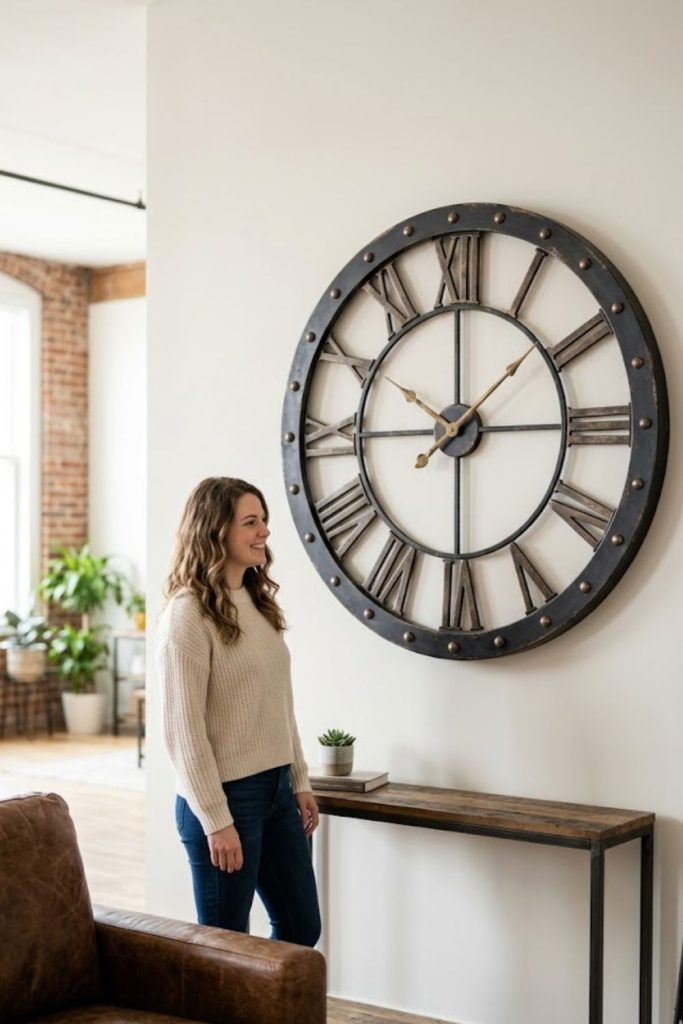
An oversized industrial-style clock — think metal frame, exposed rivets, and bold numerals — makes an immediate statement on a large blank wall. Choose a diameter between 30–48 inches for open-plan living rooms or a slightly smaller 24–30 inch for medium walls. Industrial clocks pair beautifully with leather sofas, reclaimed-wood coffee tables, and black metal accents. When styling, keep surrounding decor minimal: let the clock be the focal point. Add a slim console underneath or a pair of simple sconces at either side for balance. If you’re worried about weight, install a solid anchor or mounts into studs for long-term security.
2. Vintage gallery with a petite clock as the center of rhythm

If you love a curated look, build a gallery wall where a small vintage clock forms the rhythm point among framed prints and mirrors. Choose a clock with patina or brass details to link to older frames. Map out the gallery on the floor or use kraft paper templates on the wall to find the right composition before drilling. Keep the spacing consistent (2–3 inches between frames) and include odd-numbered groupings to maintain visual interest. The clock adds movement and function while the surrounding art provides atmosphere; choose a clock size that complements rather than dominates the composition.
3. Mantel clock above fireplace — classic and cozy
Placing a round or rectangular wall clock centered above a fireplace creates a timeless mantel vignette. For a classic look, go for a wood-framed clock, perhaps with Roman numerals and a subtle distressed finish. Keep decorative items on the mantel low — candlesticks, a small stack of books, or a single vase — so the clock remains the star. If your mantel is wide, consider flanking the clock with matching wall sconces or candle holders to frame the composition. Remember the 6–12 inch rule between mantel top and clock base for comfortable visual spacing.
4. Minimalist modern clock for a clean, contemporary feel
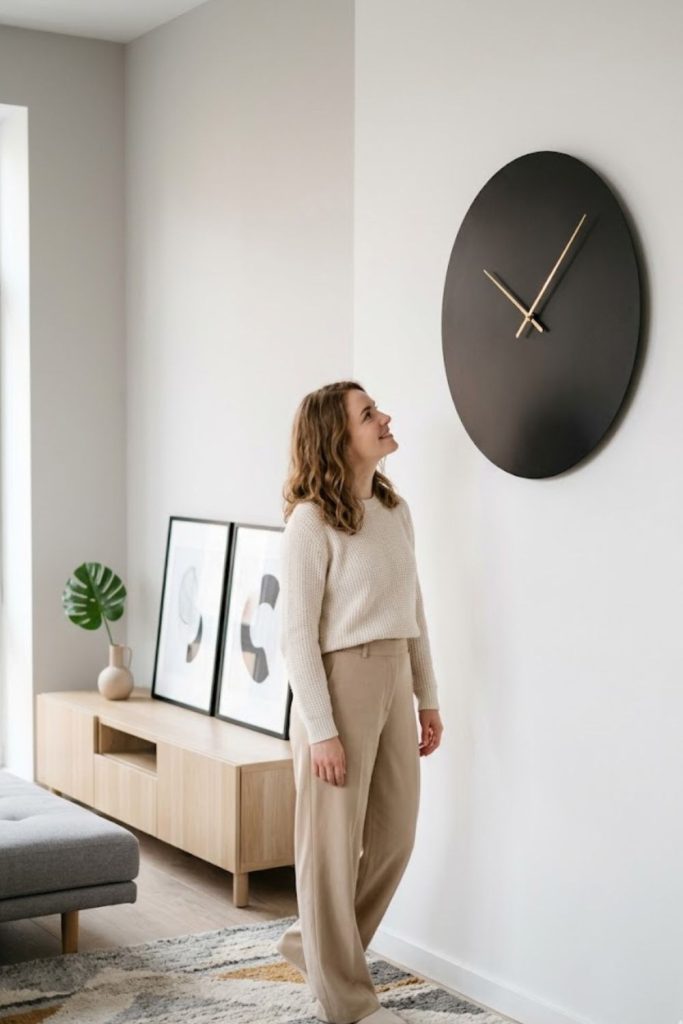
A minimalist clock — think thin hands, no numerals, or a simple monochrome face — is perfect for contemporary living rooms. These clocks read like sculptural objects rather than traditional timekeepers. Place one on a crisp white or pale wall to emphasize form; if the clock has a metallic finish, it will reflect light and add a hint of luxury. Pair it with low-profile furniture, geometric rugs, and a restrained color palette. Because minimalist clocks are visually light, you can pair them with other modern wall décor like slim shelves or framed black-and-white prints.
5. Layer a clock over wallpaper or a patterned accent wall
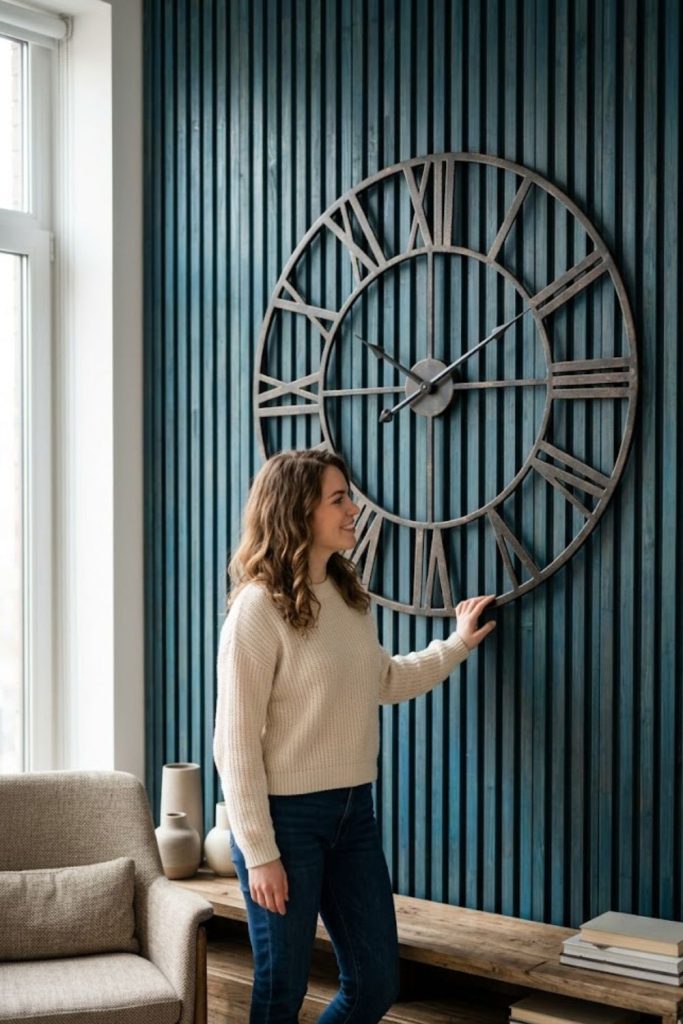
A bold wallpaper or a textured accent wall becomes instantly more useful when punctuated by a clock. For example, a floral or damask wallpaper behind a whitewashed mantel looks fresh when a small-to-medium clock is centered above it. Alternatively, mount an oversized, open-frame clock on a slatted wood wall for a layered, tactile look. The key is contrast: the clock should read clearly against the pattern, so pick frames and hands that stand out. If patterns are busy, a clock with a simple face and bold hands will provide the necessary legibility.
6. Rustic farmhouse clock paired with vintage crates and baskets
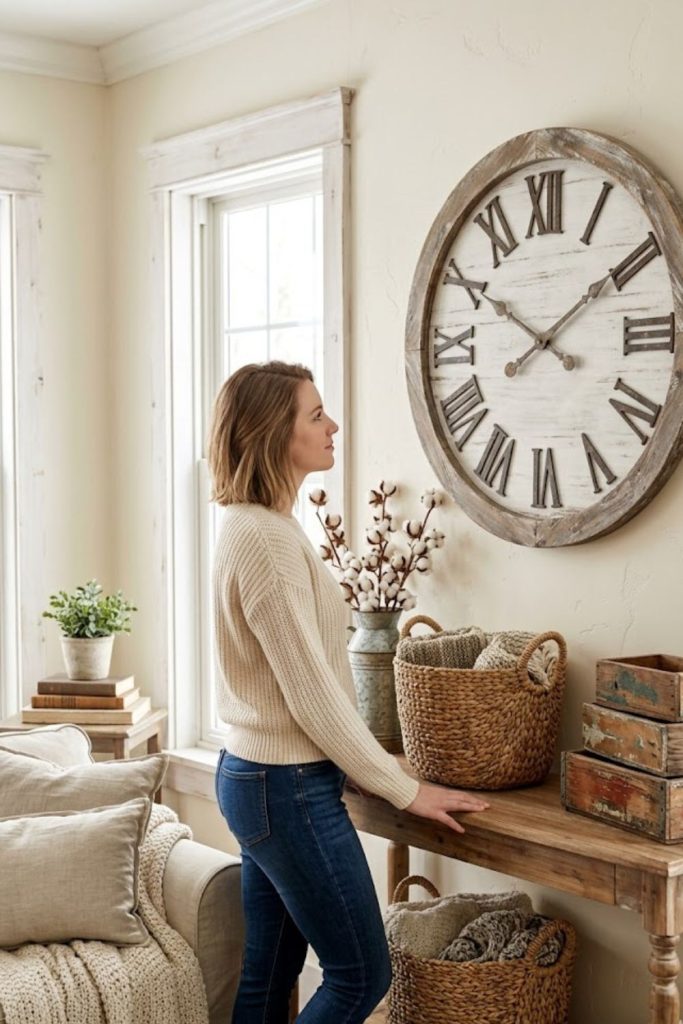
For a cozy farmhouse living room, choose a rustic wall clock — weathered wood, whitewashed finish, or metal with worn paint. Hang it above a console table styled with woven baskets, a galvanized vase, and stacked vintage crates to complete the look. A farmhouse clock signals warmth and nostalgia; pair it with textural throw blankets and linen pillows. If your clock has slatted wood elements, echo those lines in a sideboard or coffee table for continuity. For practical longevity, treat the wood finish to ensure it won’t warp near humid windows or a fireplace.
7. Mid-century modern clock with sculptural accents
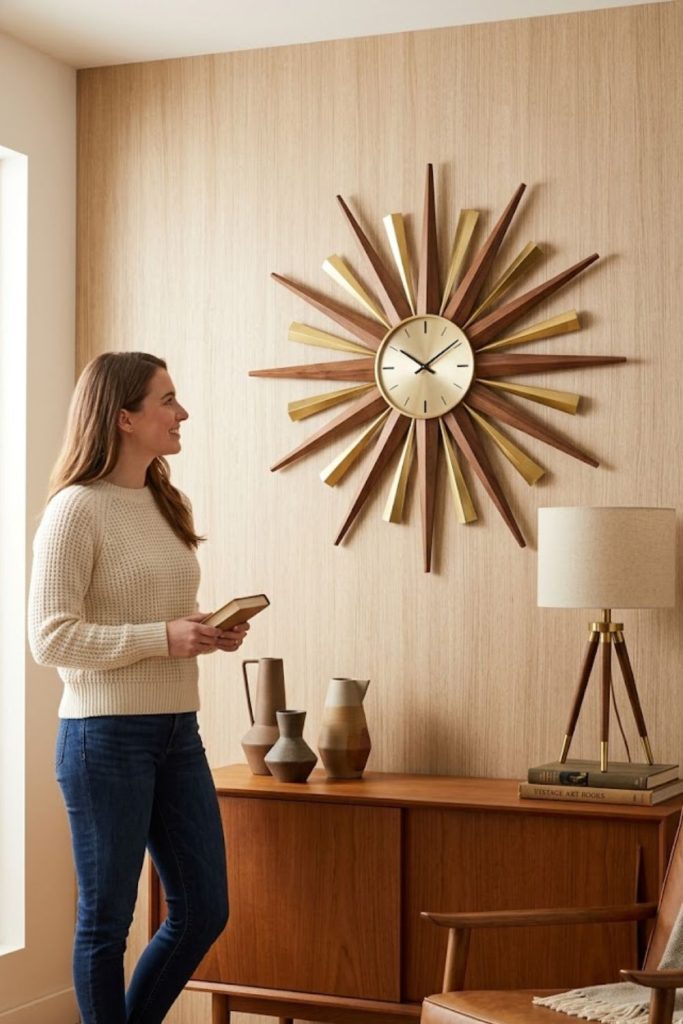
Mid-century loving interiors benefit from clocks with starburst designs, teak frames, or geometric metal rays. These clocks act as dynamic focal points — the starburst in brass or walnut adds retro glamour to a clean-lined living room. Install above a sideboard or centered over the sofa. Surround with sculptural vases, a tripod lamp, and tapered-leg furniture to maintain the era’s silhouette. Choose a clock with a satin or matte finish for understated elegance that complements wood and leather materials typical of mid-century decor.
8. Nautical or coastal clock for beachy living rooms
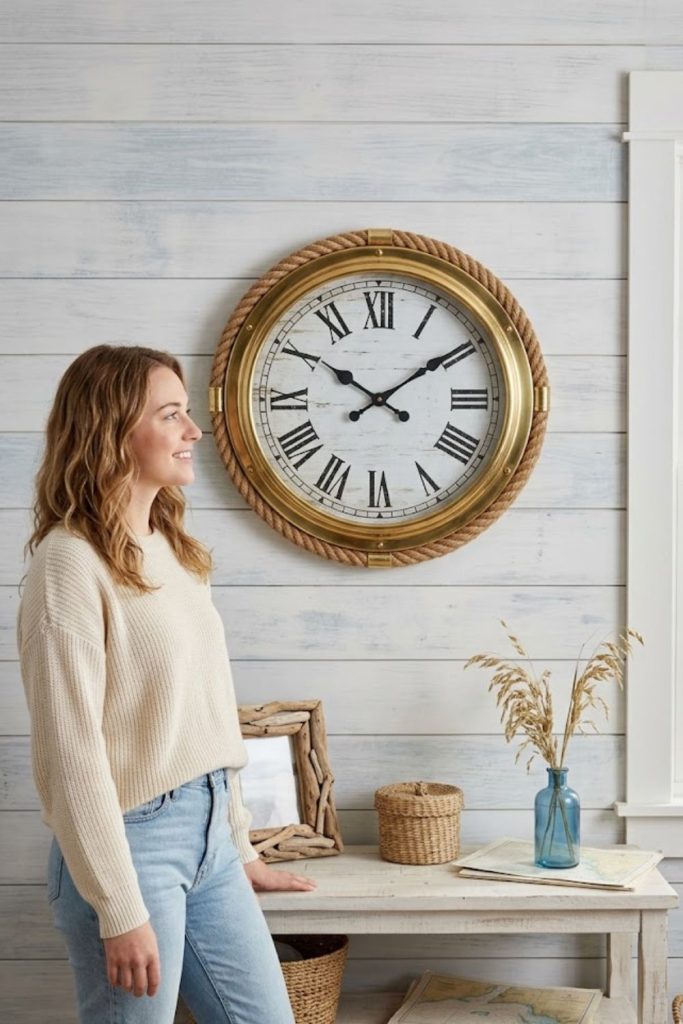
A nautical clock with rope details, brass bezel, or weathered white face gives coastal spaces instant charm. Hang it above a low console or near windows to echo sea breezes. Complement with driftwood frames, seagrass baskets, and blue accents. For authenticity, select a clock with maritime cues like porthole-style frames or bold black numerals for readability. Keep coastal clocks away from direct moisture and salty air (in practice) to avoid corrosion; indoors they create the seaside mood without the maintenance headaches of real marine equipment.
9. Sculptural clock as functional art in an eclectic room
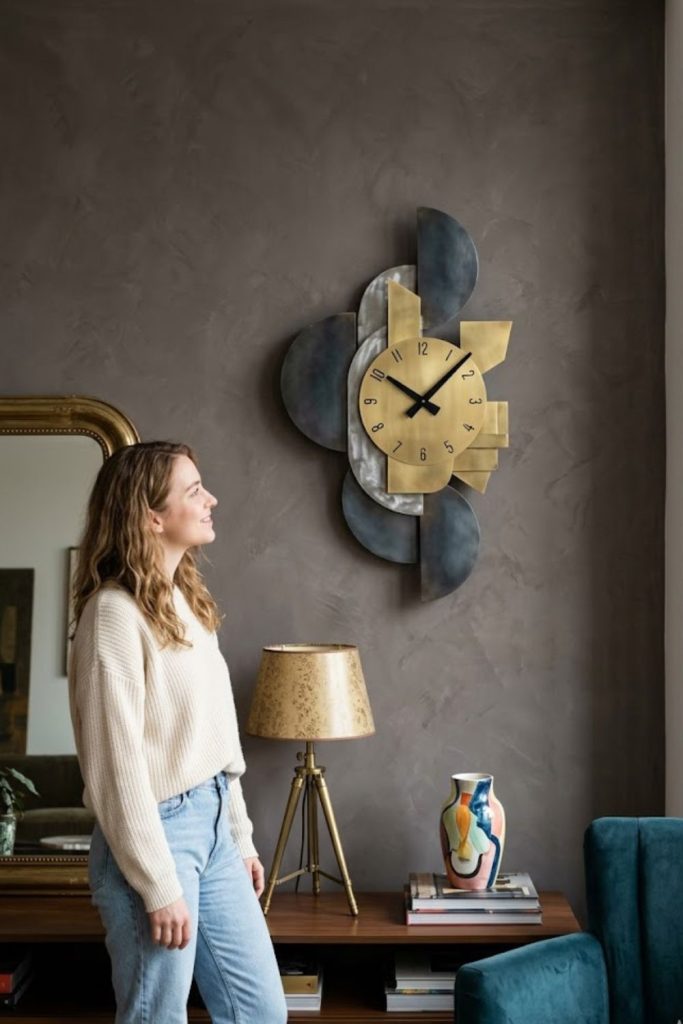
If your living room leans eclectic or maximalist, pick a sculptural clock — an abstract metal form, layered discs, or a composition of brass shapes that read like sculpture. Place it on a gallery wall or alone on a broad wall where it can breathe. Match other metallic accents around the room (a lamp base, mirror frame) to pull the look together. The sculptural clock functions as both a timepiece and an art object; consider one with interesting shadows so it interacts with your lighting plan.
10. Multi-timezone clocks for the world traveler

For global style or frequent travelers, consider a bank of three or four coordinated clocks that show different time zones. Mount them in a neat horizontal row above a console or media unit. Use identical frames and faces for cohesion, and label each with the city name or a small brass plaque. This practical display reads very intentional and pairs well with maps, globes, or travel-related artwork. Keep the spacing tight and consistent so the set reads as a singular installation rather than random objects.
11. Antique clock for classical interiors — with a twist
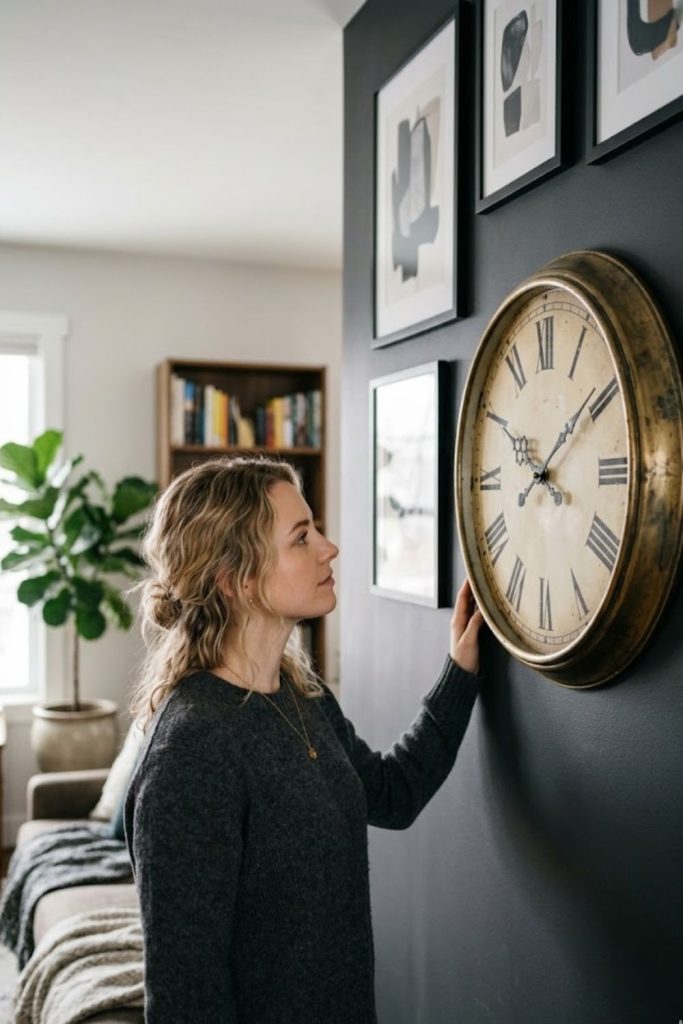
An antique-faced clock with a faux patina or brass bezel works beautifully in classical or traditional living rooms. Choose a piece with Roman numerals and hands that reflect the era. For a modern twist, hang it against a contemporary backdrop — a charcoal painted wall or a gallery of modern abstracts — to create contrast between old and new. The clock then acts as a conversational heirloom. If you find a genuine antique, have the movement inspected; if you choose a reproductions, pick quality materials so it looks and feels authentic.
12. Clustered small clocks for playful rhythm

Instead of one big piece, try an intentional cluster of small clocks in different shapes and finishes for a rhythmic installation. Use round, square, and hexagonal frames in a unified palette (e.g., black, white, and gold) to keep the display cohesive. Place the cluster off-center above a console to create deliberate informality. This playful approach works particularly well in casual, creative spaces or media rooms. Ensure each clock remains legible — vary sizes and keep spacing small (1–2 inches) so the arrangement reads as an organized group.
13. Mirror-clock hybrid to double light and function
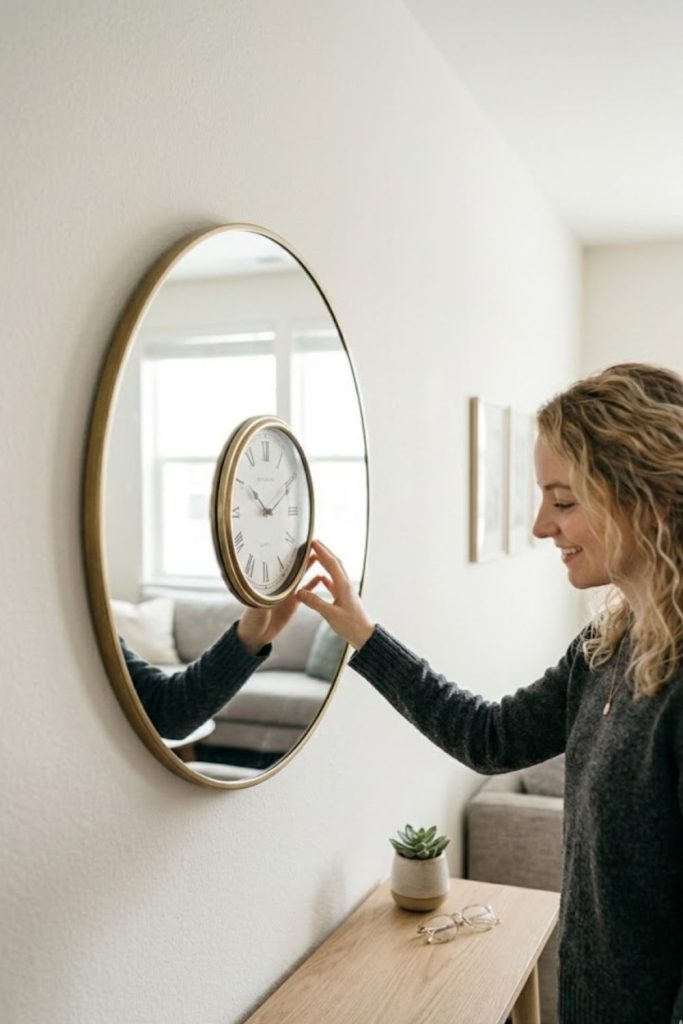
A mirror-clock hybrid — a clock face inset in a round mirror or a mirrored clock frame — brings luminosity and function to compact rooms. Hang it opposite a window to amplify daylight while also providing a practical timepiece. This solution suits narrow halls that open to the living room, or above small consoles where the mirror enhances spatial perception. Because mirrors reflect, choose a movement with quiet operation to avoid amplifying tick sounds. These hybrid pieces are stylish multi-taskers: they expand the room visually while anchoring design.
14. Digital wall clock with smart features for modern living
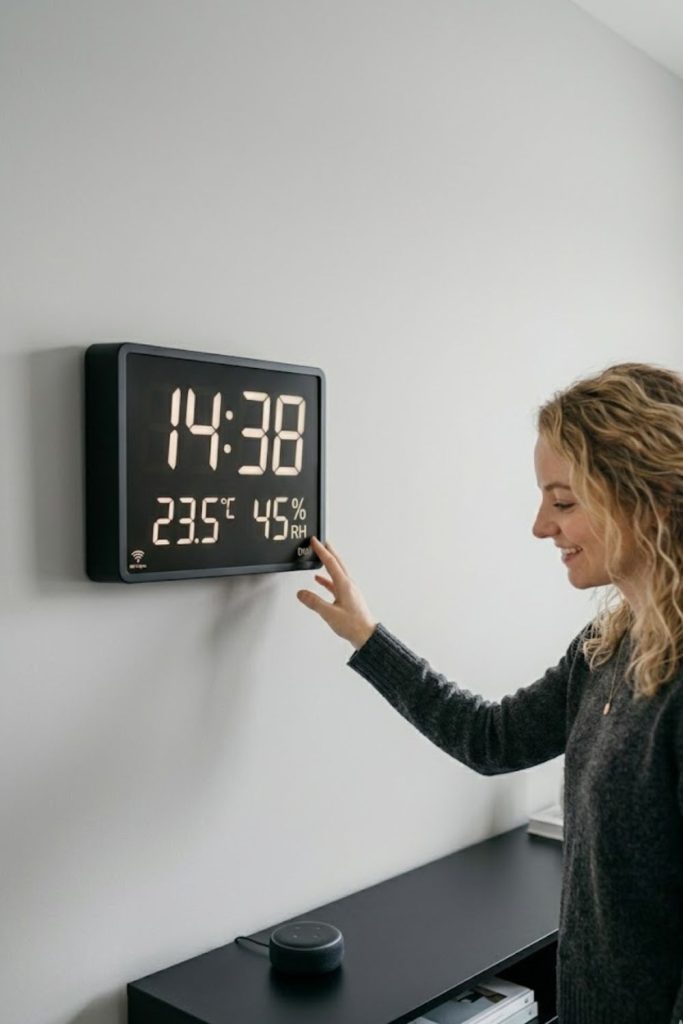
For a tech-forward living room, a sleek digital wall clock with LED readout, integrated temperature, and Wi-Fi time sync can be both stylish and functional. Choose minimalist casings in brushed metal or matte black to maintain a refined look. These clocks are ideal for minimalist, Scandinavian, or high-tech interiors where visibility and accuracy matter. Place one above an entertainment center or in a busy family space where quick glances at time and temperature are practical. Opt for adjustable brightness and night mode to reduce glare in the evenings.
15. Seasonal and swap-friendly clock styling for versatility
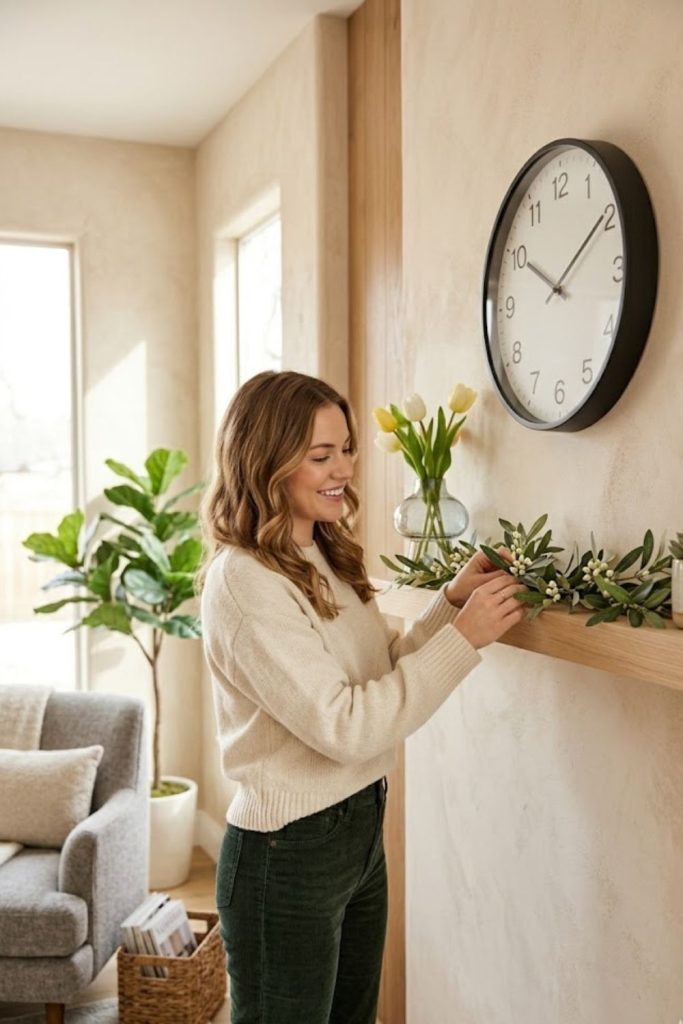
Finally, think of your wall clock as part of a seasonal vignette. You can style the area around the clock with wreaths at the holidays, garlands in fall, or fresh greenery in spring. Choose a clock with a removable frame skirt or mount a simple floating shelf beneath it where seasonal decor can sit. This approach makes it easy to refresh the living room without replacing the clock. If your clock is a neutral anchor (wood, black, or brass), it will pair seamlessly with a wide range of seasonal palettes and textures.
Deep-dive styling tips and placement troubleshooting
How to choose the right size for your wall
Measure twice. For clocks above furniture, a general guideline is: the clock width should be 60–75% of the furniture width. Over a mantel use 2/3 the mantel width; over a sofa aim for 2/3 of the sofa width. For standalone walls, scale up — larger diameters (30–48 inches) suit tall ceilings and open plans. If in doubt, trace the diameter with kraft paper and tape it to the wall to preview the scale before drilling.
Hanging on different wall materials
Drywall: use toggle or molly anchors for heavy clocks.
Plaster: locate studs or use metal hollow-wall anchors.
Brick or masonry: masonry anchors and a hammer drill are best; consider professional installation for very heavy pieces.
If you’re renting, choose command-style heavy-duty hooks rated for the clock weight, or consider freestanding solutions like leaning a clock on a mantel.
Balance and composition with surrounding decor
Symmetry is calming: pair the clock with identical sconces, mirrors, or framed prints. Asymmetry is dynamic: offset the clock with a tall plant or a stack of shelves. When pairing with shelves, leave at least 2–4 inches between the shelf top and the clock bottom. For busy gallery walls, use the clock as the visual resting point by keeping its palette slightly calmer than surrounding art.
Avoiding glare and reflections
High-gloss clock faces and glass-covered dials can produce glare from windows or lamps. If glare is a problem, choose matte faces, anti-glare glass, or mount the clock on an adjacent wall. For mirrored clocks, position to reflect desirable views — a window or plant — rather than reflecting the TV.
Sound considerations for chime and ticking clocks
If silence is important, choose a “silent sweep” quartz movement. Mechanical and chiming clocks have character but can be disruptive in quiet spaces; consider ones with night-silence settings or chime-off options. Anti-vibration pads help reduce noise transmission through the wall.
FAQ
What size wall clock should I get for my living room?
For above furniture, aim for a clock that spans about two-thirds to three-quarters of the furniture width. For empty walls, choose larger diameters (30–48 inches) depending on ceiling height and room scale. Use kraft paper templates to preview sizes.
How high should a wall clock hang above a sofa?
Leave 6–12 inches between the top of the sofa and the clock’s bottom edge. Position the clock’s center around 57–60 inches from the floor for average sightlines; raise slightly for taller ceilings.
Can I hang a heavy clock on plaster or brick walls?
Yes, but use appropriate hardware: toggle anchors or molly bolts for plaster; masonry anchors and a hammer drill for brick. If the item is very heavy, professional installation is recommended.
Are mechanical clocks better than quartz?
Mechanical clocks have traditional charm and chimes but require winding and can be louder. Quartz clocks are low-maintenance, accurate, and often silent. Choose based on your preference for maintenance, sound, and authenticity.
How do I prevent the clock from scratching the wall?
Install felt pads or rubber bumpers on the clock back to lift it slightly off the wall, distribute weight, and prevent scuffs. These also help the clock hang level.
Is it okay to use a clock as art?
Absolutely. Many modern clocks are designed as sculptural pieces. Treat a clock like artwork — balance it with furniture, lighting, and surrounding pieces to create cohesion.
Final Words
A wall clock is a deceptively powerful decor element. It provides utility while shaping the mood and proportion of your living room. Whether you choose an oversized industrial clock to dominate a great room, a vintage mantel clock for classic charm, or a minimalist digital clock for contemporary simplicity, the key is to consider scale, placement, and how the clock interacts with surrounding decor. Use the tips and ideas above to pick and place a clock that not only tells time but tells the story of your space.