Mirrors are one of the most powerful yet underused tools in living room design. They reflect light, visually double space, create depth, and act as artwork — all at once. A well-chosen mirror can rescue a dark corner, balance a heavy sofa, amplify natural light, or become a striking statement piece above a mantel. Because mirrors come in so many shapes, sizes, and finishes, they’re also endlessly versatile: they fit modern, traditional, boho, minimalist, glam, and farmhouse interiors with ease.
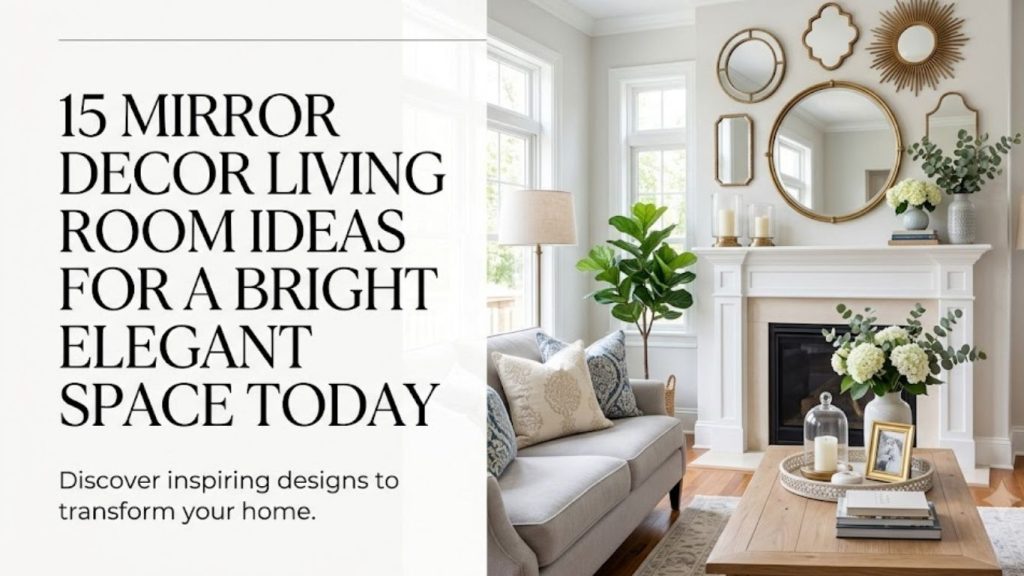
This long-form guide explains how to choose, place, style, and care for mirrors in the living room. You’ll get five practical items to buy right away to make mirror styling easier, a short planning note, and then 15 detailed, numbered ideas (each with placement and styling tips) that you can implement today. Whether you want to create a bright, airy space or a moody, gallery-like room, mirrors can help you reach your goal faster and more affordably than most decor pieces.
5 Items to Buy Now
1. A high-quality hanging kit and level
A beautiful mirror deserves secure hardware. Buy a heavy-duty hanging kit rated for the mirror’s weight, including toggle anchors, wall hooks, and D-rings or French cleats. A small laser or bubble level is indispensable for perfect alignment — nothing ruins a vignette like a slightly crooked mirror. If your wall is plaster, look for hollow-wall anchors or coach screws; for brick or masonry, use masonry anchors and a hammer drill. Investing in proper hardware protects both the mirror and your wall, and speeds up installation so the mirror looks professionally hung.
2. Felt bumpers and rubber spacers
Protect finishes and prevent rattling with adhesive felt bumpers or rubber spacers. These tiny accessories stick to the mirror’s back, keeping the glass slightly off the wall to avoid scuffs and to help the mirror hang level. They also reduce vibration when doors close or speakers thump low bass. Felt bumpers are cheap, easy to apply, and a must for expensive frames or mirrors with delicate finishes. Use thicker bumpers behind heavier edges for a flush mount or smaller ones for lightweight pieces.
3. A mirror-safe cleaner and microfiber cloths
Glass looks best when streak-free. Buy a mirror-specific cleaner or make a simple mix of distilled water with a drop of dish soap; avoid ammonia or abrasive cleaners on framed mirrors (they can damage metal leaf or gilt finishes). Microfiber cloths are ideal because they trap dust and lift oils without scratching surfaces. Use one cloth to wipe and another dry cloth to buff. For ornate frames, use a soft brush to remove dust from crevices before cleaning the glass. A dedicated cleaner keeps mirrors crystal clear, enhancing light and reflections.
4. A set of mirror mounting templates (kraft paper)
Before committing to drilling, create full-scale templates from kraft paper or brown packing paper. Cut circles, ovals, or rectangles the size of your mirror and tape them to the wall to test scale, sight lines, and spacing. This low-cost step prevents mistakes—you’ll see exactly how the mirror reads above a sofa or mantel and whether it competes with artwork or lighting. Templates let you check reflections (you might not want the TV or a cluttered shelf reflected) and make precise measurements for a professional-looking installation.
5. A smart LED accent light or picture light
A mirror framed by the right light becomes a luminous focal point. Invest in an LED picture light or a slim backlit LED strip that can be mounted above or behind the mirror. Warm-tone LEDs (2700–3000K) add ambient glow, while dimmable fixtures allow you to change mood and reduce glare at night. Backlit mirrors are especially effective in small living rooms because they produce an even halo that accentuates the mirror’s shape and brightens surrounding surfaces without harsh overhead glare.
Planning note: scale, sightlines, and reflections
Before you buy a mirror, think about three things: scale (how big the mirror should be relative to furniture or wall), sightlines (what the mirror will reflect), and mounting height (where the visual center should sit). A mirror over a console or mantel should generally be about two-thirds the width of the furniture below. For a mirror above a sofa, allow 6–12 inches between the sofa top and the mirror’s bottom. Avoid placing mirrors where they will reflect clutter or the TV unless that is intentional. Consider creating a template to test placement and always account for mounting hardware.
15 Mirror decor living room
1. Oversized floor mirror leaned against a wall for instant depth
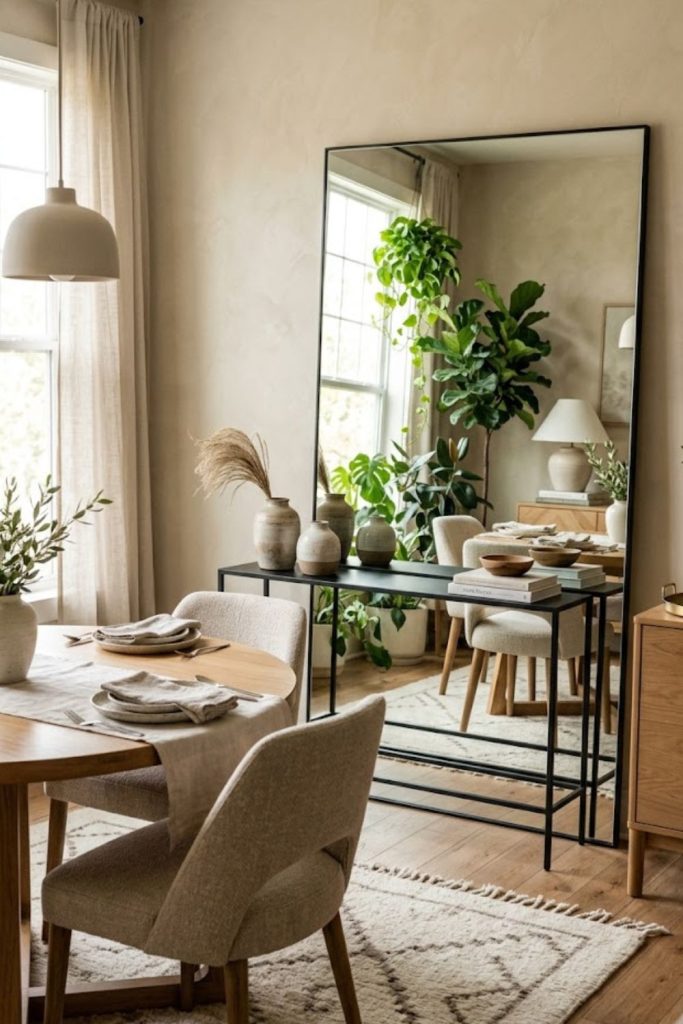
A large floor mirror, leaned rather than hung, creates immediate drama and depth. Place it in a corner or behind a narrow console to reflect the room’s best features—natural light from windows, an attractive sideboard, or a plant grouping. Leaned mirrors are forgiving for renters and are easy to reposition. Choose a tall mirror (6–7 feet) with a thin frame for a modern look or a thick, carved frame for classic elegance. When leaning, anchor it with non-slip pads and keep the top secured with anti-tip hardware for safety.
2. Mirror gallery wall with mixed shapes and frames
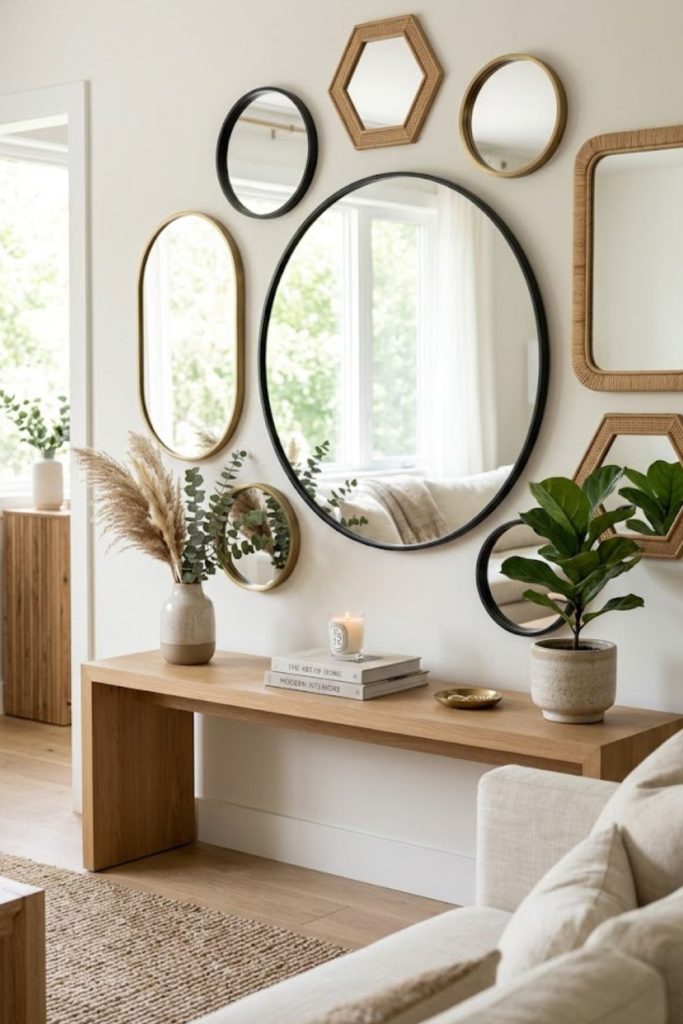
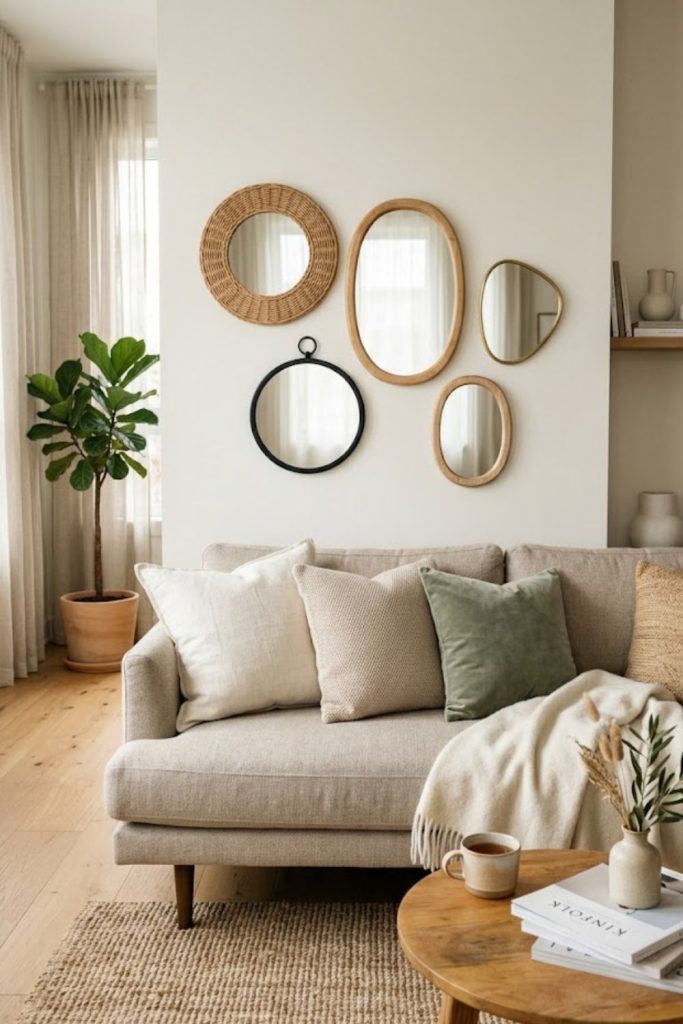
Instead of framed photos, use an intentional cluster of mirrors in different shapes and finishes for a reflective gallery wall. Mix round, oval, and rectangular mirrors with varying frames—matte black, brass, rattan—to add texture and interest. Start with the largest mirror as an anchor and arrange smaller ones around it, keeping 2–3 inches between frames for cohesion. Gallery mirrors work well above consoles, stair runs visible from the living room, or long blank walls. They both reflect light and create visual rhythm, making the space feel curated and lively.
3. Sunburst mirror as a vintage focal point
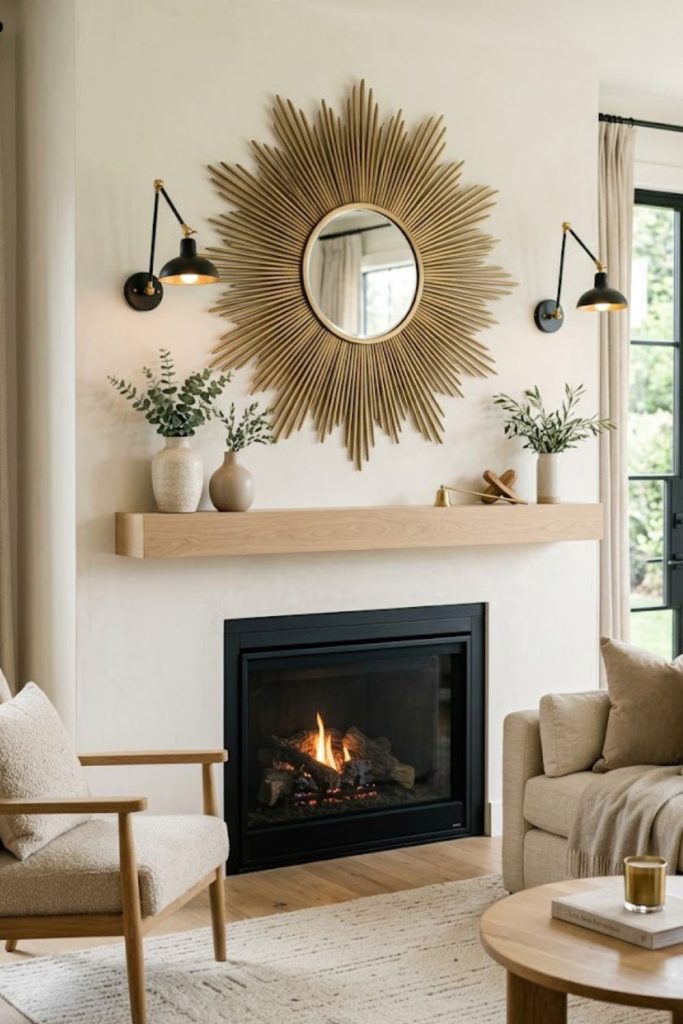
A sunburst mirror instantly reads as mid-century glamour or Hollywood Regency depending on finish. Place a gilded or metal sunburst above the mantel or sofa for a dramatic focal point. Its radial form draws the eye outward and bounces light through the room. Keep surrounding decor minimal so the sunburst can shine—pair it with two symmetrical sconces or a simple mantel arrangement. In modern rooms, a black or brushed brass sunburst adds sculptural contrast; in traditional spaces, go for gold leaf to amplify the ornate vibes.
4. Full-length mirror behind seating to multiply the view
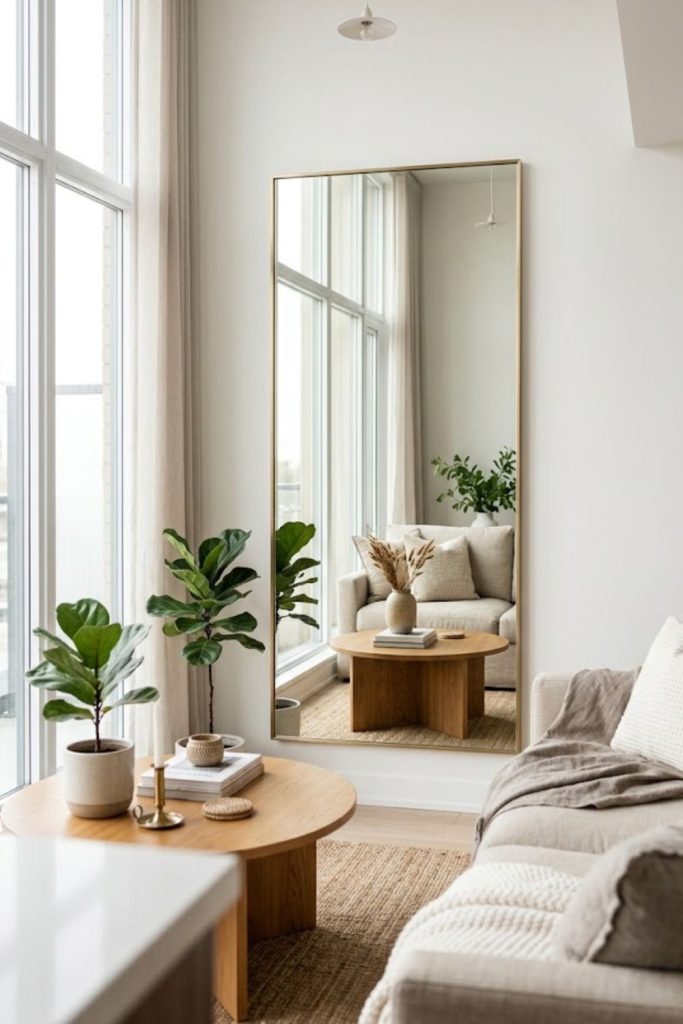
Mount a full-length mirror directly on the wall behind seating to visually widen the area. This technique is especially useful in long, narrow living rooms—mirrors create an illusion of parallel space, making the room feel twice as spacious. Use a floor-to-ceiling mirror or a tall, narrow panel depending on the wall proportions. Frame it in a finish that matches other metals in the room to create continuity. Avoid placing the mirror so low that it reflects only feet and the underside of furniture; aim to capture the height and activity of the space.
5. Mirrored coffee table or mirrored furniture for subtle reflection
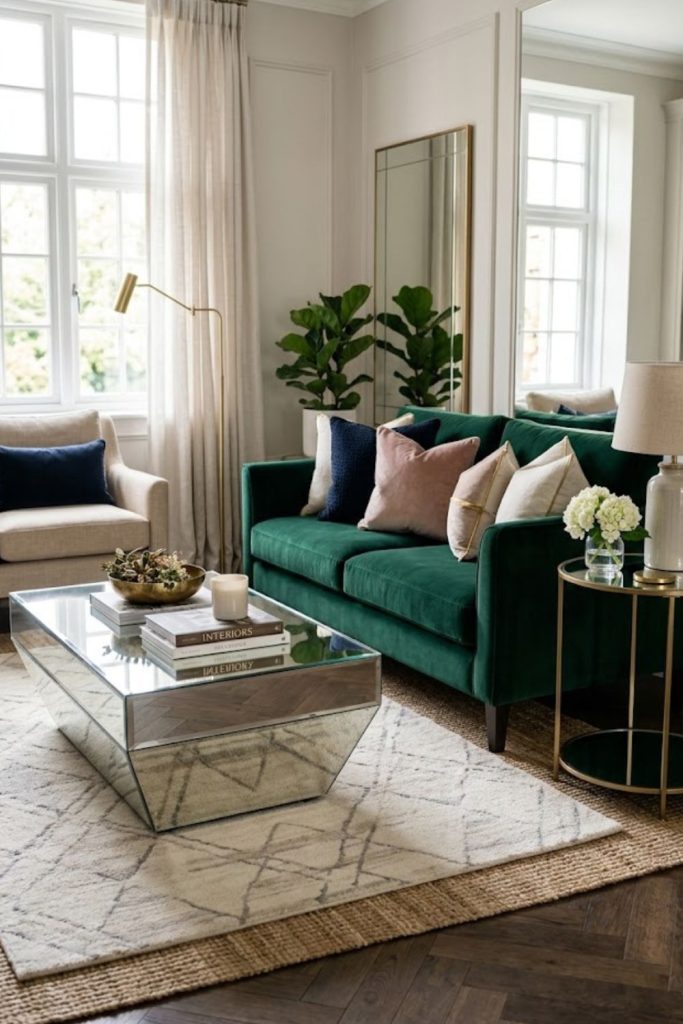
If you want reflective surfaces without glass wall mirrors, incorporate a mirrored coffee table, side table, or cabinet doors. Mirrored furniture adds glam and bounces light at eye level while serving functional needs. These pieces work well with velvet sofas, jewel tones, and layered rugs, balancing opulence with practicality. Use mirrored surfaces sparingly—one or two pieces in a room avoids an overstated look. Keep mirrored furniture clean and free of scratches; it becomes an elegant focal point that reads as intentional décor.
6. Backlit mirror above the fireplace for soft illumination
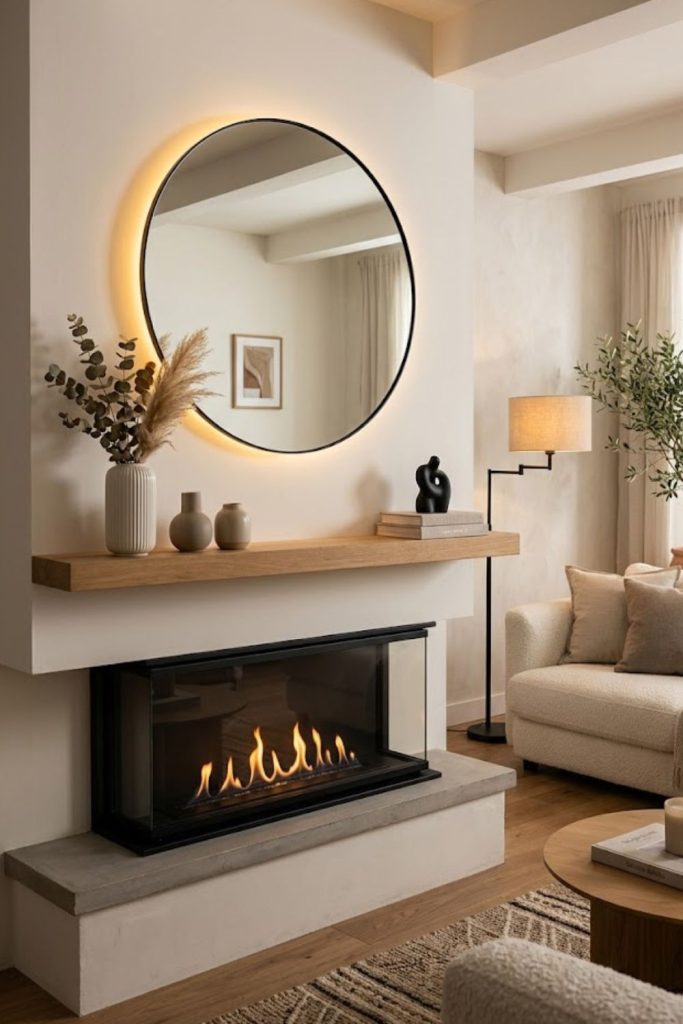
Install a rectangular or circular backlit mirror above the fireplace to create cozy, even illumination. The halo of light softens shadows and highlights the mantel without harsh overhead glare. Backlit mirrors are a modern and refined choice, especially in minimalist or contemporary living rooms. They also reduce the need for additional accent lighting. Choose warm LED tones for ambient evenings and incorporate a dimmer to adjust intensity. The glow will make the fireplace area feel like a designed vignette that’s both relaxing and spectacular.
7. Antique mirror with patina for old-world charm
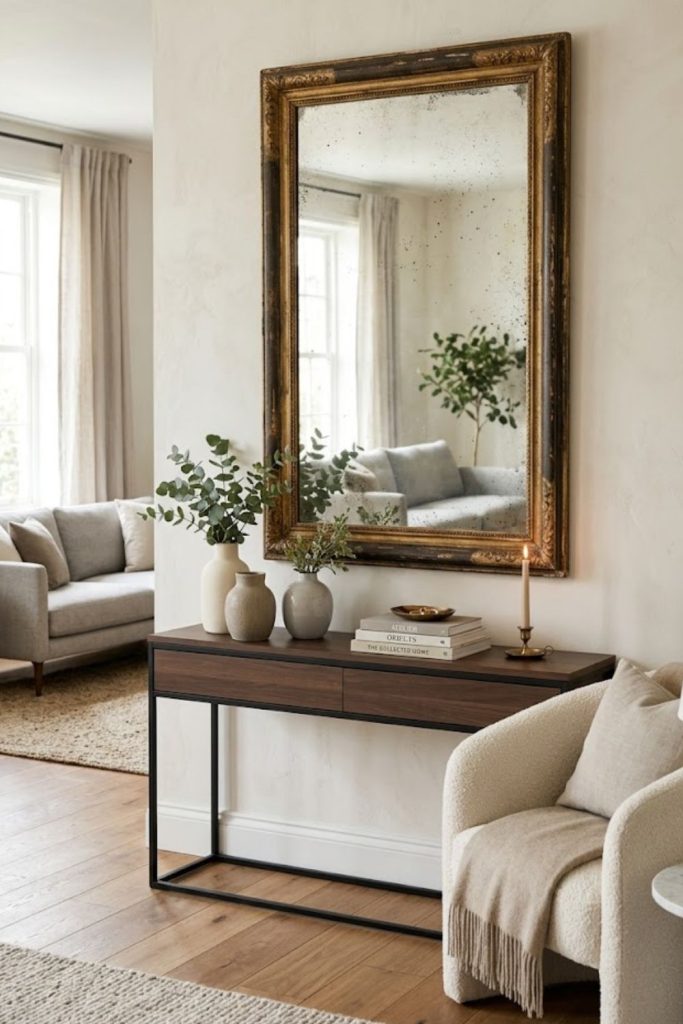
An antique mirror with foxing (small spots in the silvering) adds history and texture to a living room. Use it above a console or a sideboard to introduce a sense of time and craft. Pair antique glass with contemporary furniture to create an interesting contrast—old glass softens modern lines and makes the room feel collected rather than catalogued. When sourcing antiques, check the back and frame for stability; reinforce with appropriate hanging hardware as older frames may not have modern fixings.
8. Multipaneled or window-style mirror to mimic architectural detail
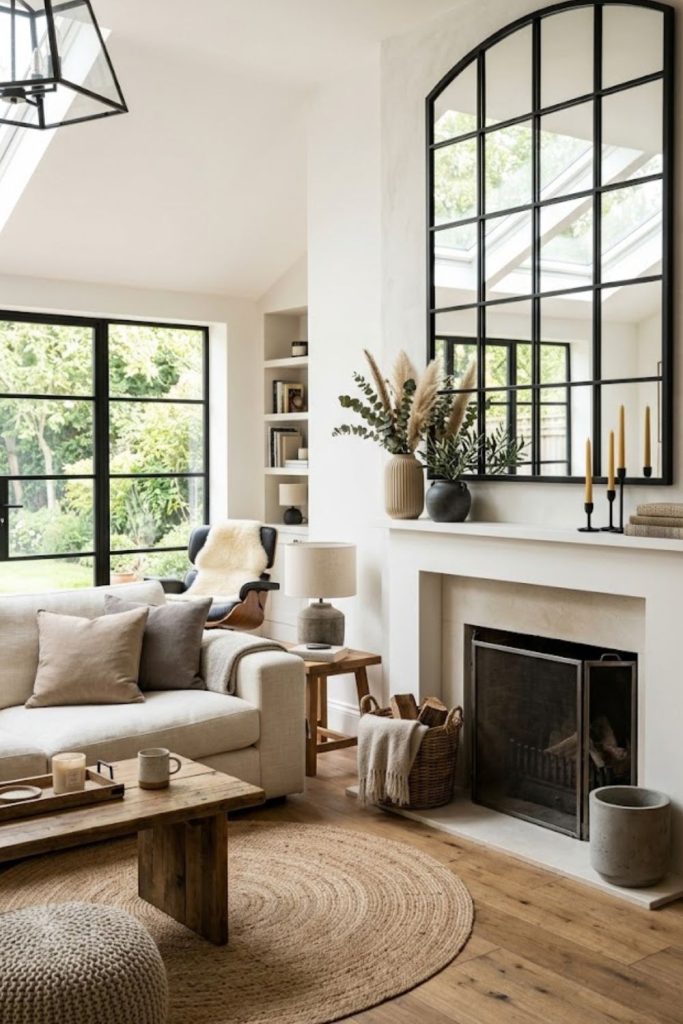
Mirrors composed of multiple panes or styled like old industrial windows bring architectural interest into the living room. They work beautifully over mantels or large wall expanses, creating a faux window that visually extends the room. Grid-style mirrors in black metal frames add an airy, industrial feel; wood-framed multipane mirrors lean rustic. These pieces are excellent for apartments with no view—they provide the illusion of another opening and bounce daylight into darker zones.
9. Decorative mirror above sideboard to balance symmetry
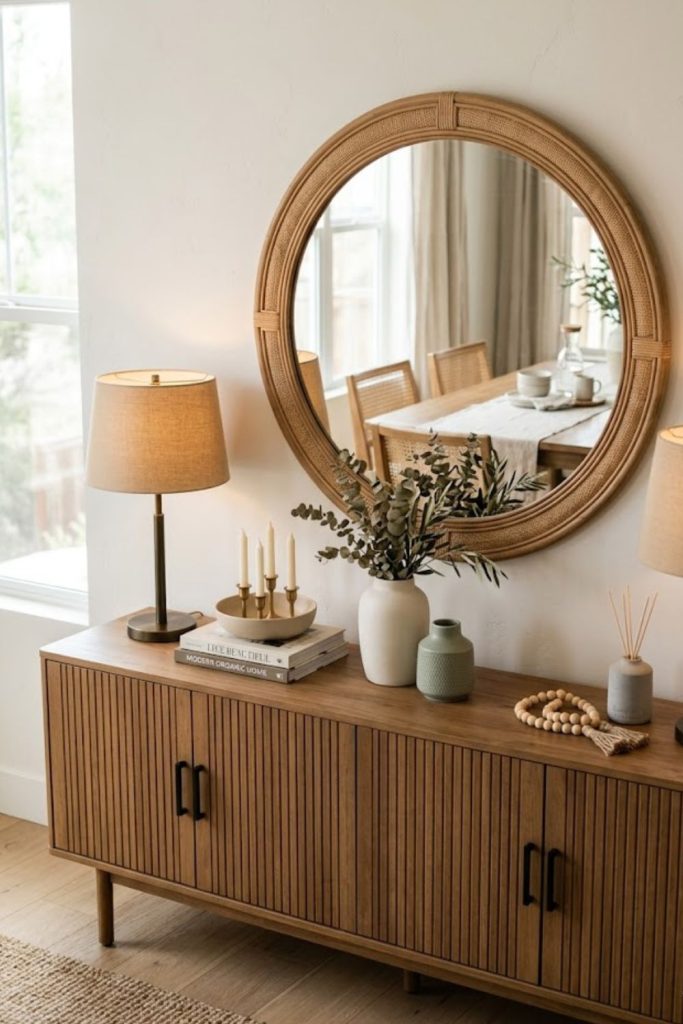
A medium-sized round or oval mirror centered above a sideboard creates a balanced, symmetrical vignette. Flank the mirror with lamps or matching sculptures for a composed look. This placement also doubles the decorative items placed on the sideboard, visually amplifying your styling. Use a mirror with a decorative frame (rope, rattan, brass) to add texture that complements accessories. It’s a reliable formula for entertaining areas—mirrors reflect platters and décor, enhancing the sense of abundance.
10. Mirrored panels as a feature wall for glamour
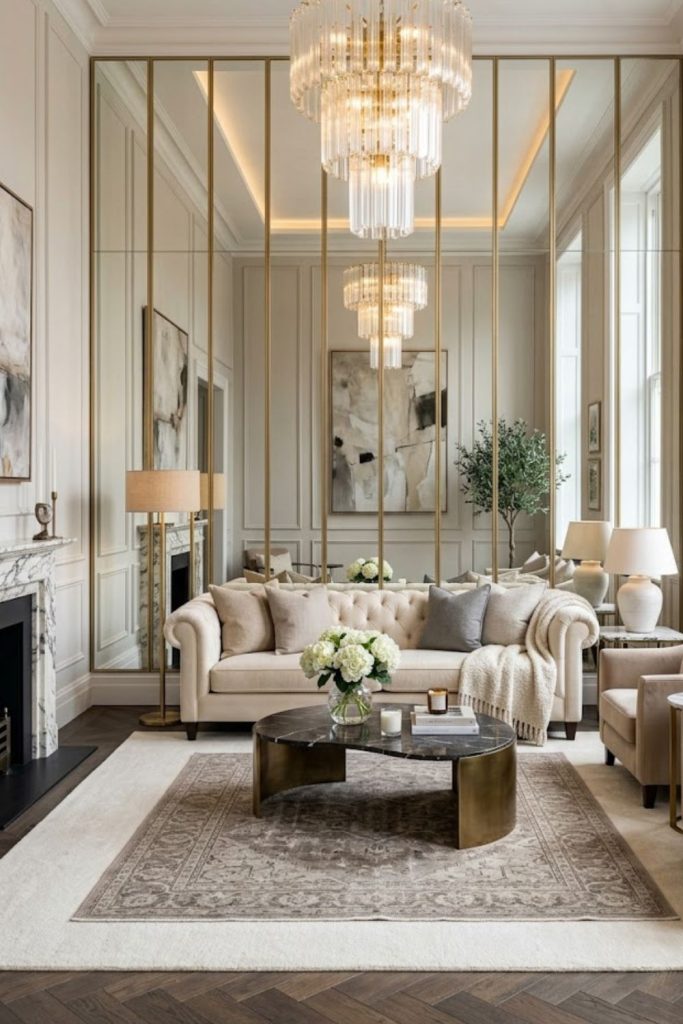
Install tall mirrored panels to cover an accent wall and create an ultra-glam backdrop. Panels can be full-length or segmented with framing, and they work well behind media walls, bar areas, or behind main seating. This approach is bold—use it in a focal zone, and keep the rest of the room subtle. Mirrored panels add depth and a luxe feel, particularly when paired with plush textiles, chandeliers, and metallic accents. Ensure privacy and reflections are considered; you may not want to reflect neighboring windows or busy areas.
11. Small decorative mirrors grouped over a sofa for texture
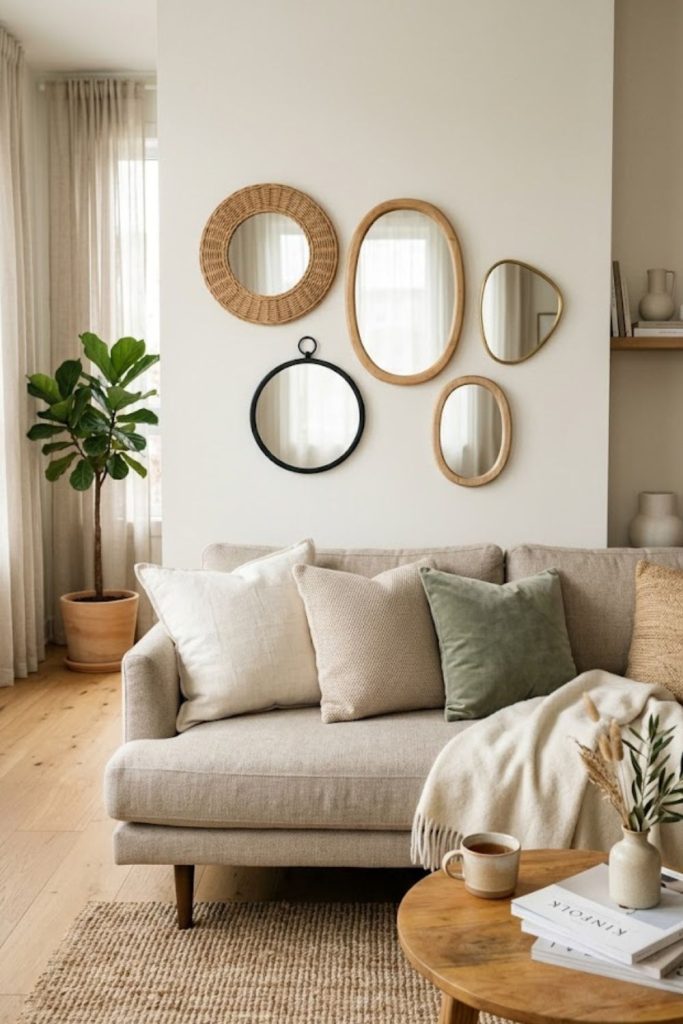
Group a trio or quintet of small mirrors over a sofa to create architectural texture without the dominance of a single large mirror. Use organic shapes and mixed materials—wicker, wood, metal—to add subtle variety. Keep spacing tight (2–3 inches) and align the cluster to the sofa’s center for harmonious balance. This arrangement works particularly well above low-profile sofas or consoles and gives the wall a layered, tactile character that complements cushions and throws.
12. Mirror tray staging on a coffee table for elevated styling
A mirrored tray on a coffee table reflects decorative objects—books, candles, small vases—creating a luxe, layered vignette. The tray focuses the eye and adds light at table level. Use a mirrored tray in brass or with a fluted edge to add glamour. It’s also practical: trays corral items and are easy to move when guests arrive. Keep the arrangement uncluttered—one or two focal pieces plus a complementing book looks curated and intentional.
13. Half-moon or arched mirrors to soften straight lines
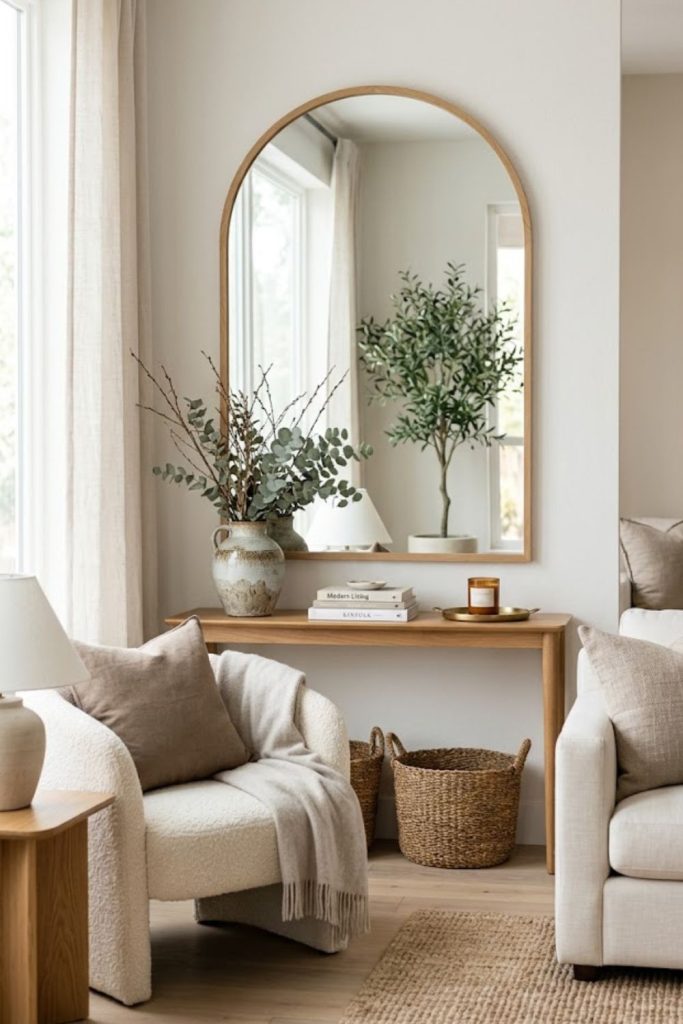
Arched and half-moon mirrors introduce a softer silhouette into rooms dominated by rectangular furniture. Place an arched mirror over a console, behind a reading chair, or centered on an accent wall. Its curve counterbalances angular sofas and shelving, creating visual relief and a calming focal point. An arched mirror with a slim metal or wood frame blends with many styles from Scandi to classic, making it a versatile choice for those seeking elegance with subtle softness.
14. Mirrored wall niches for artful vignettes
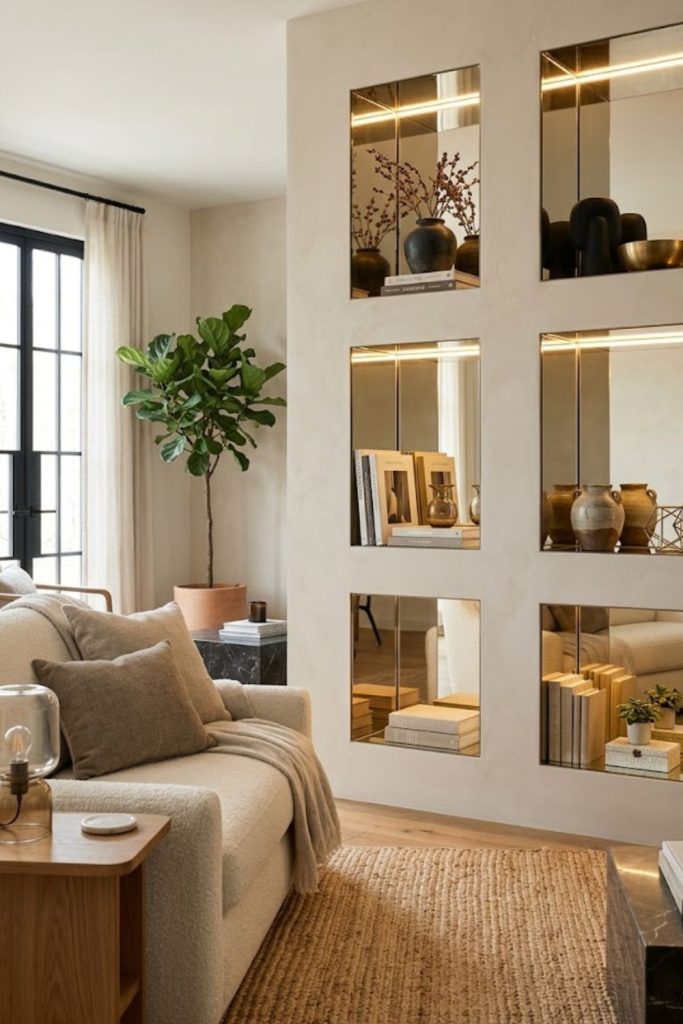
If your living room has wall niches or recessed shelving, back them with mirrored panels to add depth and spotlight objects. Mirrored niches make displayed pieces pop, creating mini stages within the room. Use warm LED strip lighting inside the niche to illuminate ceramics, books, or sculptures. This technique works especially well in narrow rooms where the mirrors amplify light and break up long, flat walls into rhythmic focal points.
15. Statement round mirror with oversized frame as a room anchor
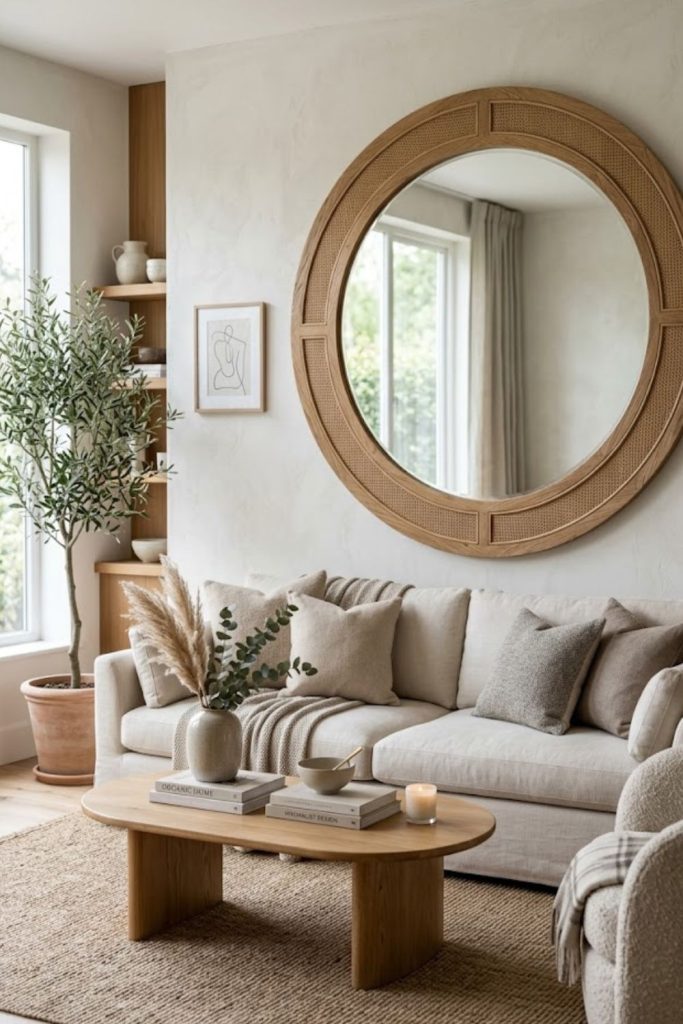
A large round mirror with a substantial frame (wood, rattan, brass, or plaster) anchors a living room like a piece of art. Place it above the sofa, mantel, or console; the circular shape unifies other design elements and creates a calm center. Oversized round mirrors read as both dramatic and soft—choose a textured frame to add tactility or a thin metallic rim for minimalist elegance. This classic silhouette is perennial: it suits modern, coastal, and traditional interiors alike.
Styling tips: frames, finishes, and mirror care
- Frames: Match or thoughtfully contrast the mirror frame with other metals and wood tones. If your existing pieces are brass, repeating brass in the mirror frame ties the room together. For eclectic rooms, a mix of finishes can feel curated—just ensure one finish dominates.
- Finish: Gilt and gold feel luxurious; matte black reads modern; rattan/woven frames add warmth and texture; antique patina brings history. Consider finish scale—small rooms often benefit from lighter frames to avoid a heavy feel.
- Care: Clean mirrors weekly with a glass cleaner and microfiber cloth. For framed pieces, dust frames with a soft brush first. Avoid spraying cleaners directly on gilded or delicate frames—spray the cloth instead. Keep mirrors out of direct, prolonged sunlight to prevent frame fading, and always secure large mirrors to wall studs or with anti-tip straps.
FAQ
What size mirror should I choose for my living room?
Choose a mirror that’s in proportion to the furniture or wall. Above furniture, aim for about two-thirds the width of the piece below. For empty walls, bigger mirrors create drama—full-length or oversized round pieces usually read well. Use kraft-paper templates to preview size.
Where should I place a mirror in a living room?
Common placements include above a mantel, console, sofa, or opposite a window to reflect light. Corners also benefit from leaned mirrors. Avoid placing mirrors where they reflect clutter or TVs unless that’s your intent.
Will mirrors make my living room look bigger?
Yes. Mirrors create the illusion of depth and reflect light, making rooms appear larger and brighter. Position them to reflect windows or open spaces for the best effect.
How do I hang a heavy mirror safely?
Use the appropriate anchors for your wall type and hang using D-rings, a French cleat, or heavy-duty mirror hooks. If in doubt, hire a professional installer. Always attach to studs for the safest support.
Can a mirror be used instead of art?
Absolutely. A mirror can function as both art and utility, especially if it has a decorative frame or interesting shape. Use it as a focal point or as part of a gallery wall.
Final Words
Mirrors do more than show reflections — they amplify light, expand space, anchor decor schemes, and act as sculptural elements in their own right. From oversized floor mirrors that double a room to small decorative clusters that add texture, there’s a mirror solution for every living room style and budget. Use the 15 ideas above as a starting point: test sizes with paper templates, think about sightlines, and layer light to maximize impact. With thoughtful placement and styling, mirrors will transform your living room into a brighter, larger, and more beautiful space that feels both intentional and welcoming.