There is something deeply comforting and timeless about a farmhouse-style living room. With its blend of rustic textures, natural materials, warm tones, and inviting charm, farmhouse décor evokes a sense of home, heritage, and relaxed comfort. Whether your house is in the countryside or in a busy city, a farmhouse-inspired living room can transform your space into a cozy retreat — one where family, friends, and simple moments feel special.
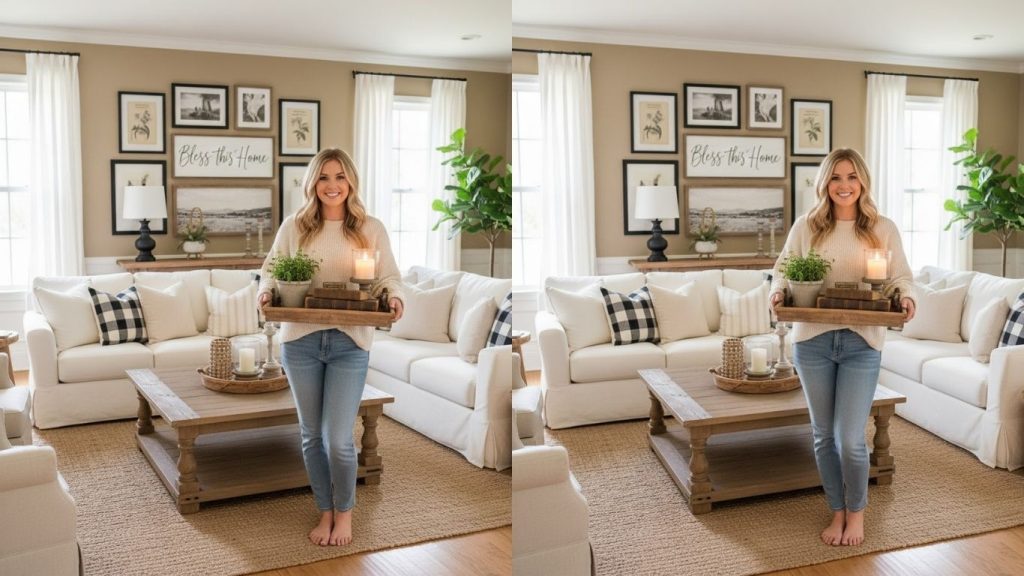
Farmhouse living room décor celebrates authenticity. It mixes weathered wood, soft textiles, earthy colors, vintage pieces, greenery, and handcrafted details. It’s less about perfection and more about personality, balance, and warmth. A well‑designed farmhouse living room feels lived‑in yet curated; humble, yet stylish.
If you’ve been dreaming of a living room that welcomes, soothes, and tells a story — this guide is for you. Below you’ll find five key items worth buying right away to anchor your style, then 15 fully detailed décor ideas, each with practical tips to help you bring farmhouse charm into your own home.
5 Items to Buy for a Farmhouse Living Room
1. Distressed Wood Coffee Table
A distressed wood coffee table — preferably reclaimed wood or finished to look aged — forms the heart of a farmhouse living room. It brings natural texture, warmth, and character. The imperfections in the wood (knots, grain variations, worn edges) add authenticity and charm. It pairs beautifully with neutral or linen‑upholstered sofas, woven rugs, and soft pillows. Whether rectangular or a rustic round pedestal style, this table instantly roots the living room in farmhouse heritage. It’s a timeless piece that ages gracefully with the home.
2. Woven Jute or Natural Fiber Rug
Flooring can make or break the farmhouse vibe. A woven jute or natural fiber rug offers earthy tones, durable texture, and organic warmth underfoot. Its neutral, earthy color palette anchors the furniture without competing for attention. A jute rug works perfectly beneath wooden furniture, coffee tables, or seating areas, creating a cozy, grounded space. It’s practical — easy to clean, hard-wearing — while enhancing the rustic, earthy aesthetic that defines farmhouse décor.
3. Linen or Cotton Slipcovers and Throws
Soft textiles are essential for balance — rough wood and hard surfaces need softness to feel welcoming. Linen or cotton slipcovers for sofas or armchairs, combined with throw blankets, add comfort and enhance the relaxed farmhouse feel. Choose neutral tones (cream, beige, oatmeal, soft gray) for subtlety, or add plaid, stripe, or heritage‑inspired patterns for character. These fabrics invite touch and make the living room feel homey and lived-in. Slipcovers also give flexibility for cleaning and seasonal refreshes.
4. Wrought‑Iron or Rustic Metal Accents
Metal accents — wrought‑iron candle holders, lanterns, rustic metal frames, aged metal lamp bases — bring structure, contrast, and depth to a farmhouse living room. They complement wood and soft textiles, enhancing the room’s character without overpowering. A pair of wall sconces flanking a fireplace, a metal-framed mirror above a console, or a lantern-style pendant light can anchor the space and emphasize the rustic charm. These details help bridge old-world farmhouse style with modern living.
5. Dried or Fresh Greenery in Rustic Planters
Plants soften hard surfaces and inject life into the room. Using greenery — whether fresh or dried — presented in rustic planters (terracotta, galvanized metal, woven baskets, or aged ceramic) brings nature indoors and enhances the farmhouse vibe. Olive branches, pampas grass, eucalyptus, or simple potted green plants work beautifully. They add height variation, texture, and a sense of organic calm that complements wood, metal, and fabric elements.
Setting the Stage: What Farmhouse Living Room Decor Means
Before diving into specific ideas, it helps to understand what defines farmhouse décor at its core. Unlike ultra-modern or minimal styles, farmhouse embraces imperfection and warmth. It values natural materials (wood, stone, metal, linen), soft neutral palettes, layered textures, found‑or‑aged items, and a balance between functionality and aesthetics. The goal isn’t to create a polished showroom — but a space that feels real, comfortable, and timeless.
When designing a farmhouse living room, think about balance: rustic and soft, old and new, structural and cozy. Use a mix of materials, allow for asymmetry and personal touches, and prioritize comfort without sacrificing design.
With that in mind, let’s move to the main section — 15 farmhouse living room décor ideas to inspire your own space.
farmhouse living room decor ideas
1. Build the Foundation with Neutral Walls and Soft Earthy Tones
Start with a light, neutral wall color — soft cream, warm white, or a gentle greige — to create a blank canvas that highlights farmhouse elements. Neutral walls allow wood tones, textiles, and decor items to stand out, and make the room feel light and airy. Next, layer in earthy tones through furniture, rugs, and accents: muted greys, warm browns, sandy beiges. This neutral-earthy foundation lets you build warmth and depth while keeping the room timeless. Avoid bold wall colors at first; farmhouse charm often lies in subtlety and cohesion.
2. Anchor Seating with a Rustic Wood Coffee Table and Natural Rug
With neutral walls, bring in a distressed wood coffee table and a woven jute (or natural fiber) rug to define your seating area. The wood table’s rough-hewn texture balances clean lines, while the rug softens underfoot and adds earthy warmth. Surround the table with sofas or armchairs upholstered in linen or cotton slipcovers. Add a woven basket nearby for throws or firewood (if you have a fireplace). This arrangement roots the room in rustic comfort, making it feel grounded, welcoming, and true to farmhouse roots.
3. Mix Textiles — Slipcovers, Throws, Cushions for Comfort & Character
Farmhouse style thrives on softness and layering. Use slipcovers for furniture to soften wood and structure. Drape chunky knit or linen throws over the sofa and chairs for warmth and visual interest. Mix cushions in neutral tones, plaids, stripes, or simple prints to add personality. The mix of textures — smooth linen, soft cotton, rough wool, cozy knit — creates a lived-in feel. These layers invite people to sit, relax, and stay awhile, which is the heart of farmhouse hospitality.
4. Use Wrought-Iron or Rustic Metal Lighting and Fixtures
Introduce rustic metal elements to add structure and contrast. Wrought-iron chandeliers, metal-framed lanterns, antique-style table lamps, or floor lamps with metal bases provide character. Overhead lantern-style lights or an aged-metal chandelier amplify farmhouse ambience. Pair metal fixtures with soft light bulbs for a warm glow. Wall sconces on either side of a fireplace or large mirror create symmetry and old-world charm. Metal details break up soft textures and wood with a distinct, grounded edge.
5. Incorporate Vintage or Distressed Pieces for Authenticity
One of the defining aspects of farmhouse décor is history and imperfection. Look for vintage or distressed items: a weathered trunk as a coffee table, an old wooden ladder used as a blanket rack, a vintage wooden crate for storage, an antique mirror with patina, or old farm tools repurposed as wall decor. These pieces tell a story, add character, and lend authenticity. Mixing them with modern, clean furniture gives your living room depth and personality — a space that feels collected over time rather than assembled all at once.
6. Add a Statement Fireplace or Faux Fireplace with Rustic Elements
A fireplace — real or faux — anchors a farmhouse living room like nothing else. Use a stone or brick surround for an authentic rustic look. Surround it with a thick wooden mantel that can hold candles, family photos, vintage jars, or seasonal decor. Place a cozy armchair, a woven basket with logs (or blankets), and a rug in front of the hearth. This setup exudes warmth, comfort, and old‑world charm. If a real fireplace isn’t possible, even a faux mantel or decorative hearth with candles and wood accents creates inviting ambiance.
7. Introduce Greenery in Rustic Planters for Life and Freshness
Furniture and wood can feel heavy — greenery brings life, softness, and color contrast. Use plants like olive trees, ferns, snake plants, or eucalyptus in terracotta pots, galvanized metal buckets, or woven baskets. Put one large plant in a corner and smaller potted plants across shelves or tables to balance texture and green bursts. Greenery softens the rustic tones, adds freshness, and helps the room breathe. Seasonal branches or dried grasses in simple vases also add rustic elegance.
8. Use Open Shelves or Wooden Bookcases with Curated Displays
Open shelving or wooden bookcases are ideal for showcasing farmhouse décor — think vintage books, rustic pottery, ceramic jars, woven baskets, framed black-and-white photos, candles, and small greenery. Avoid overcrowding: leave empty spaces to let the eye rest between objects. Use a mix of tall, medium, and small items for depth. Wicker baskets or ceramic containers store clutter while looking part of the décor. A curated shelf display reinforces the style and keeps your living room organized and visually rich.
9. Layer Lighting for Warmth — Floor Lamps, Table Lamps, Candles
Farmhouse living rooms should feel cozy both day and night. Layer your lighting: a central rustic chandelier or pendant, side table lamps with fabric or metal shades, a floor lamp beside a reading chair, and candlelight for ambience. Use bulbs with warm tones to enhance the rustic warmth. Candles in metal or glass lanterns add flickering glow and atmosphere. This mixture of light sources adds depth, comfort, and mood — the kind of softness that welcomes gathering, reading, or relaxing.
10. Incorporate Natural Textures: Jute, Wicker, Burlap, Linen
Texture is the silent hero of farmhouse décor. Combine natural materials generously: jute rugs, wicker baskets, burlap pillows, linen curtains, woven throws, wooden furniture. These textures complement each other and balance harder surfaces like metal and wood furniture. A wicker basket with blankets, a linen cushion, a burlap-covered throw over the armchair — these small details build a tactile, harmonious environment. Textures help you achieve rustic sophistication and comfort in one package.
11. Add Soft, Warm Color Accents Alongside Neutrals
While farmhouse décor relies heavily on neutrals and earth tones, accents of soft warm colors add character. Muted sage green, dusty blue, soft blush, terracotta, or mustard are good companions. Use these colors in accent pillows, pottery, small rugs, or art. For example, a dusty-blue ceramic vase on the coffee table, a terracotta throw over the sofa, or a mustard pillow among neutral ones. These subtle pops of color enhance warmth and prevent the palette from feeling too monotone.
12. Decorate with Rustic Wall Art and Mirrors with Wooden Frames
Wall décor ties the room together. Use rustic wall art — vintage farm prints, pastoral landscapes, black‑and‑white rural photography, or simple botanical sketches — framed in distressed wood or weathered frames. Large mirrors with wooden or metal frames help bounce light and make the room feel larger. Position mirrors opposite windows to maximize light, or above consoles or fireplaces for balance. Wall art and mirrors complete the look, offering visual interest and a sense of heritage.
13. Use Functional Storage That Doubles as Decor
In farmhouse living rooms, practicality combines with aesthetics. Choose storage furniture that looks beautiful: wooden chests, old trunks, woven baskets, vintage cabinets. Use them to store blankets, magazines, or everyday clutter. When closed, they maintain the rustic look; when open or layered with textiles and decorative objects, they add texture and warmth. This approach ensures your living room stays tidy while remaining inviting and homey.
14. Embrace Asymmetry and Imperfection for a Natural Feel
Farmhouse style isn’t about perfect symmetry—it’s about casual elegance and lived-in charm. Don’t be afraid to leave one shelf sparsely decorated, group objects unevenly, mix vintage with modern, or show rough edges. Let small imperfections shine: a chipped side table, weathered wood grain, slightly mismatched frames. This approach keeps the room authentic, relaxed, and personal. The beauty of farmhouse décor lies in its humanity — it welcomes imperfection and celebrates character over perfection.
15. Seasonal and Personal Touches: Change Decor with Time and Memory
One of the joys of farmhouse décor is its flexibility. As seasons change, rotate décor: in spring, fresh flowers in rustic vases; in autumn, dried branches, pumpkins, warm-toned throws; in winter, candles, cozy blankets, rustic lanterns. Add personal touches—family photos in simple frames, handcrafted items, souvenirs from travels, or handmade pottery. These details make the space uniquely yours, evolve with your life, and keep the living room dynamic and full of warmth.
Frequently Asked Questions
What colors complement farmhouse living room decor?
Neutral palettes — warm whites, creams, greiges, soft grays, taupe, sandy browns — form the foundation. Accents like muted sage green, dusty blue, terracotta, mustard, or even soft blush can complement well. The key is subtlety and a natural, earthy tone rather than bright, neon shades.
Can farmhouse decor work in small living rooms or apartments?
Absolutely. Use lighter neutrals on walls, choose compact furniture (slipcovered sofas, narrow coffee tables), rely on woven rugs, simple rugs, and vertical storage like open shelving. Use mirrors to reflect light, and keep décor balanced with negative space so the room feels open rather than cluttered.
How do I balance rustic and modern elements in farmhouse decor?
Mix natural materials (wood, wicker, jute) and vintage items with modern upholstery, clean lines, and minimalistic accents. For example: a sleek linen sofa paired with a distressed wood coffee table, or a metal-framed lamp next to woven baskets. Balance is achieved by repeating tones (neutral colors, soft textures) and limiting bold contrasts, keeping the style cohesive and intentional.
Do I need actual antique furniture to achieve farmhouse style?
No. What matters is appearance, texture, and intentional design. New furniture can be dressed up with slipcovers, distressed finishes, rustic accessories, and natural textiles to evoke a farmhouse feel. Vintage or reclaimed items add authenticity and character but aren’t strictly necessary.
How often should I update or refresh farmhouse living room decor?
You don’t need frequent overhauls. Instead, small seasonal updates — change throw blankets, rotate pillows, add seasonal greenery or dried florals, rearrange decorative items — keep your living room fresh and aligned with the seasons while maintaining the core style.
Final Words
A farmhouse living room isn’t just a design style — it’s a feeling. It’s warmth, comfort, history, simplicity, and welcome all rolled into one space. It’s where you sink into a comfy sofa under a soft throw, breathe in natural textures, enjoy the scent of wood, feel the patina of time, and relax in a room that tells a story.
By combining the right pieces — distressed wood, woven rugs, soft textiles, metal accents, greenery, vintage touches — and embracing balance, imperfection, and texture, you can create a living room that feels timeless and deeply personal. Use the 15 ideas above as a roadmap: pick what resonates with you, adapt it to your space, and let your living room evolve over time.