Small living rooms can feel warm, cozy, and wonderfully inviting—but only when the lighting is done right. Lighting influences how large a room appears, how comfortable it feels, and how well the design elements come together. In a compact living room, every bulb, lamp, and fixture has a major impact. The right lighting choices can create the illusion of more space, highlight your décor, soften harsh corners, and make your room feel bright and open instead of cramped or dull.
This complete guide explores 15 small living room lighting ideas designed to help you transform your space with minimal effort. These ideas are practical, achievable, stylish, and perfect for maximizing both the beauty and function of a small room. Before diving into the list, here are a few recommended items that will enhance lighting in any small living room.
5 Items to Buy for Enhancing Small Living Room Lighting
These items are affordable, versatile, and extremely effective for brightening small spaces.
Slim floor lamps
Slim floor lamps are ideal for small living rooms because they require very little floor space but provide excellent vertical illumination. Their tall, narrow shape draws the eye upward, making the ceiling appear higher. Placing one in a corner brightens the area without cluttering the room. Many slim floor lamps also come with adjustable heads or multiple light settings.
LED strip lights
LED strip lights are perfect for creating soft, ambient lighting without taking up physical space. You can install them behind the TV, under shelves, along ceiling molding, or behind furniture to create a floating effect. Their gentle glow makes small rooms appear larger and more stylish.
Wall-mounted sconces
Wall sconces save floor and table space while offering beautiful lighting. They can provide task lighting, ambient lighting, or accent lighting depending on placement. Wall sconces contribute elegance and help open up the room by eliminating the need for bulky lamps.
Multi-functional smart bulbs
Smart bulbs give you complete control over your lighting. You can dim them, change color temperature, or schedule brightness automatically. In a small living room, this flexibility helps you create different moods without adding multiple fixtures.
Table lamps with built-in shelves
Combination furniture helps maximize compact rooms. A table lamp that includes small shelves or storage makes your living room feel organized while providing additional light. This type of lamp works especially well beside a sofa or in a reading corner.
Understanding the Importance of Lighting in Small Living Rooms
Lighting plays a major role in the perception of space. In small living rooms, poor lighting makes the area feel cramped, shadowy, and uninviting. Good lighting, on the other hand, opens up the space, reduces harsh contrasts, creates softness, and improves functionality. By using multiple layers of lighting—ambient, task, and accent—you can create depth and dimension, making the room feel larger than it actually is. Strategic lighting can also highlight architectural features, reflect off walls, and draw attention to your favorite décor pieces.
Small Living Room Lighting Ideas
1. Use layered lighting to create dimension
Layered lighting is one of the most effective techniques for small living rooms. Instead of relying on a single ceiling fixture, combine different light sources—ambient lighting for overall brightness, task lighting for specific activities, and accent lighting to highlight decorative elements.

When layered correctly, the room feels more dynamic and less confined. Soft glows from various directions eliminate dark zones and make the space appear open. Layering also allows you to adjust the lighting based on time of day or mood, giving your small living room a flexible, welcoming atmosphere.
2. Install ceiling-mounted fixtures to save space
Ceiling-mounted fixtures are excellent for small living rooms because they free up valuable floor and table area. Flush-mount or semi-flush-mount lights provide ample illumination without hanging too low or crowding the space.
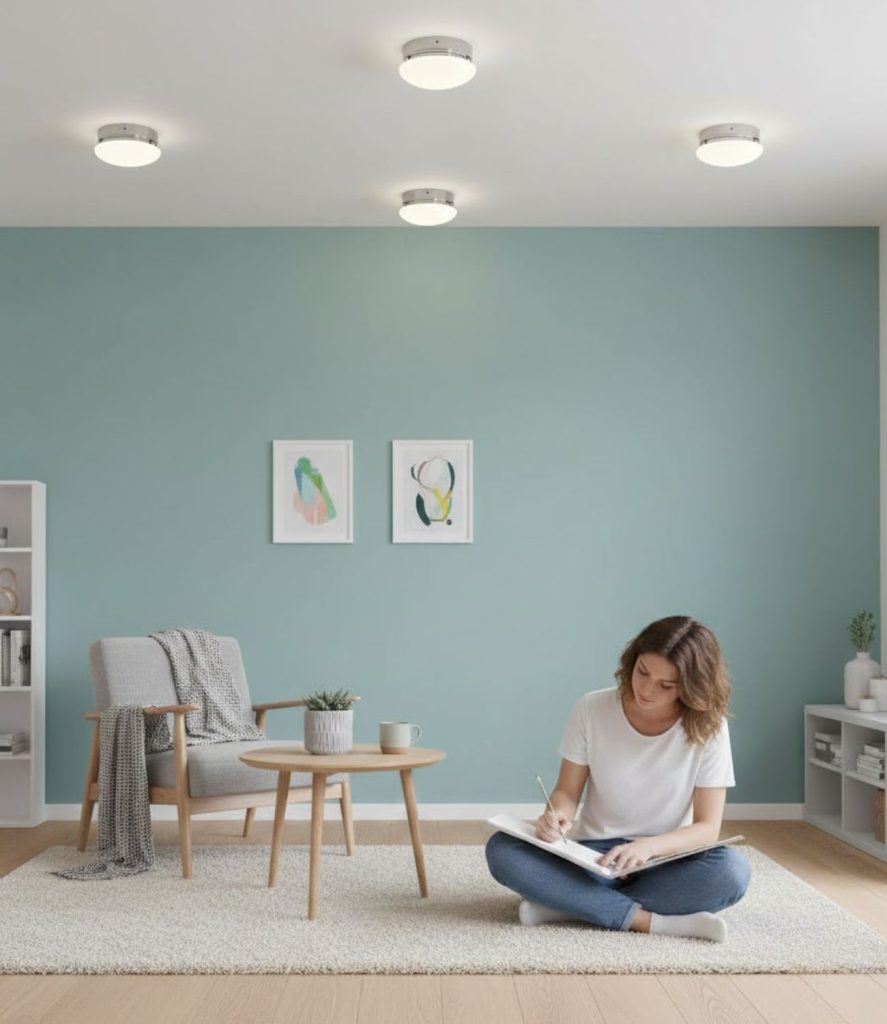
They distribute light evenly across the room, preventing shadows that make rooms look smaller. Choose light fixtures with clean lines or simple designs to keep the space visually uncluttered. Since ceiling lights are centralized, they are perfect for creating bright, general illumination while allowing you to add accent lighting elsewhere.
3. Use sconces to free up floor and table space
Wall sconces brighten your living room without occupying floor space or surfaces. They add elegance, functionality, and convenience to small rooms. Whether placed beside the sofa, near the entryway, or on an accent wall, sconces provide a warm, inviting glow that makes the room feel larger.
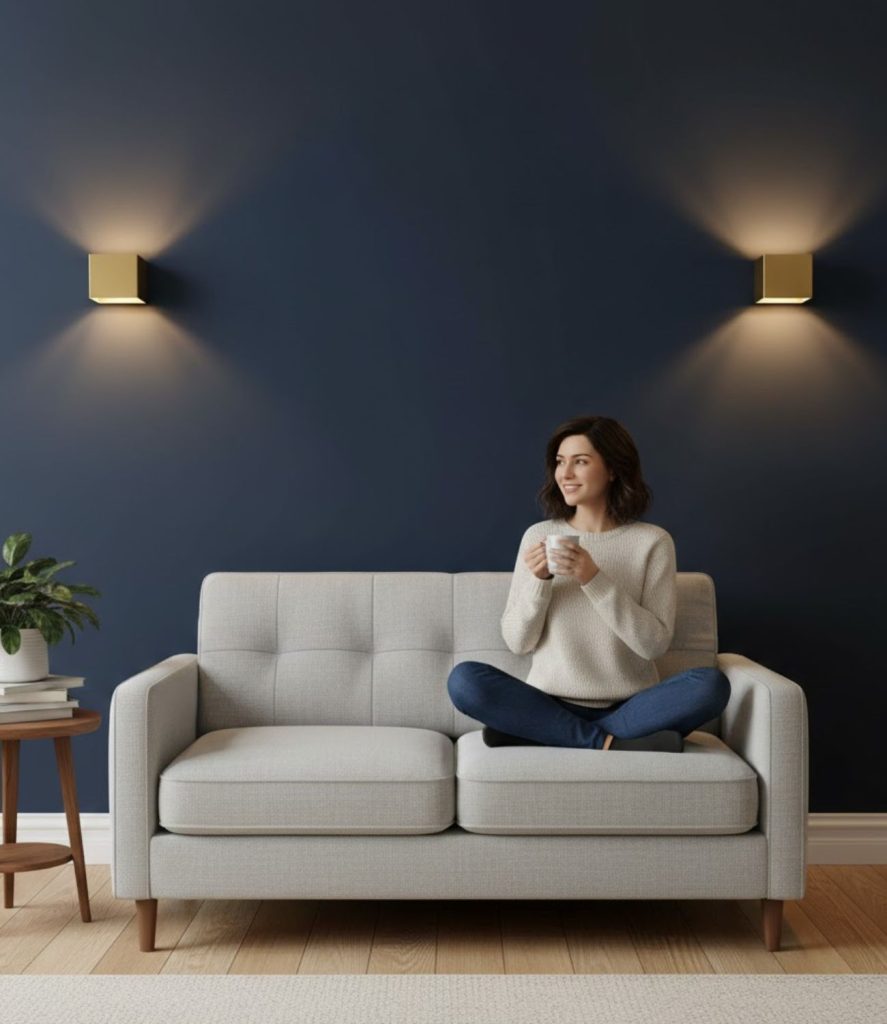
Since sconces direct light both upward and downward, they help soften shadows and elongate the walls. They’re perfect for highlighting décor or adding ambiance. Choose sleek, low-profile sconces to maintain a clean and spacious look.
4. Add LED strip lights for soft ambient glow
LED strip lights are perfect for adding subtle, stylish illumination to small living rooms. Their flexible design allows them to be placed in various creative spots—behind the TV, under floating shelves, along the ceiling, or beneath furniture edges.
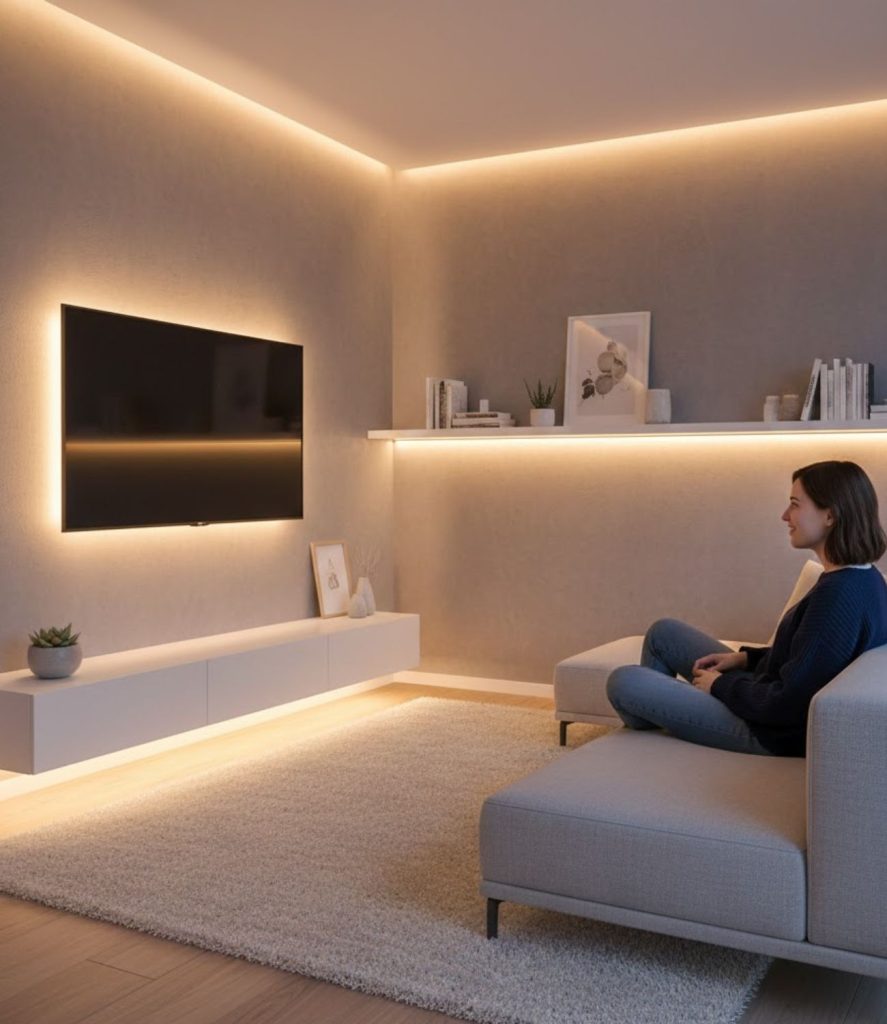
This indirect lighting technique spreads a soft glow that enhances depth without overwhelming the eyes. Because strip lights don’t take up physical space, they’re ideal for small rooms. They also make furniture appear to float and add a modern touch without cluttering the area.
5. Choose glass or translucent light fixtures
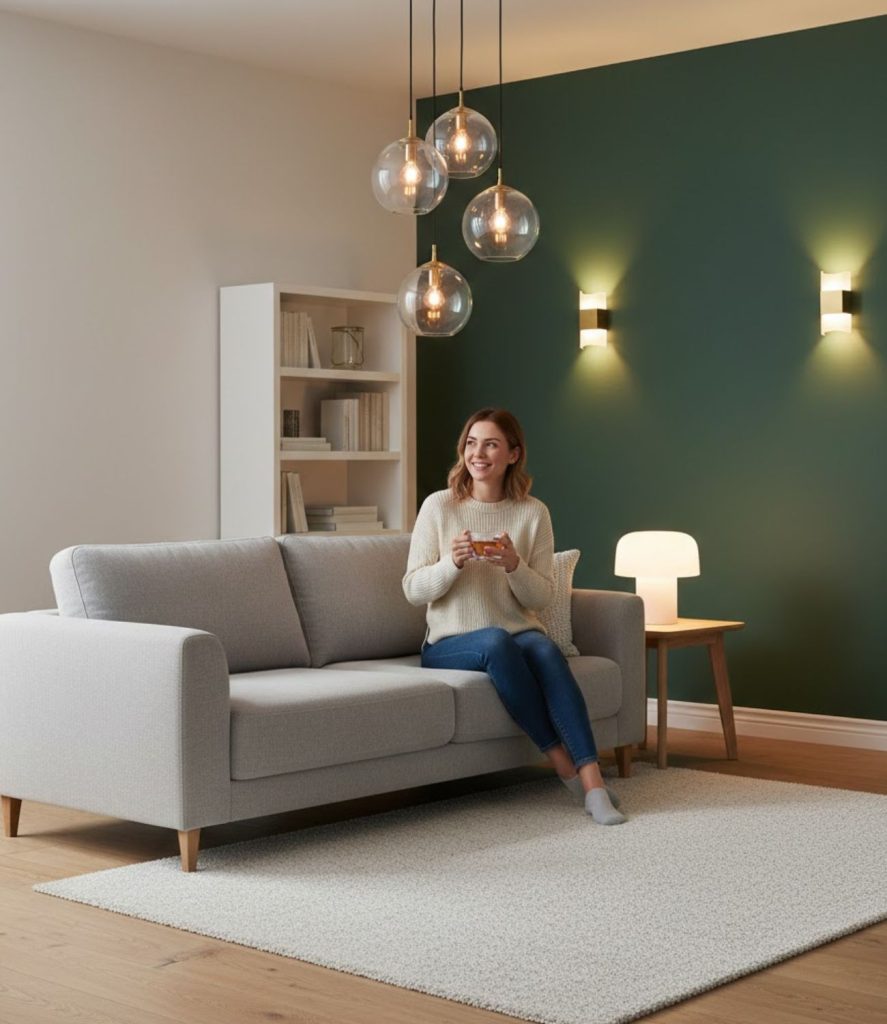
Glass or translucent fixtures create an airy, open feeling in small living rooms. Unlike bulky or opaque designs, these fixtures allow light to pass through, reducing visual weight and enhancing brightness. Clear glass pendants, frosted shades, or acrylic diffusers work well for general lighting while keeping the room feeling spacious. These fixtures also complement any décor style—modern, rustic, minimalist, or traditional. They reflect and amplify light, making the room appear larger and more open.
6. Add a slim floor lamp in a dark corner
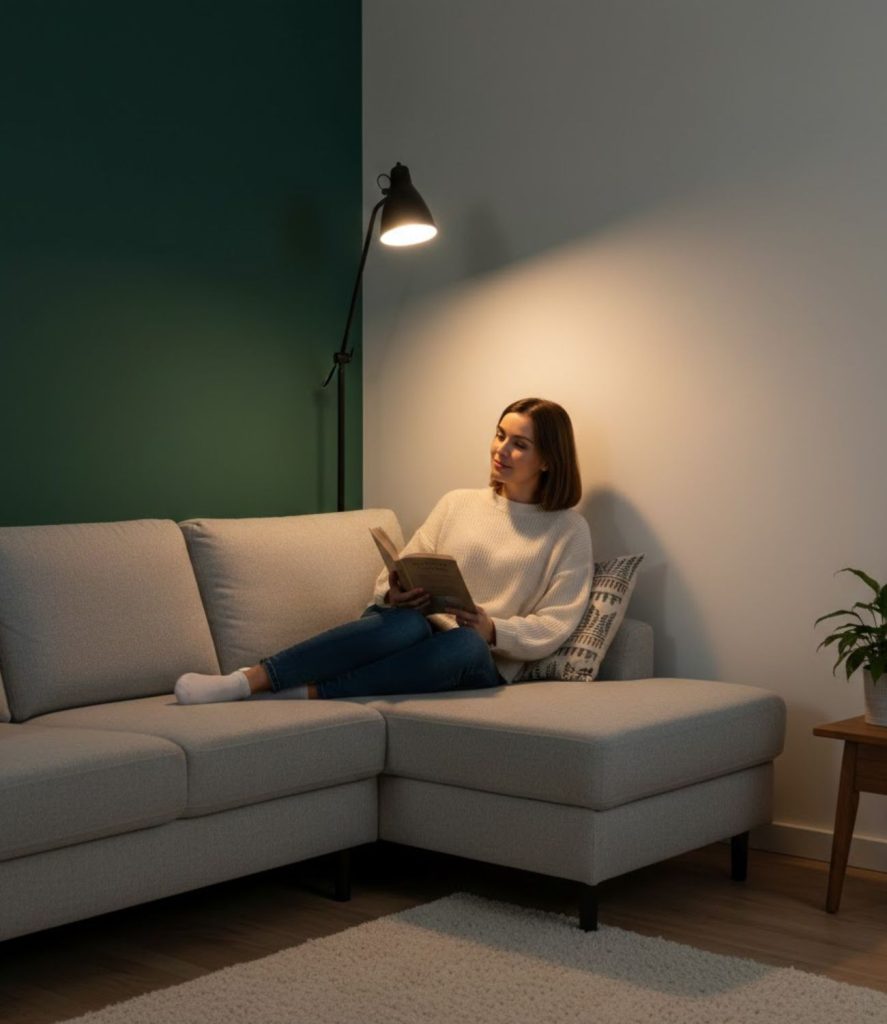
A slim floor lamp is a smart lighting solution for small rooms because it adds vertical illumination without occupying much space. Position the lamp in a dark corner to brighten the area and make the room feel balanced. A tall lamp draws the eye upward, giving the illusion of higher ceilings. Choose a design with an adjustable head or multiple bulbs to get more flexibility. Slim floor lamps also work well behind sofas or next to accent chairs.
7. Use a mirror to reflect and amplify light
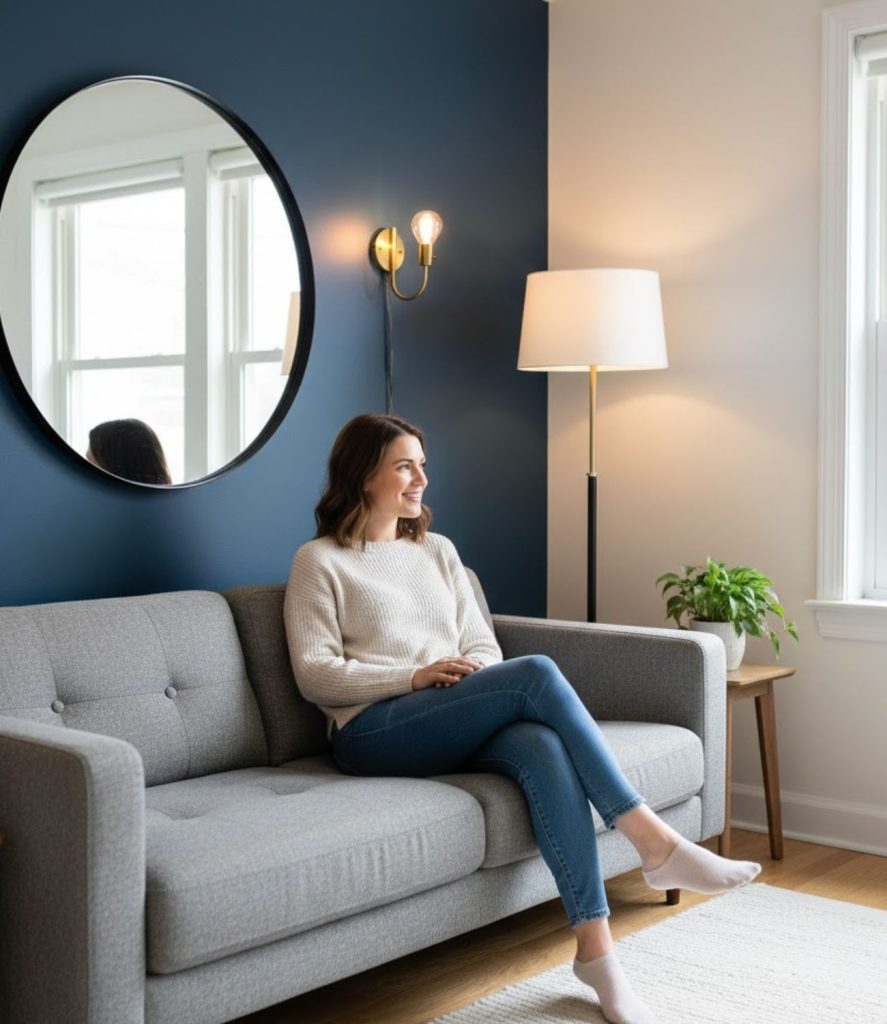
Mirrors work wonders in small living rooms by reflecting light and visually expanding the space. Place a mirror opposite a window or near a lamp so it can bounce light throughout the room. This technique increases brightness, reduces shadows, and creates the illusion of a larger area. Mirrors with simple frames work best because they maintain a clean aesthetic. Pairing lighting with mirrors helps brighten the entire room naturally and efficiently.
8. Highlight architectural features with accent lighting
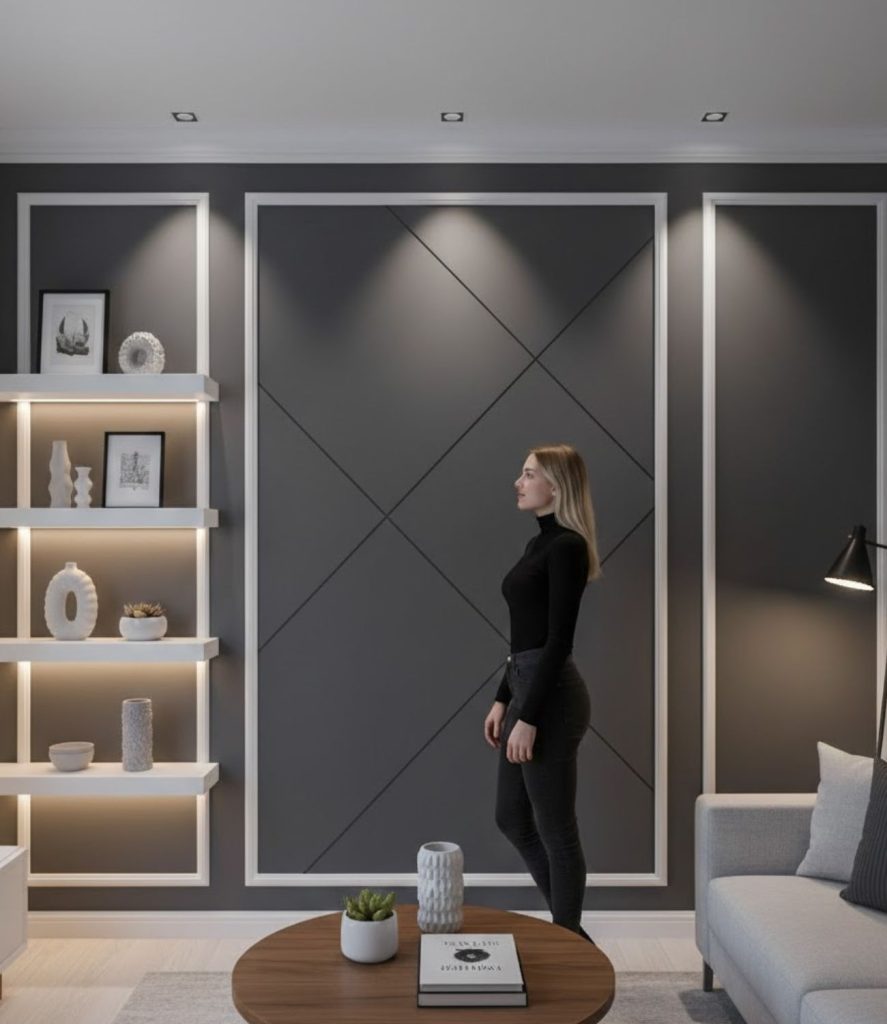
Accent lighting draws attention to unique architectural details—such as textured walls, built-in shelves, archways, or crown molding. These highlighted areas create depth and dimension, making small living rooms appear more spacious and sophisticated. You can use small spotlights, LED strips, or directional fixtures to illuminate these features. Accent lighting not only adds beauty but also helps guide the eye around the room, creating a sense of flow that breaks up the visual compactness of the space.
9. Install track lighting for flexibility
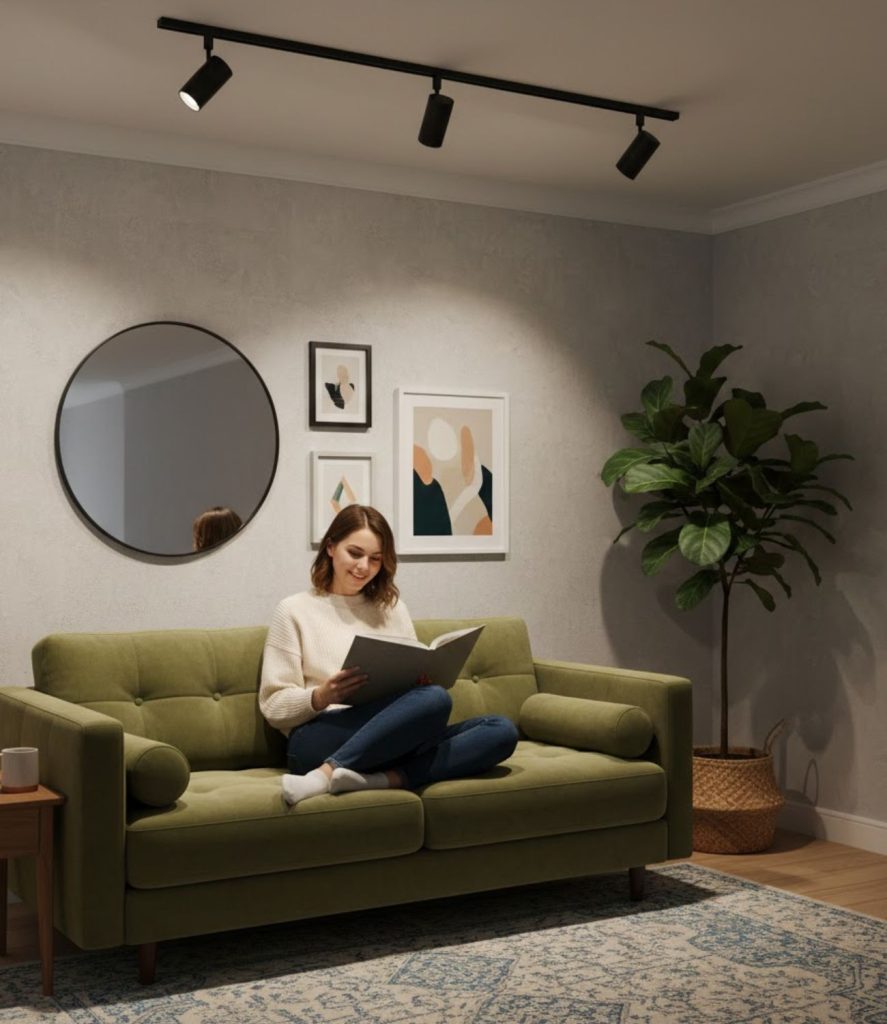
Track lighting is ideal for small living rooms that require adaptable illumination. Its adjustable heads let you aim light exactly where needed—toward artwork, seating areas, or dark corners. Track lighting also eliminates the need for multiple lamps, helping reduce clutter. Choose low-profile track rails if your ceilings are low, or opt for curved tracks to soften the room’s lines. This versatile lighting option gives you both functionality and style while enhancing overall brightness.
10. Choose warm LED bulbs for inviting ambiance
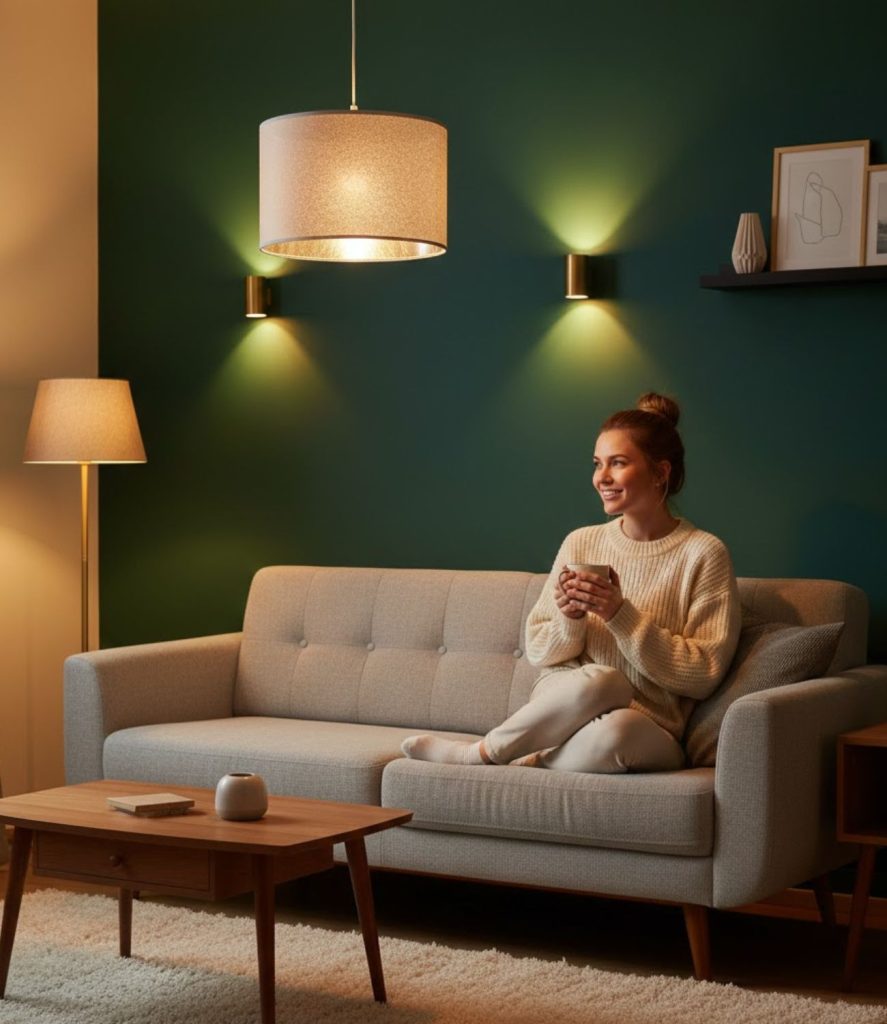
Lighting temperature has a major influence on how your small living room feels. Warm LED bulbs create a cozy, relaxing atmosphere without overpowering the space. They are flattering to skin tones, gentle on the eyes, and ideal for evening use. Unlike harsh white bulbs, warm LEDs soften edges and minimize shadows, making the room feel larger and more comfortable. Since they are energy-efficient and long-lasting, they’re perfect for frequent use in compact spaces.
11. Use pendant lights sparingly but strategically
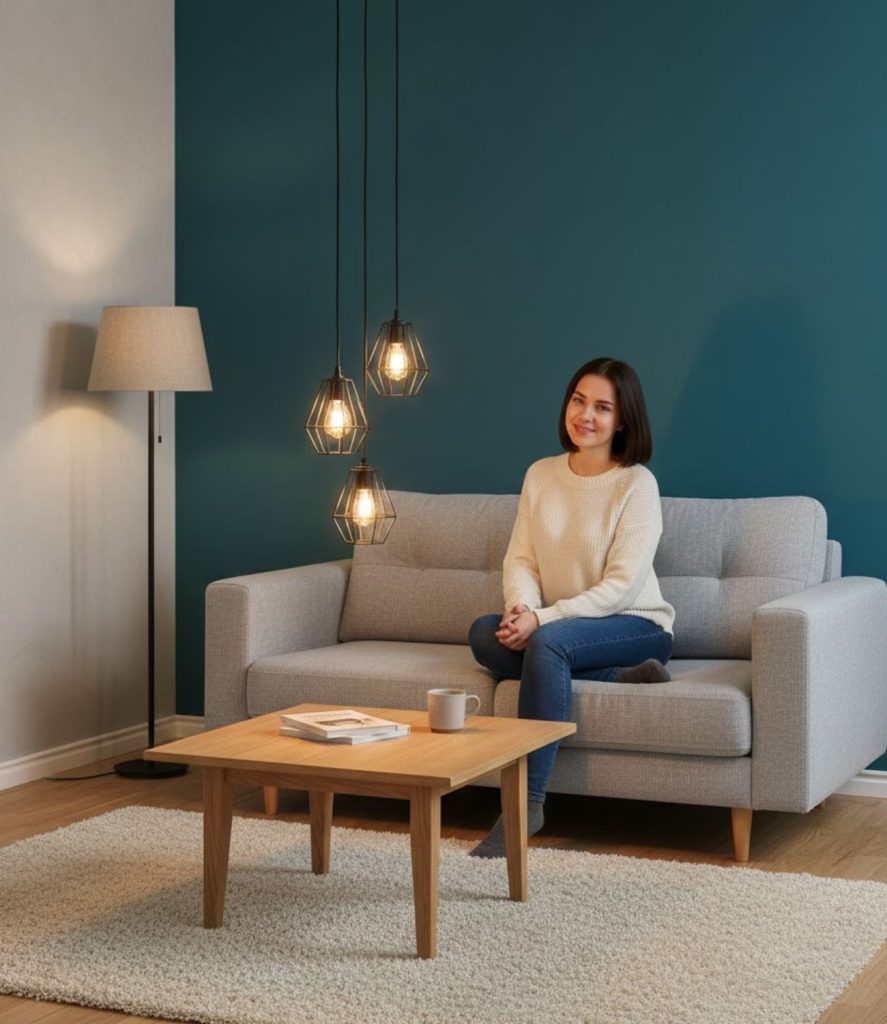
Pendant lights can be used in small living rooms as long as they are chosen and placed thoughtfully. Opt for small, lightweight pendants that do not hang too low. They should enhance the room rather than dominate it. Use a pendant over a coffee table or near a corner seating zone to introduce focused lighting without crowding the area. Glass or open-frame pendants are particularly effective because they allow light to flow freely and maintain an airy feel.
12. Add a table lamp with a narrow base
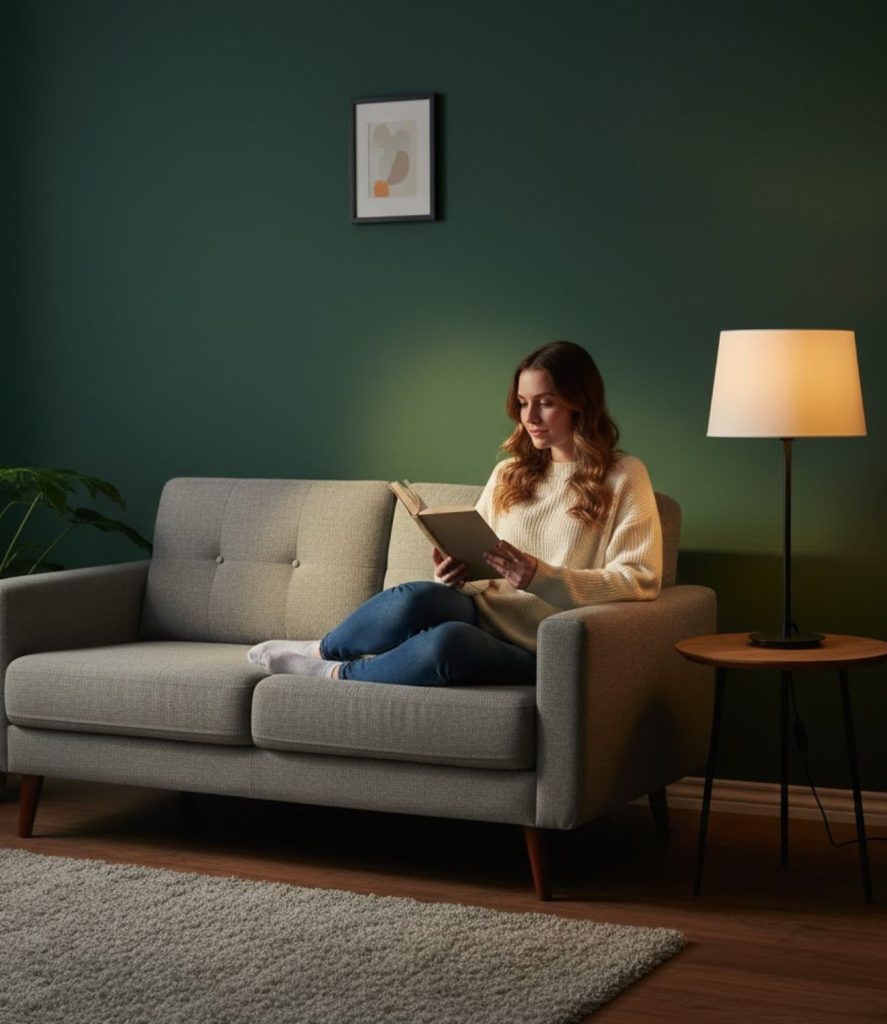
Table lamps provide soft, localized lighting, perfect for reading or creating ambiance. For small living rooms, choose lamps with narrow bases or tall, slim designs. This ensures the lamp provides ample light without taking up too much tabletop space. Place the lamp on a side table, console, or floating shelf to brighten the room without contributing to clutter. The right table lamp adds both charm and functionality to compact living spaces.
13. Use uplighting to visually expand the room
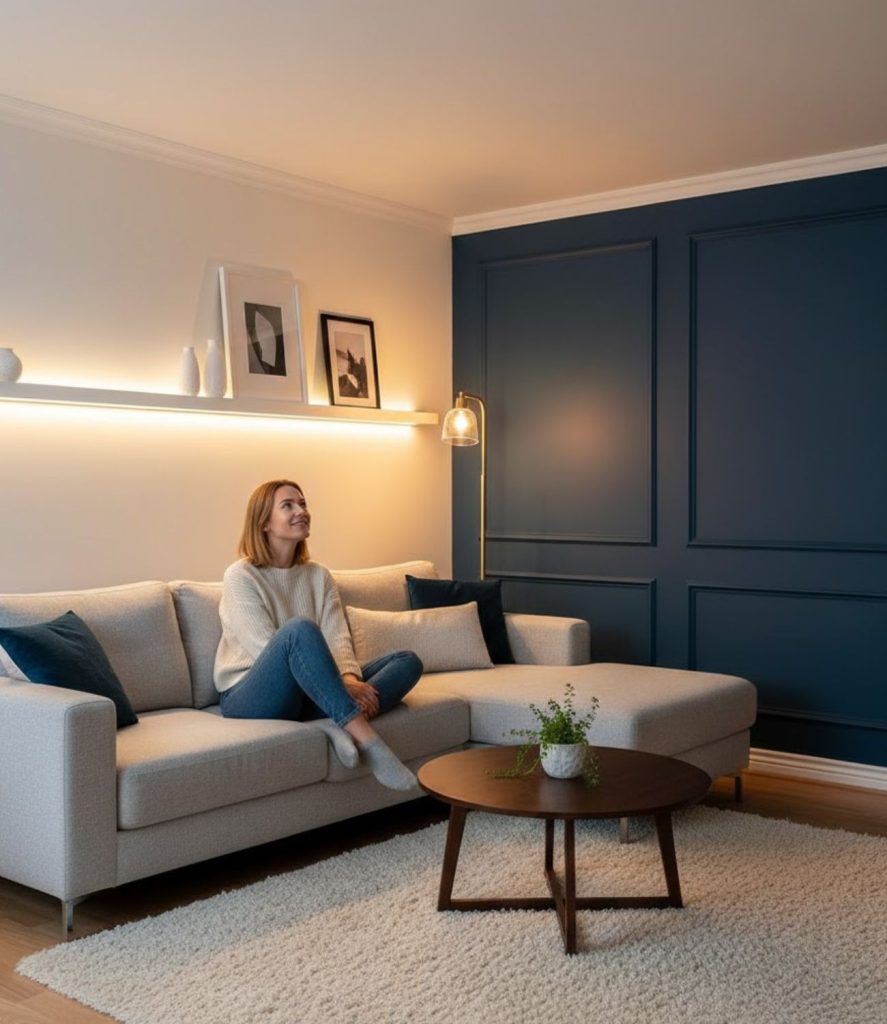
Uplighting pushes light upward toward the ceiling, creating a bright, open effect. This technique makes ceilings appear higher and expands the room visually. You can use floor lamps with upward-facing globes, wall-mounted uplights, or LED strips placed behind furniture. Uplighting softens the environment and reduces harsh shadows, making the small living room feel airy and comfortable. It’s an excellent option for rooms with dark corners or low ceilings.
14. Add lighting behind the TV for balanced brightness
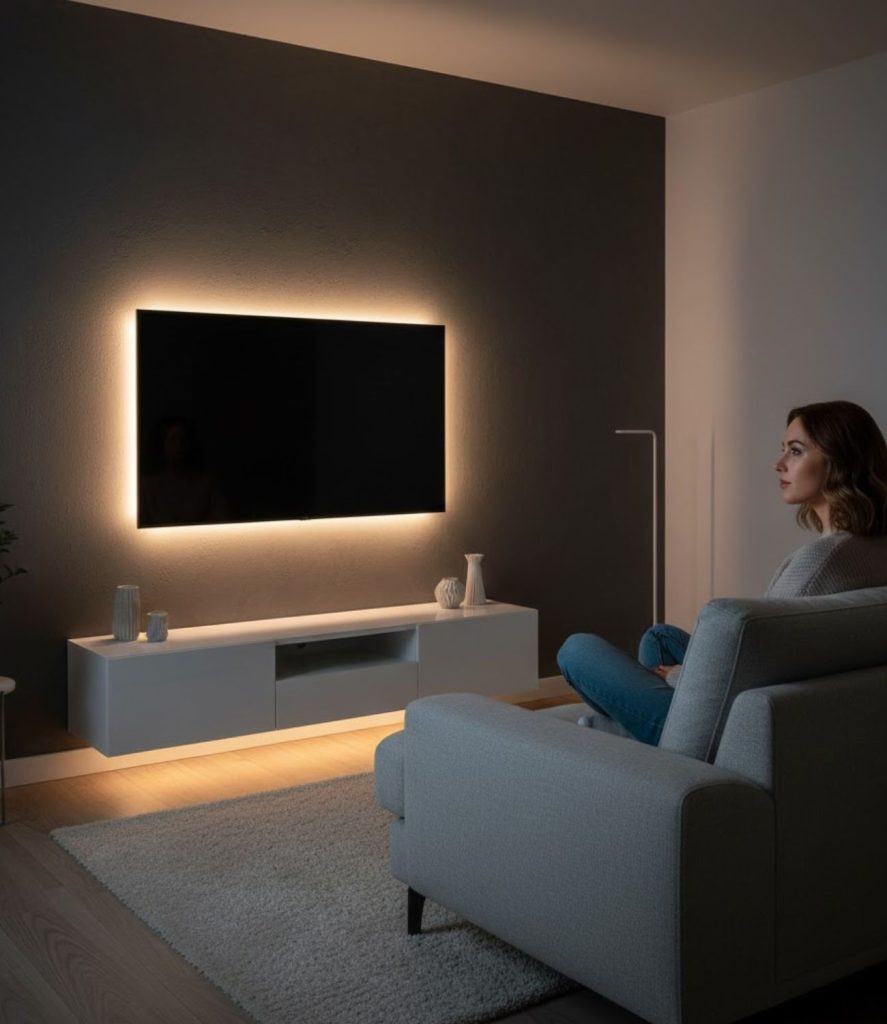
Placing LED lights or soft bias lighting behind your TV helps reduce eye strain and adds a modern touch to the living room. It creates a soft glow around the screen, balancing brightness in the room. This is especially helpful in small spaces because it adds ambiance without requiring extra fixtures. The indirect light spreads gently and enhances the overall mood. This technique highlights your entertainment area without overpowering it.
15. Use dimmable lights for flexible mood control
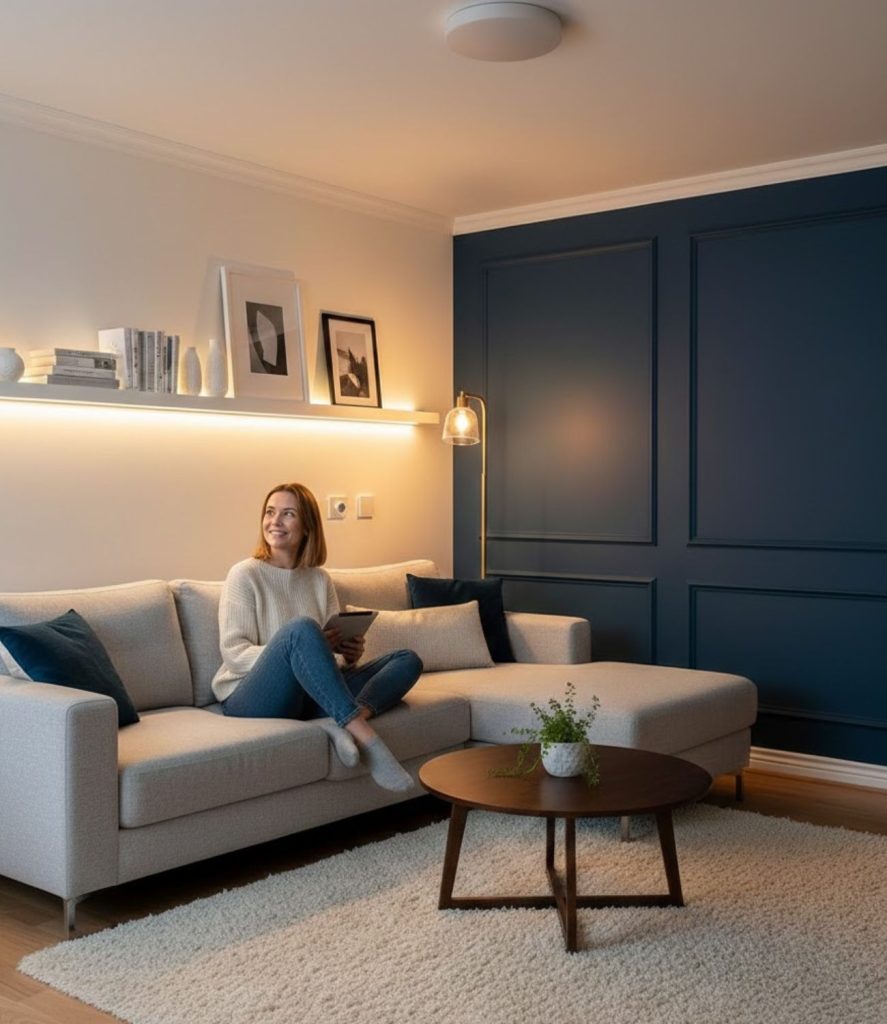
Dimmable lights let you control the brightness based on your needs. In a small living room, this flexibility is essential. Bright lighting is perfect for daytime activities, while dimmed lighting creates a cozy, intimate atmosphere at night. Whether using a dimmer switch, smart bulbs, or remote-controlled fixtures, adjustable lighting helps you adapt your space instantly. Dimming also helps create depth and texture in the room, making it feel warm and inviting.
Frequently Asked Questions
How can I make a small living room look brighter?
Use layered lighting, choose light-colored décor, add mirrors, and incorporate LED strips or sconces. Avoid harsh, direct lighting that creates shadows. Using warm LED bulbs and positioning lights strategically also helps brighten the space.
What lighting is best for a small living room?
Layered lighting works best—combining ceiling-mounted fixtures, wall sconces, floor lamps, and accent lighting. Lights that save space, such as slim lamps and wall-mounted options, are especially useful.
How many light sources should a small living room have?
Most small living rooms benefit from at least three light sources: one for general lighting, one for task lighting, and one for accent lighting. This prevents dark areas and creates a balanced atmosphere.
Are pendant lights suitable for small living rooms?
Yes, as long as the pendant is lightweight, compact, and not hung too low. Glass or open-frame pendants maintain an open feel and work well in small spaces when used sparingly.
What color temperature is best for small living rooms?
Warm white (2700K–3000K) is ideal because it creates a cozy, comfortable environment and avoids the harshness of brighter white or cool-toned lighting.
Final Words
Good lighting is one of the most powerful ways to transform a small living room. With the right combination of fixtures, bulbs, and placement, you can make your space feel larger, brighter, and more welcoming. These 15 small living room lighting ideas are designed to help you create both beauty and function—no matter your layout or design style. Whether you prefer soft ambient lighting, practical task illumination, or creative accent lights, the right setup can dramatically enhance your living room.