A mid century modern living room is a perfect blend of timeless elegance, functional design, and minimalist charm. Inspired by design trends from the 1940s to 1960s, mid century modern interiors emphasize clean lines, organic shapes, warm wood tones, and functional furniture that balances style and practicality. The style continues to be popular today because it combines comfort, simplicity, and aesthetic appeal, making it ideal for living spaces that are both stylish and inviting.
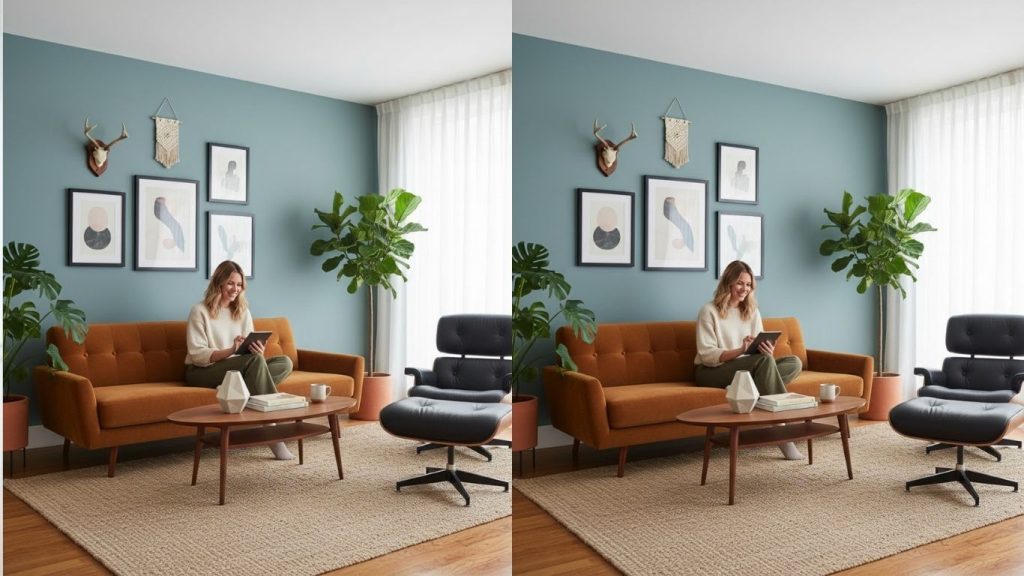
Mid century modern living rooms feature iconic furniture pieces, statement lighting, vibrant accent colors, and natural materials. By mixing retro elements with modern touches, you can create a space that feels both nostalgic and fresh. Before diving into the full list of design ideas, here are five must-have items to help you establish the perfect mid century modern foundation for your living room.
5 Items to Buy to Elevate Your Mid Century Modern Living Room
1. Iconic Mid Century Sofa
A mid century modern sofa typically features low-profile design, sleek lines, and tapered wooden legs. Upholstery options like neutral fabric or bold colors such as mustard, teal, or olive add personality. The sofa acts as a focal point while maintaining the clean aesthetic of the style. Its minimalist design ensures it pairs well with both vintage and contemporary elements, making it versatile. Comfort is a priority, and the sofa balances practicality with aesthetic appeal, creating a central seating area that complements other mid century modern pieces in the room.
2. Wooden Coffee Table
A wooden coffee table with clean lines and simple geometric shapes is essential in mid century modern design. Tables often feature warm wood tones, tapered legs, and functional storage or surface space. A wooden coffee table grounds the seating area, adding warmth and texture. It pairs beautifully with leather or fabric sofas and works as a practical surface for décor, books, or beverages. Its timeless design ensures the table remains stylish for years while supporting the mid century modern aesthetic.
3. Statement Lighting
Lighting is a critical component in mid century modern interiors. Consider pendant lights, arc floor lamps, or tripod-style table lamps in brass, matte black, or wood finishes. Iconic mid century lighting features clean lines, bold shapes, and warm illumination. Proper lighting enhances the room’s architecture, highlights furniture, and sets the mood. Statement lighting not only provides functionality but also acts as a design centerpiece that embodies the elegance and innovation of mid century modern style.
4. Accent Chairs
Mid century modern accent chairs with angular shapes, wooden frames, and comfortable upholstery complement sofas and add visual interest. Chairs in vibrant colors or textured fabrics create focal points while maintaining the minimalist aesthetic. Placing them strategically near windows or seating areas improves functionality and encourages conversation. These chairs reflect classic mid century modern design principles of combining comfort, form, and functionality, providing style while enhancing the room’s usability.
5. Area Rug
An area rug defines the seating zone and adds warmth, texture, and cohesion to a mid century modern living room. Opt for geometric patterns, muted tones, or bold colors that harmonize with the furniture. Rugs anchor the seating arrangement and soften the room’s look. They also introduce tactile comfort, balancing the hard surfaces of wooden floors, tables, and furniture legs. A well-chosen rug enhances the overall aesthetic and ensures that the space feels inviting and harmonious.
Understanding Mid Century Modern Design
The core of a mid century modern living room lies in simplicity, functionality, and timeless appeal. Furniture with clean lines, tapered legs, and organic forms defines the style. Wood, leather, metal, and natural fabrics are commonly used, while vibrant colors and geometric patterns add personality. Balance is key—combining modern touches with classic retro pieces ensures a cohesive and comfortable space. By understanding these principles, you can create a living room that reflects the iconic mid century aesthetic while adapting it to your personal taste.
Mid Century Modern Living Room Ideas
1. Embrace Warm Wood Tones
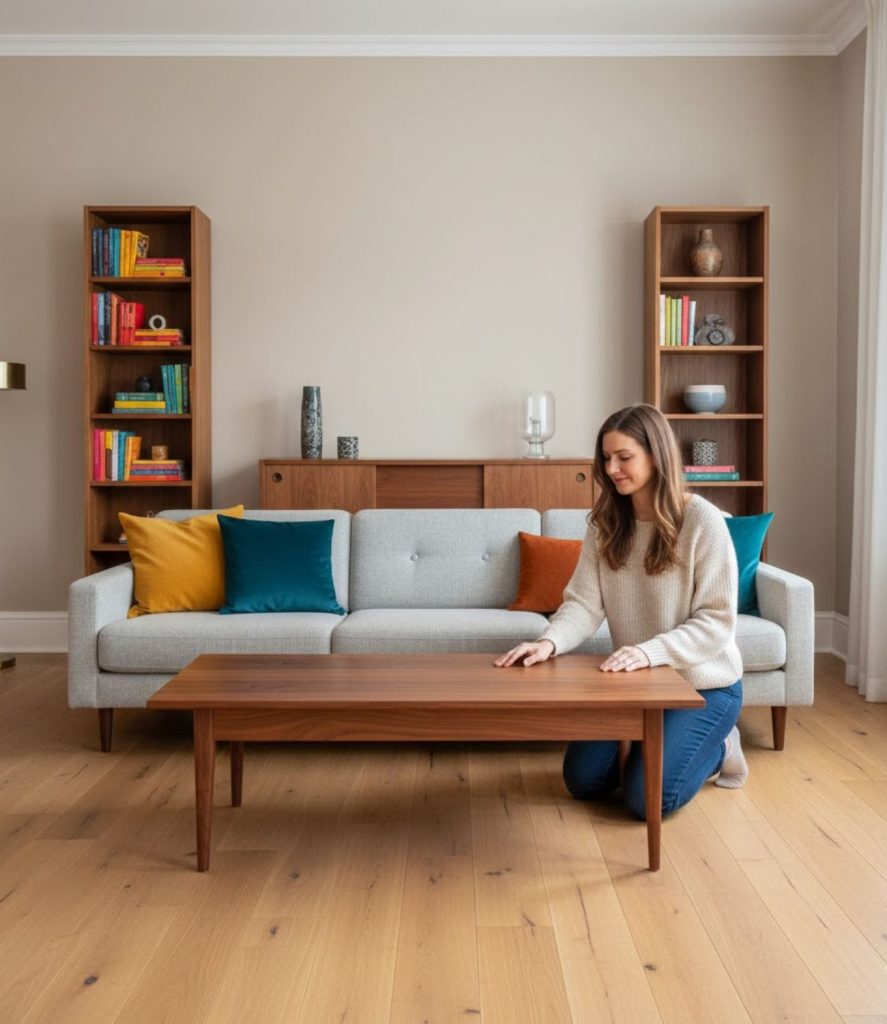
Wood is the backbone of mid century modern design. Incorporate teak, walnut, or oak in furniture, shelving, or flooring. Warm wood tones add richness, texture, and warmth to the living room. Pair wooden elements with neutral upholstery or bold accent colors for balance. Wood’s natural beauty enhances the minimalist forms of mid century modern furniture while creating a cozy, inviting environment.
2. Add Geometric Patterns
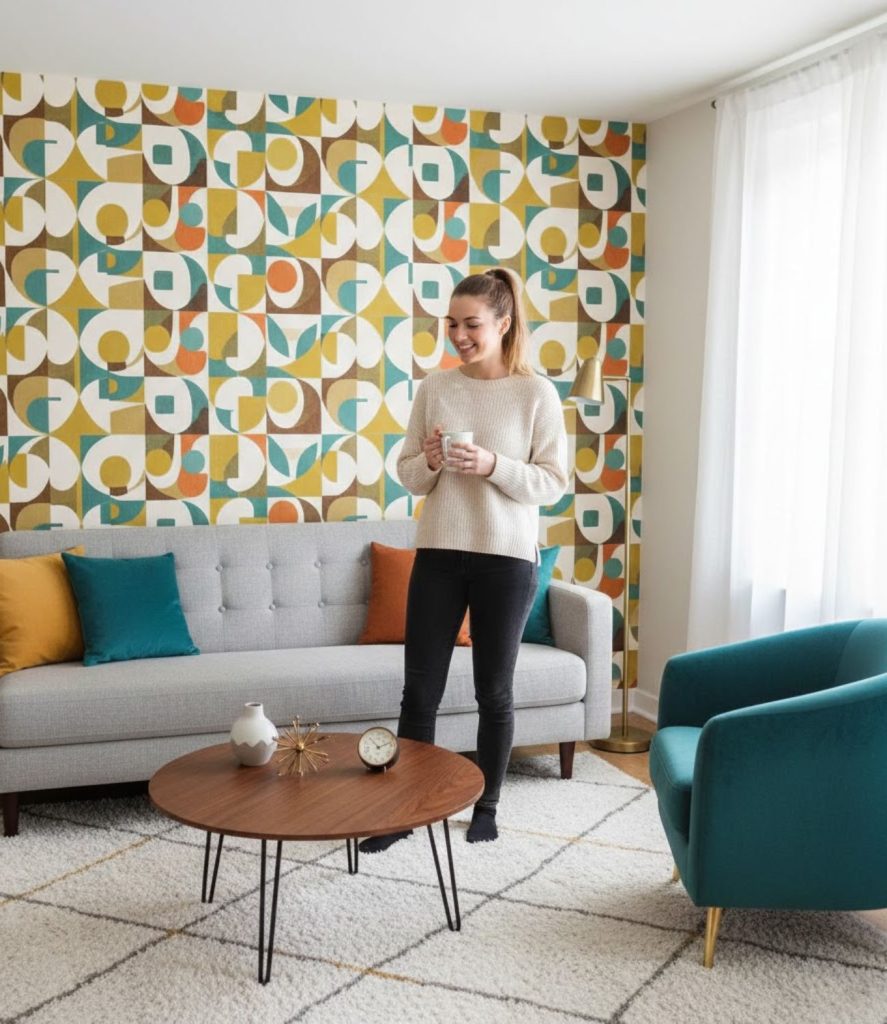
Geometric patterns in rugs, cushions, or wallpaper are a hallmark of mid century modern style. Patterns in triangles, circles, or abstract shapes introduce visual interest without cluttering the space. They can highlight accent areas like seating arrangements or entryways. Geometric designs complement clean-lined furniture and balance organic shapes, giving the room a distinctive mid century personality.
3. Incorporate Iconic Furniture Pieces
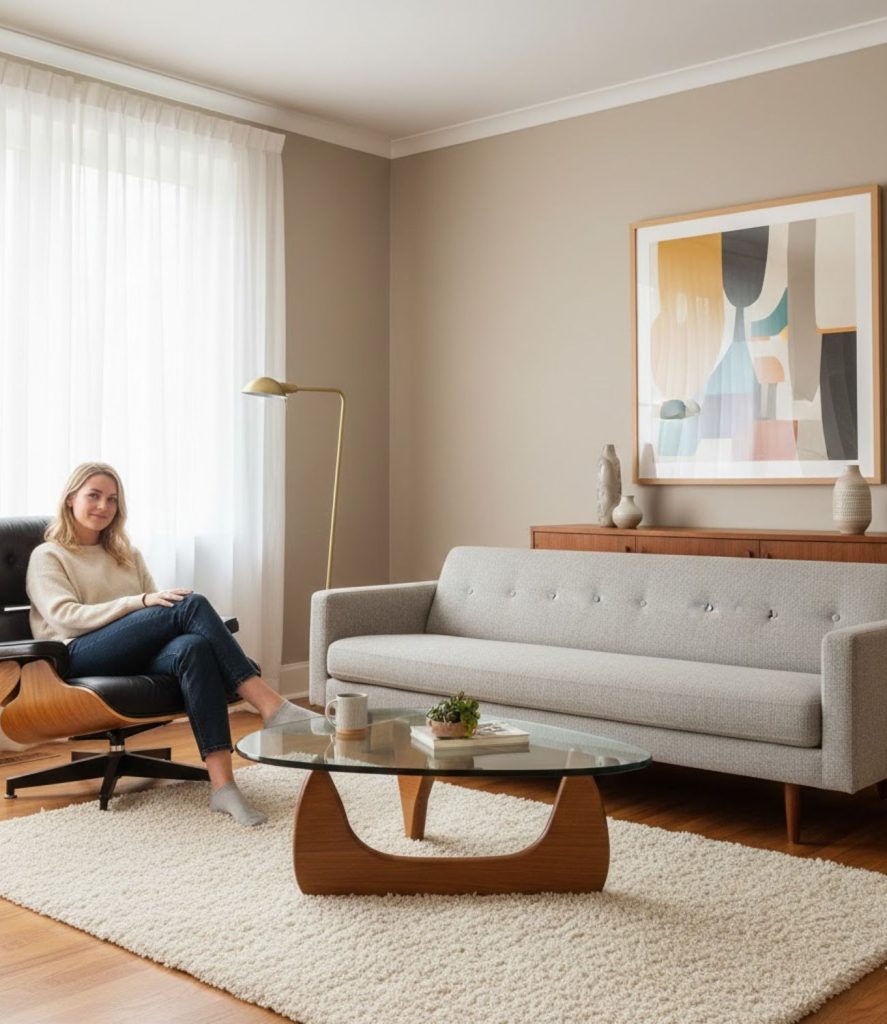
Furniture with tapered legs, streamlined silhouettes, and ergonomic shapes defines mid century modern interiors. Iconic pieces like the Eames lounge chair, Noguchi coffee table, or minimalist wooden sideboards elevate the room. These furniture choices combine comfort, functionality, and timeless appeal. Incorporating classic designs ensures authenticity and a lasting connection to mid century modern heritage.
4. Introduce Vibrant Accent Colors
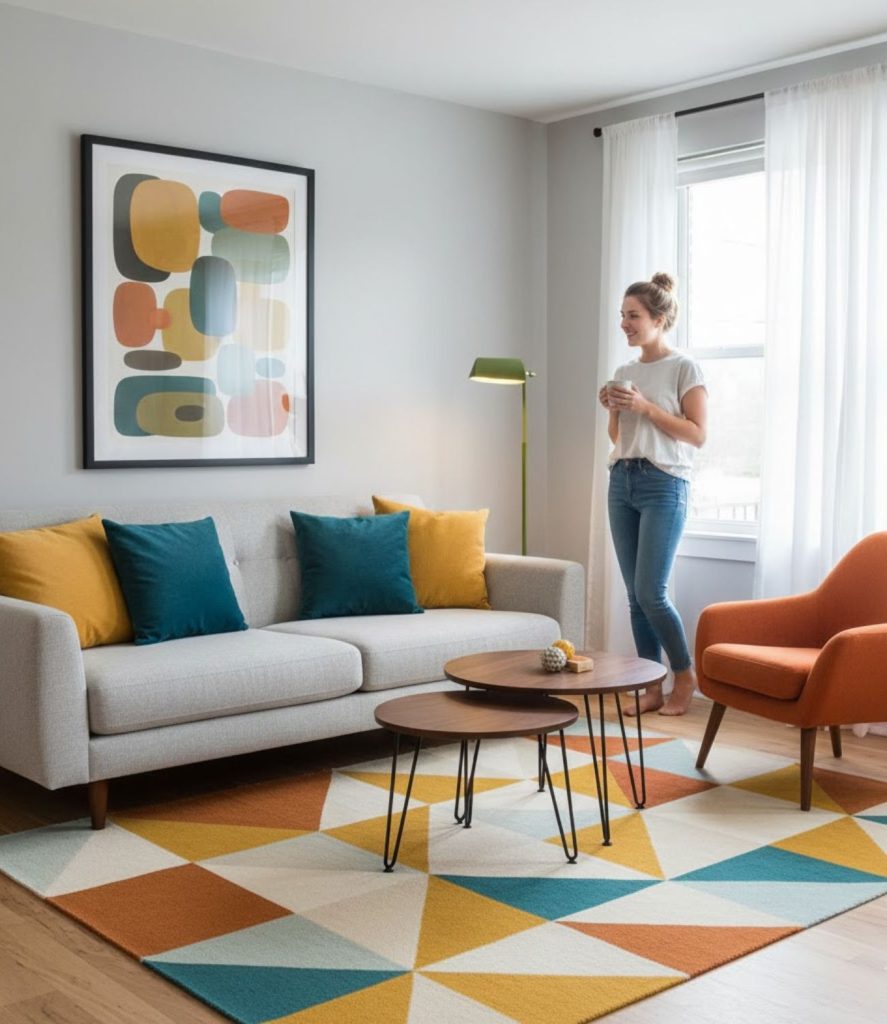
Mid century modern interiors often feature pops of bold colors like mustard yellow, burnt orange, teal, or olive green. Use these in cushions, chairs, or artwork to energize neutral foundations. Accent colors add personality, highlight design features, and create visual interest. Balanced use of vibrant tones maintains harmony while enhancing the retro-modern aesthetic.
5. Highlight Clean Lines
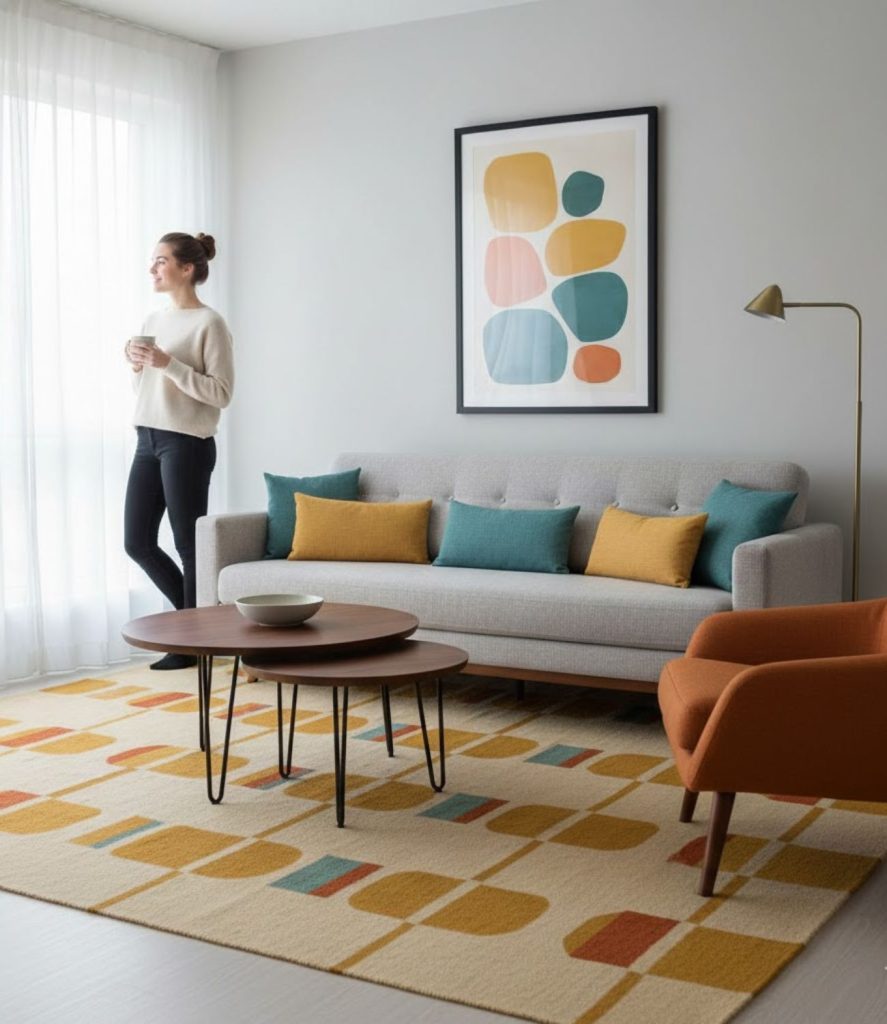
The essence of mid century modern design is clean, uncluttered lines. Furniture, décor, and architectural elements should reflect simplicity and functionality. Avoid overly ornate pieces. Straight edges, geometric shapes, and tapered legs ensure a minimalist yet stylish space. Clean lines provide visual calm and allow accent pieces, colors, and textures to shine.
6. Layer Textures

Texture adds depth and dimension to a mid century modern living room. Combine leather, wool, linen, wood, and metal for a balanced feel. Cushions, rugs, throws, and upholstery introduce softness and warmth, while wood and metal provide structure. Thoughtful layering prevents the space from feeling cold or sterile, creating a comfortable, inviting environment.
7. Use Statement Lighting
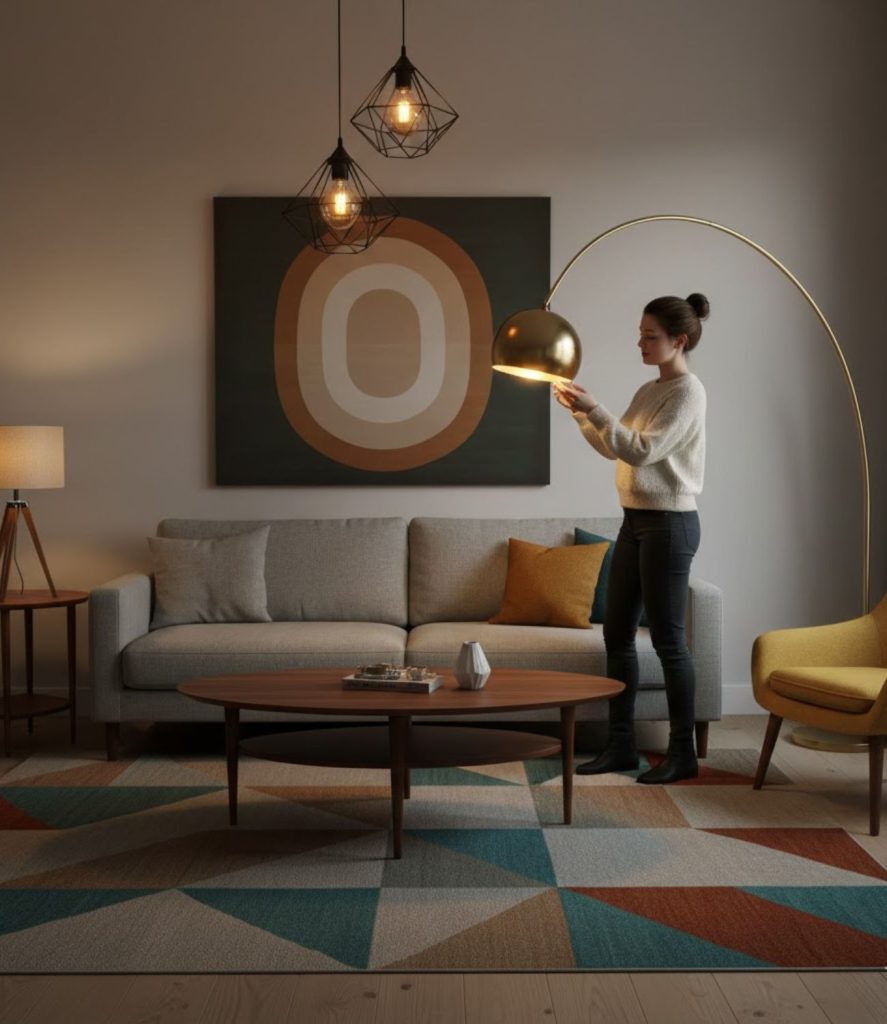
Mid century modern lighting often features bold shapes and functional elegance. Consider pendant lights, arc floor lamps, or tripod table lamps. Metallic finishes and warm bulbs highlight furniture, architectural details, and textures. Statement lighting anchors the design while providing both form and function. Proper illumination ensures the living room feels welcoming and stylish.
8. Incorporate Natural Elements

Bring nature indoors with plants, wooden furniture, and stone accents. Greenery introduces life and softness, balancing angular furniture and geometric patterns. Wooden elements complement neutral or bold colors, enhancing warmth and organic appeal. Natural materials connect the modern space with classic mid century elements, creating a harmonious and inviting environment.
9. Add Floating or Minimalist Shelving

Shelving with clean lines and minimal hardware supports the mid century aesthetic. Floating shelves or slim wooden units provide storage without overwhelming the room. They can display books, decorative items, or plants, contributing to both function and style. Minimalist shelving maintains openness while highlighting the room’s design features.
10. Incorporate Statement Art
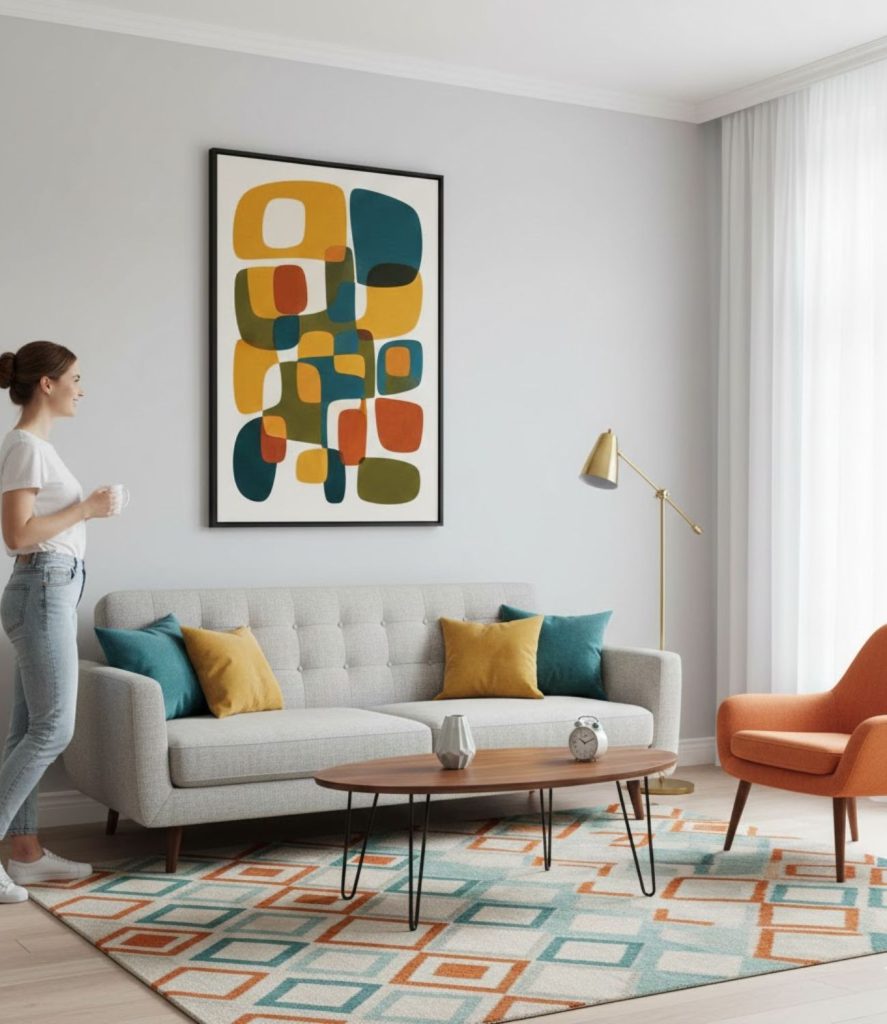
Artwork serves as a focal point and reflects the retro-modern aesthetic. Abstract paintings, colorful prints, or geometric designs enhance walls without cluttering them. Large-scale art pieces anchor seating areas, while smaller pieces create cohesion. Strategic placement ensures visual balance and emphasizes mid century modern elegance.
11. Choose Low-Profile Furniture
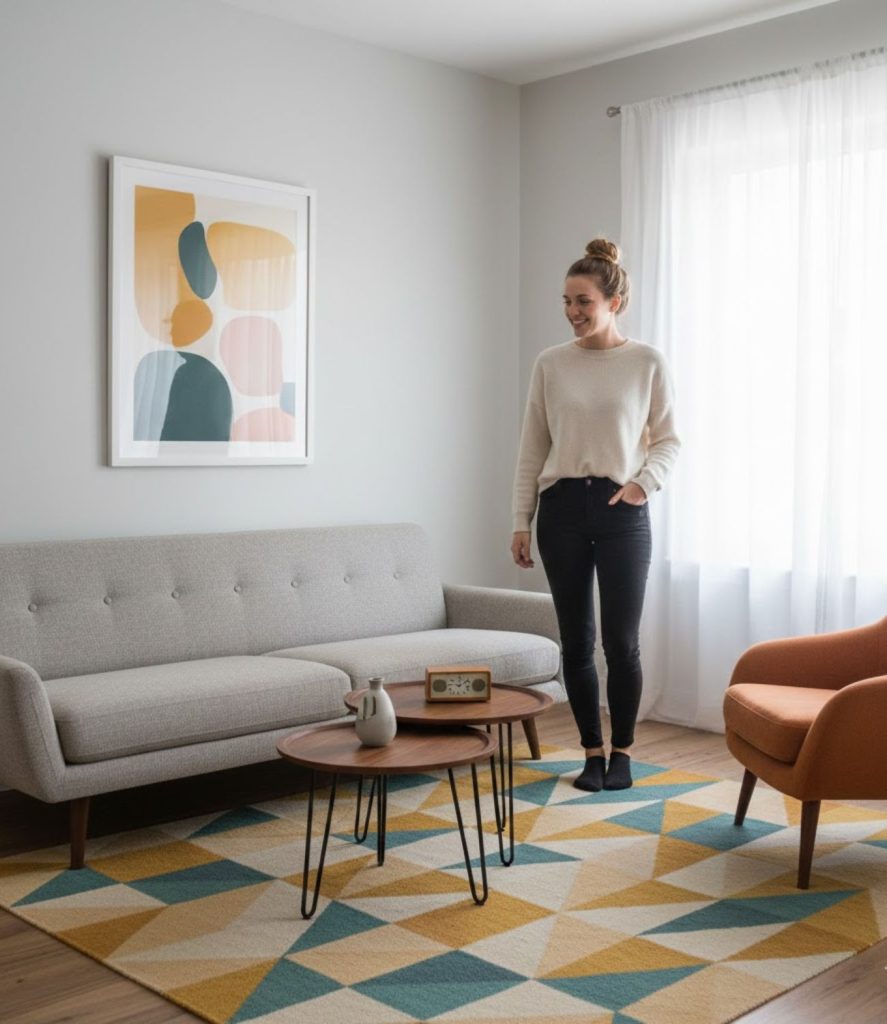
Low-profile sofas, tables, and chairs emphasize openness and modern minimalism. They maintain proportion, encourage airflow, and complement other mid century design elements. Low furniture enhances spatial perception and balances bold accent pieces, ensuring comfort and style coexist seamlessly.
12. Use Neutral Backdrops
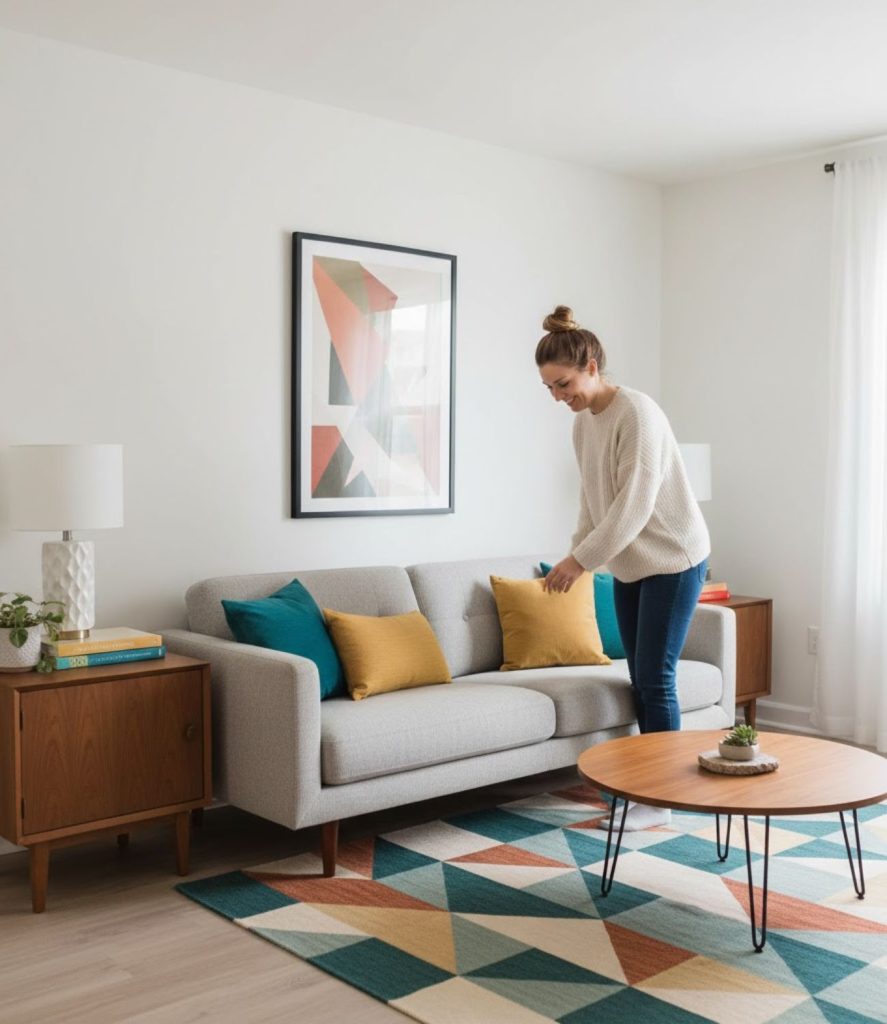
Neutral walls, flooring, and ceilings provide a canvas for mid century furniture and décor. Whites, beiges, and soft greys highlight shapes, textures, and colors. Neutral backdrops ensure longevity and flexibility, allowing accent pieces and personal items to shine while maintaining harmony.
13. Mix Organic and Angular Shapes
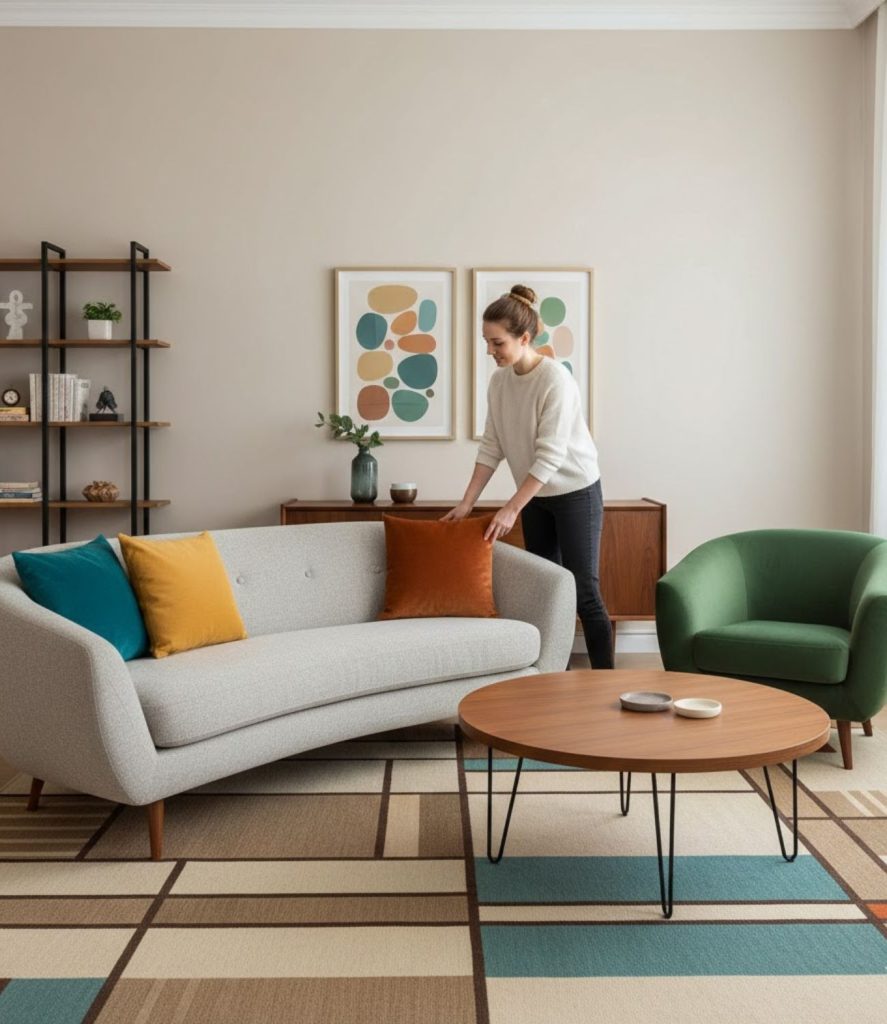
Combine furniture with soft curves and rounded edges with angular pieces for visual interest. Rounded chairs, curved sofas, or circular tables contrast geometric rugs, angular lighting, or straight-lined shelves. This balance creates a dynamic, engaging, and classic mid century modern living room.
14. Curate Minimal Accessories
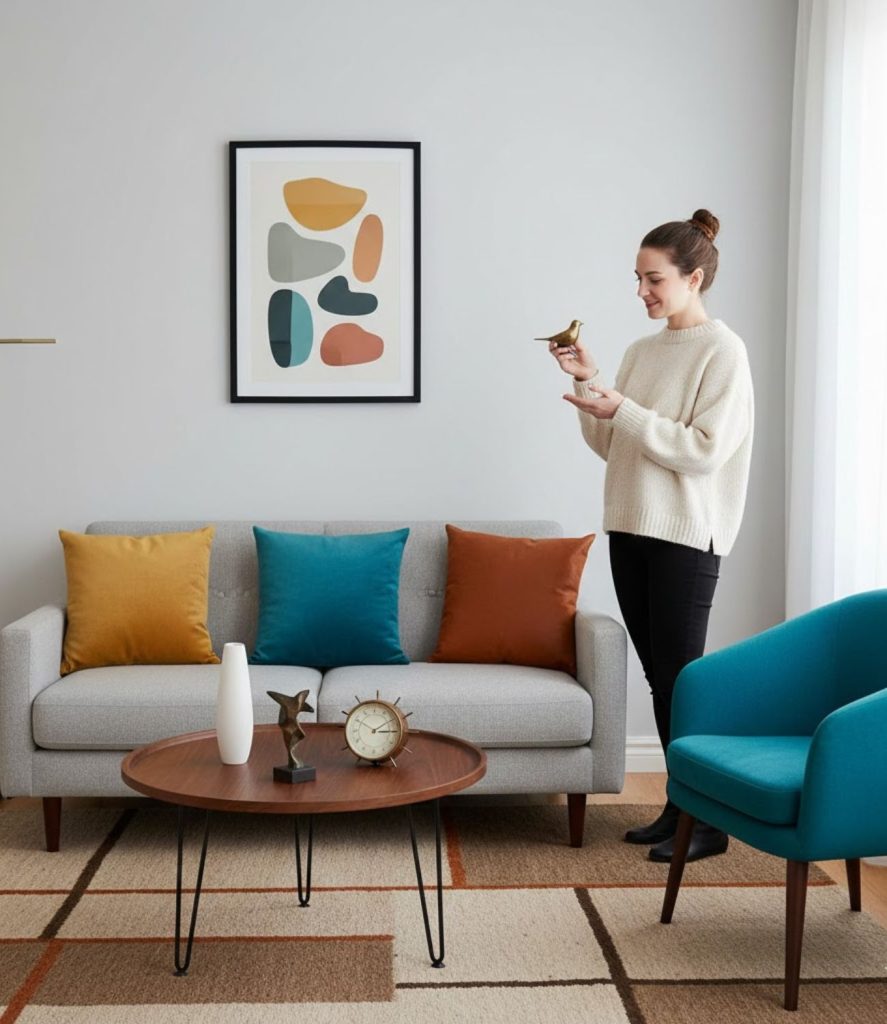
Select accessories that enhance the design without overcrowding the space. Minimalist vases, sculptural objects, or vintage items reflect personality and style. Strategic placement maintains a clean aesthetic and emphasizes the mid century modern principles of simplicity, functionality, and elegance.
15. Highlight Architectural Details

Exposed beams, large windows, and high ceilings are features that enhance mid century modern interiors. Maintain clean finishes and integrate furniture and décor to complement these architectural elements. Highlighting structure adds depth, light, and spatial clarity, reinforcing the room’s retro-modern identity.
FAQs
What colors work best in a mid century modern living room?
Neutral foundations with pops of mustard, teal, burnt orange, olive, or muted blue work best. Balance is key.
How do I combine vintage and modern pieces effectively?
Mix iconic mid century furniture with contemporary minimalism, layering textures, and accent colors to create harmony.
Can mid century modern design work in small spaces?
Yes, with low-profile furniture, clean lines, and strategic use of color and lighting, small living rooms can feel open and stylish.
What materials define mid century modern interiors?
Wood, leather, fabric, metal, glass, and natural fibers are commonly used to balance form, function, and warmth.
How do I make the living room feel cozy without clutter?
Layer textures, add rugs, cushions, lighting, and greenery while keeping furniture and accessories minimal and purposeful.
Final Words
A mid century modern living room blends timeless elegance, functional design, and minimalist charm to create spaces that are stylish, comfortable, and enduring. By carefully selecting iconic furniture, layering textures, incorporating bold accents, and maintaining clean lines, you can achieve a cohesive and inviting environment. The 15 ideas in this guide provide a roadmap to create a living room that celebrates retro-modern aesthetics while adapting to contemporary lifestyles. Thoughtful curation, balance, and attention to detail ensure your space is both visually stunning and highly livable.