Walls are more than boundaries — they’re the canvas of your living room’s personality. Well-chosen wall decor can change the mood, define the style, and make ordinary rooms feel curated and complete. Whether your taste leans modern minimal, cozy farmhouse, eclectic boho, or classic traditional, the walls give you the biggest visual real estate to work with. This guide gives you practical, creative, and user-friendly ways to dress your living room walls so they look intentional and welcoming.
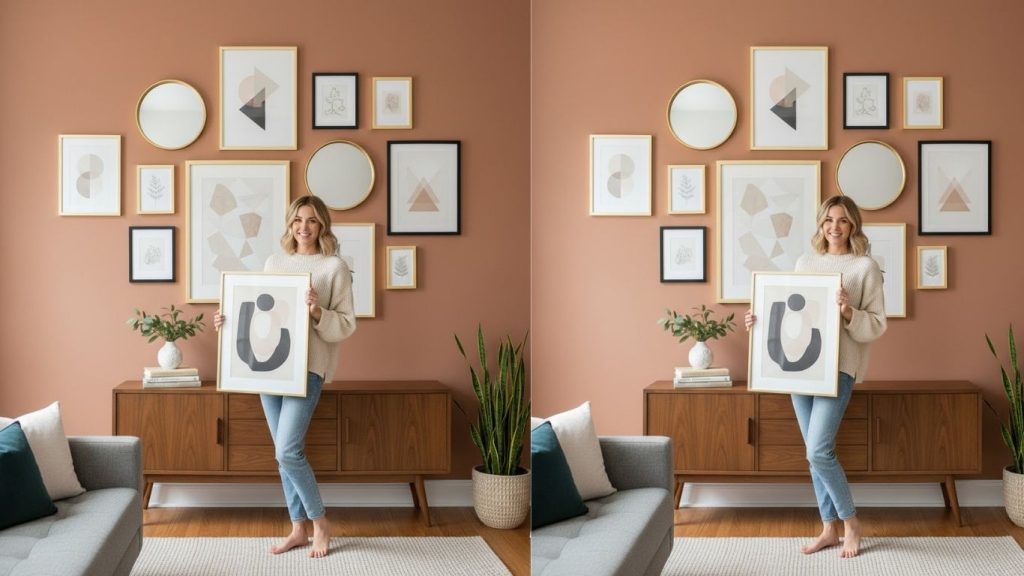
We’ll begin with five ready-to-buy items that will instantly make it easier to implement many of the ideas below. After a short note, you’ll find the main section: the keyword heading followed by 15 numbered living room wall decor ideas with clear, actionable steps, styling tips, and troubleshooting advice.
5 Items to Buy Now (to execute living room wall decor ideas with confidence)
Statement gallery rail or picture ledge
A picture ledge gives you instant flexibility. Install it at eye level or slightly above your sofa and lean framed prints, small sculptures, and seasonal pieces against the wall instead of committing to nails. It’s perfect for renters or indecisive decorators because you can swap art quickly. Choose a sturdy, wide shelf (2–3 inches deep) that can hold multiple frames and small objects. Use it to layer items—large frame at the back, smaller pieces in front, and a low decorative object to anchor the grouping. The ledge simplifies curation and keeps holes to a minimum.
A set of matching frames in mixed sizes
Buy frames that share a consistent finish (black, natural wood, or white) but vary in size and orientation. Having a matched set reduces visual clutter and makes building a gallery wall much easier. Pre-mat prints or use simple mat boards to give photos breathing room and make cheaper prints look polished. With a cohesive frame style, you can mix photos, prints, and certificates — the uniform frames make the collection feel curated rather than chaotic.
Lightweight command hanging kit and level
Make installation stress-free with damage-free hanging strips and a small spirit level. Command strips hold frames and lightweight decor without nails — perfect for renters. For heavier pieces, use anchors and screws but keep the level handy so everything lines up. A hanging kit that includes wire hangers, picture hooks, and wall anchors saves time and ensures your artwork sits straight and secure.
Oversized decorative mirror (round or sunburst)
A large mirror reflects light, enlarges the sense of space, and becomes a focal point. Round and sunburst styles are versatile—round mirrors soften angular rooms while sunbursts give energy and focus. Mirrors can be centered above a mantel, sofa, or console. Choose a frame that complements your decor—antique gold for traditional, black metal for industrial, or woven rattan for boho.
Wall-mount floating shelf set
Floating shelves are the unsung heroes of wall decor because they combine display and storage. Use a wide shelf to hold sculptural vases, small plants, or books; shorter shelves can frame a gallery or hold candles and personal mementos. Shelves let you play with depth—mix wall art, three-dimensional objects, and greenery to create a living, evolving wall.
A short note before we begin
Good wall decor starts with proportion, balance, and a little restraint. Consider your wall’s size, the furniture beneath it (especially sofas and consoles), and the natural sightlines as you walk into the room. Always hang artwork so the center sits roughly 56–60 inches from the floor (adjust slightly for taller ceilings or low-slung furniture), and use the sofa width as a guide for grouping sizes. With those rules in mind, let your personality lead the selections.
15 Living Room Wall Decor
1. The Classic Gallery Wall: curated mix of frames and art
A gallery wall is a powerful way to showcase personality. Start by collecting a mix of artworks, photographs, prints, and even textile pieces. Lay everything on the floor first to test arrangements: aim for a central anchor piece and build around it, keeping consistent spacing (2–3 inches) between frames. Use a mix of vertical and horizontal pieces to create rhythm, and vary mat sizes to give breathing room. If you’re hesitant about making permanent holes, use the picture ledge from earlier—this gives you instant changeability. When placing above a sofa, keep the gallery width around two-thirds to three-quarters of the sofa width for balance. A gallery wall works in any style; keep frame finishes cohesive for a polished look or intentionally mix metals for an eclectic vibe.
2. Oversized Single Art Piece for Bold Simplicity
Sometimes less is more. Choose one oversized painting, print, or tapestry to anchor your living room. This approach simplifies decision-making and creates an immediate focal point. For scale, the artwork should generally be 60–75% of the sofa width if hung above it. When selecting a piece, think about dominant colors and texture—an abstract canvas can provide color without competing with patterned furniture, while a photorealistic landscape brings serene detail. Keep surrounding decor minimal so the artwork reads clearly. If budget is a concern, oversized posters or fabric wall hangings are cost-effective alternatives that still deliver impact.
3. Mirror Styling: reflect light and enlarge the space
Mirrors are both decorative and functional. Place a large mirror above the mantel or console to bounce light into darker corners. For narrow rooms, position a mirror across from a window to double natural light. Round mirrors soften and modernize, while tall rectangular mirrors add height. Group small mirrors into a cluster to create dynamism—use matching frames for cohesion or a variety of shapes for playful character. For safety and proportion, ensure the mirror’s base is at least a few inches above furniture tops unless intentionally leaning for a contemporary look. Add layered lighting near mirrors (sconces or lamps) to create flattering evening ambiance.
4. Floating Shelves with Vignettes: display + storage
Floating shelves allow you to mix 2D and 3D objects for a lively wall. Use a wide lower shelf and smaller shelves above to create an asymmetrical composition. On each shelf, combine framed prints, small plants, stacked books, and a single sculpture. To avoid clutter, use odd-numbered groupings (three or five objects) and vary heights for visual interest. Shelves are ideal for seasonal swaps—introduce lighter ceramics and botanical prints in summer and switch to warm-toned pottery and framed text pieces in winter. Remember weight limits: heavier items should be on properly anchored shelves.
5. Statement Wall Paneling: wainscoting, shiplap, or molding
Architectural wall treatments add instant sophistication. Wainscoting or raised panel molding suits traditional rooms and can be painted to match or contrast the wall. Shiplap lends coastal or farmhouse vibes and is surprisingly modern in painted or natural finishes. For a contemporary twist, try geometric wall panels in matte finishes or board-and-batten painted a deep hue for dramatic depth. Paneling works especially well behind a TV or sofa because it reads as a permanent backdrop; just ensure the scale of the paneling aligns with the wall size—overscaled trim on a small wall may feel heavy.
6. Textiles on the Wall: tapestries, quilts, and woven art
Fabric wall hangings bring texture and warmth without needing glass or frames. A woven tapestry or handmade macramé introduces tactile interest and softens acoustics. Quilts and kilim rugs can be hung as art to add pattern and cultural richness. Choose textiles with complementary colors to existing upholstery and repeat a hue from the sofa or rug to create harmony. Textiles are particularly helpful in rooms with hard surfaces because they reduce echo and make the space cozier. Use a discreet rod or Velcro sleeve to hang and allow for easy removal or laundering if needed.
7. Floating Frames with Botanical Specimens
Create an elegant, museum-like display by pressing flowers or leaves inside floating frames. Use a series of identically sized frames for a clean grid or stagger them for a more organic feel. Botanical displays work well in sunlit rooms and pair beautifully with rattan or mid-century furniture. If you prefer longevity, use high-quality faux botanicals or preserved specimens that maintain color. Floating frames keep the visual weight light and allow the wall color to show through, enhancing the natural aesthetic.
8. Functional Wall Decor: wall-mounted consoles and storage
Combine function and form with wall-mounted consoles, narrow shelves, or cubbies. These elements can hold a lamp, display plates, or act as a drop zone for keys and mail while also serving as decorative anchors. Integrate baskets or decorative boxes to hide clutter and keep the look curated. A slim console below art gives the wall a purposeful, layered feel. For small apartments, think vertical: tall, narrow storage meets both utility and decor without sacrificing floor space.
9. DIY Photo Grid: clean and personal
For a personal, budget-friendly option, create a photo grid using identical frames and consistent matting. The grid’s regularity produces a modern, gallery-like effect while showcasing family moments. Choose a neutral palette for photos (black-and-white or sepia) to keep the grid from feeling too busy. Measure carefully: equal spacing and level alignment are essential for this precise look. Use Command strip hangers for renters, or a picture rail to make swapping photos seasonal and simple.
10. Sculptural Wall Objects: plates, masks, and 3D art
Bring depth by introducing three-dimensional objects—ceramic plates, decorative masks, carved wooden panels, or metal sculptures. Group plates in a radial or linear pattern or create a sculptural cluster with varied materials for tactile contrast. When mixing 3D pieces with flat art, give the sculpture breathing room and ensure secure mounting hardware. These pieces can be conversation starters and make the wall feel more tactile and collected.
11. Floating TV Wall Styling: frame and integrate your screen
Instead of hiding the TV, treat it as a design element. Surround your mounted TV with slim frames, floating shelves, or paneled molding to give the screen intentionality. Use low-contrast frames or matting to prevent glare and choose matte finishes on surrounding decor to cut reflections. For a cinematic look, flank the TV with sconces or narrow shelving to create a balanced media wall. Cable management is key—conceal wires through in-wall kits or decorative cord covers for a polished finish.
12. Accent Wall in Bold Paint or Wallpaper
An accent wall introduces instant drama. Choose a single rich paint color or a bold wallpaper behind a sofa or fireplace to anchor the room. If wallpaper is patterned, keep the rest of the room neutral to avoid visual competition. For paint, deep greens, navy, terracotta, or charcoal provide cozy, modern backdrops. Use semi-gloss or satin finishes for easy cleaning in high-traffic areas. Accent walls are also a chance to experiment—try a painted mural or geometric shapes for a bespoke look.
13. Vertical Garden or Living Wall
Bring nature indoors with a vertical garden. Wall-mounted planters, pocket planters, or modular green panels work in bright rooms—think pothos, ferns, or trailing ivy for low-maintenance beauty. Living walls add texture, purify air, and create a calming focal point. Ensure proper watering plans and drainage; some systems include trays to catch overflow, or use faux plants for a maintenance-free alternative. Accent the green with wooden frames or terra-cotta pots to warm the aesthetic.
14. Large-Scale Typography or Quote Art
Words have personality; a single large quote or typographic piece can set the room’s tone—whether playful, inspirational, or elegant. Choose fonts that match your style: hand-lettered scripts for cozy, serif for classic, or bold sans for modern. Typography can be painted directly onto the wall for a murals-like effect or applied as a framed print for flexibility. Keep the message short for readability from across the room and pair it with complementary lighting to make the words stand out.
15. Rotating Seasonal Wall Displays
Make your walls feel alive by rotating decor with the seasons or holidays. Create a neutral base (floating shelves or picture ledge) and swap small framed pieces, seasonal greenery, and textiles to reflect spring blooms, summer palms, autumnal branches, and cozy winter accents. This approach keeps the living room feeling fresh year-round and is an easy way to engage with color and texture without a complete overhaul.
Deep-dive styling tips and troubleshooting
How to scale art to furniture
A common mistake is choosing art that’s too small for the wall space above a sofa. Measure the sofa width and aim for artwork or grouped compositions that total between 60–75% of the sofa width. For mantel or console placement, choose a piece that spans 2/3 of the mantel length or anchor a pair of smaller pieces symmetrically.
Choosing frames and finishes
Frames set the tone. Black frames read modern and graphic; warm wood feels relaxed and traditional; gold or brass bring a formal or vintage touch. Keep frame thickness proportional to the piece—large canvases suit broad frames; delicate prints pair with thin profiles. To unify mixed media, consider using mats of the same color or matching frame finishes across a grouping.
Balancing color and pattern
If your living room already has busy patterns, opt for neutral or monochrome art to avoid overwhelm. Conversely, if the furnishings are muted, use patterned wallpaper or colorful art to energize the space. Repeat accent colors from pillows or rugs in your wall art to create a cohesive palette.
Placement hacks for perfect alignment
When hanging multiple pieces, use kraft paper templates cut to each frame size taped to the wall to test layout. For level hanging, mark the wall’s centerline and align the piece’s center or top with that guide. A small laser level simplifies alignment for more complex grids.
Safety and pet/child-friendly considerations
Secure large mirrors and heavy frames with wall anchors and anti-tip kits. Place fragile sculptures on higher shelves out of reach. Use weighted bases for freestanding wall objects and avoid low-hanging glass in high-traffic areas.
FAQ
How high should I hang artwork above a sofa?
Aim for the artwork’s center to sit between 56–60 inches from the floor. Practically, this often means the bottom of the art sits 6–12 inches above the top of the sofa. For low-profile furniture or tall ceilings, adjust slightly so the composition reads balanced relative to your sightlines.
Can I mix modern and vintage pieces on the same wall?
Yes—mixing eras gives walls personality. Keep some unifying element (color, frame finish, or theme) to prevent visual discord. For instance, pair vintage botanical prints in modern black frames, or mix contemporary abstracts with an antique mirror to create layered contrast.
What’s the easiest way to change the look without rehanging?
Use picture ledges and floating shelves to lean art and swap objects quickly. Rotating textiles and small sculptural items also refresh the look. For renters, command hooks and strips allow temporary yet secure display changes.
How do I make a small living room feel larger with wall decor?
Use light-reflecting items like mirrors and glossy frames, choose vertical stripes or tall artwork to draw the eye upward, and keep color palettes light and cohesive. Avoid overcrowding walls; negative space helps small rooms breathe.
What materials are best for gallery walls in humid climates?
Choose frames and backing materials resistant to warping—metal or sealed woods with acrylic glazing instead of glass. Use moisture-resistant mats and avoid hanging works in direct moisture-prone locations like above radiators or poorly ventilated windows.
Final Words
Living room wall decor is the fastest way to personalize and elevate your space. Whether you choose a single dramatic piece, a layered gallery, or a functional and beautiful shelving system, the key is to balance scale, texture, and color with the room’s furniture and light. Start with a clear focal point, use a consistent visual thread (frame finish, color repeat, or texture), and don’t be afraid to change things seasonally—walls are meant to evolve with you. If you’d like, I can create a custom wall layout for your room—tell me the wall width, sofa dimensions, and the look you want, and I’ll draft a tailored plan with measurements and suggestions.