Ambient lighting is the backbone of any well-designed living room. It creates a comfortable and inviting atmosphere, enhances the room’s aesthetic, and supports other lighting layers like task and accent lighting. Unlike bright, direct lighting, ambient lighting is soft and evenly distributed, offering a warm, welcoming glow that fills your living room without harsh shadows or glare. Whether your style is modern, rustic, minimal, or eclectic, ambient lighting can transform a space, highlighting textures, colors, and décor details while keeping the mood relaxed and serene.
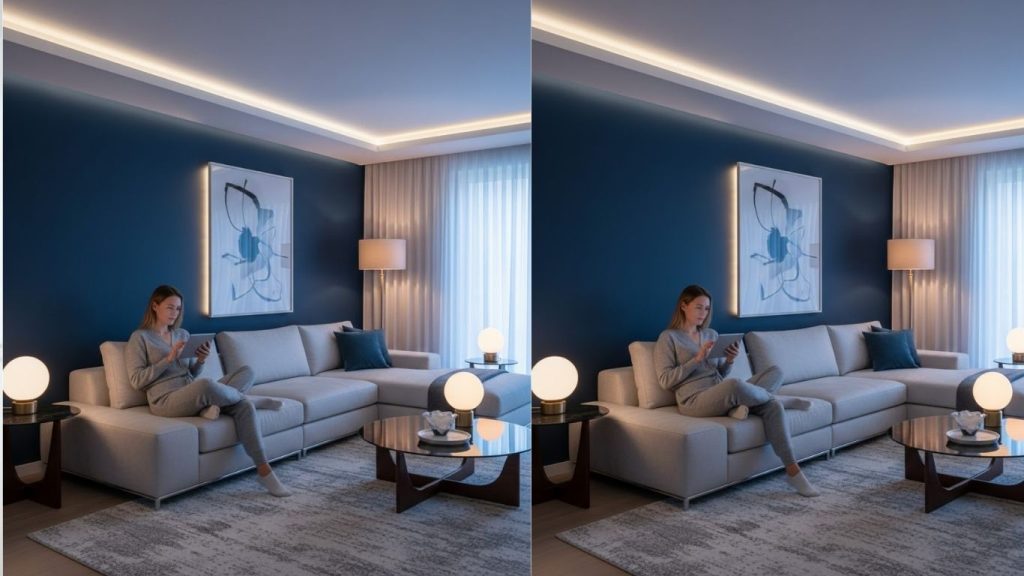
The secret to perfect ambient lighting lies in layering and selecting the right fixtures. Combining overhead lights, floor lamps, wall sconces, LED strips, and accent lamps ensures your living room feels luminous yet cozy. In this guide, we’ll explore 15 living room ambient lighting ideas, along with five essential items to buy that will help you achieve the perfect glow.
5 Must-Have Items for Ambient Living Room Lighting
1. Dimmable LED Ceiling Lights
Dimmable LED ceiling lights provide flexible ambient illumination. You can brighten the room for social gatherings or lower the intensity for a relaxing evening. LEDs are energy-efficient and long-lasting, while dimmers allow you to adjust the mood instantly.
2. Floor Lamps with Fabric Shades
Floor lamps are perfect for creating pockets of ambient light. A fabric shade softens the glow and distributes it evenly, filling dark corners and balancing the overall illumination in your living room.
3. Wall Sconces
Wall sconces are excellent for indirect lighting. They save floor space and add elegance while creating a warm glow that enhances textures and highlights architectural features in your living room.
4. LED Strip Lights
LED strip lights can be installed behind furniture, along ceilings, or under shelving to produce subtle, ambient backlighting. They enhance depth, add sophistication, and maintain a soft, even glow without overpowering the space.
5. Table Lamps with Soft Shades
Table lamps provide localized ambient lighting while adding decorative flair. Choose lamps with fabric or frosted shades to diffuse the light gently, creating a cozy and inviting environment.
Understanding Ambient Lighting
Ambient lighting is often referred to as general lighting. It sets the tone for your living room by providing a base level of illumination, upon which task and accent lighting can be layered. The goal is to create a soft, uniform glow that minimizes harsh shadows and bright spots. Warm tones are preferable because they produce a welcoming and relaxed atmosphere. Ambient lighting is not about drawing attention to a particular feature—it’s about making the entire room feel luminous, balanced, and harmonious. With proper layering, ambient lighting ensures your living room feels both functional and visually appealing.
Living Room Ambient Lighting Ideas
1. Install a Central Dimmable Ceiling Fixture
A central ceiling light serves as the main source of ambient illumination. Opt for a fixture with dimmable LEDs or multiple bulbs to control brightness. This allows you to adjust the room’s atmosphere for different occasions, from lively gatherings to quiet evenings.
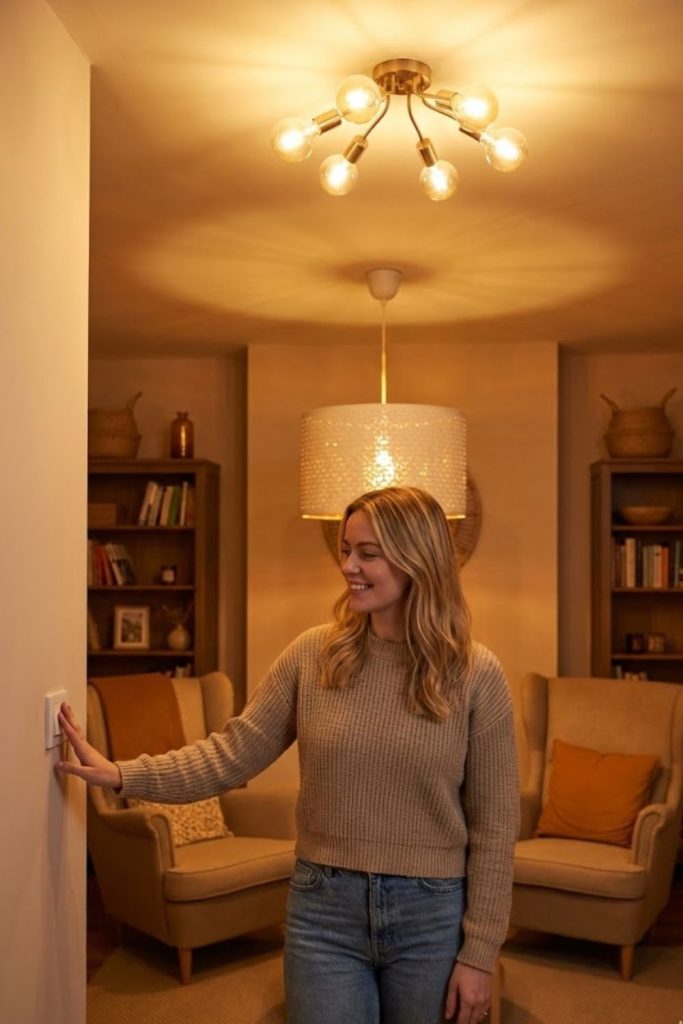
Choose a warm-toned bulb for a softer glow that complements furniture and wall colors. The central fixture establishes the foundation of ambient lighting, ensuring even light distribution throughout the living room.
2. Layer with Floor Lamps
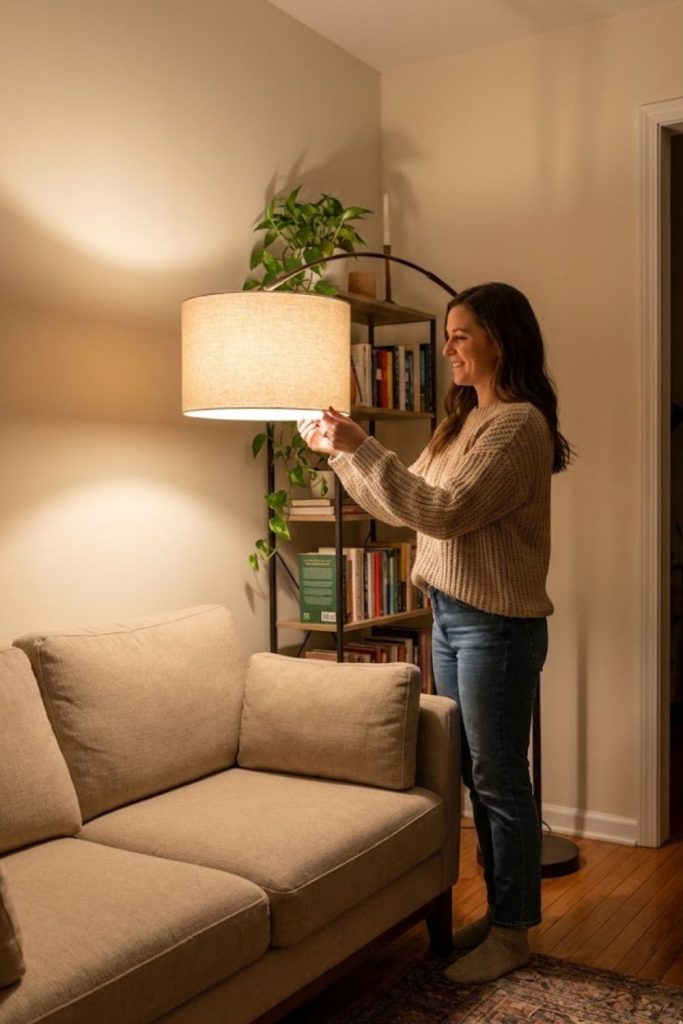
Floor lamps help eliminate shadows in corners and provide secondary ambient lighting. Choose lamps with fabric or frosted shades to diffuse light evenly. Place them near seating areas, behind sofas, or in dark corners to create warmth and depth. Adjustable or arc-style floor lamps are versatile, allowing light to be directed upward or downward depending on your needs. Layering floor lamps with ceiling fixtures enhances comfort and creates a cozy, well-lit space.
3. Use Wall Sconces for Soft, Indirect Glow
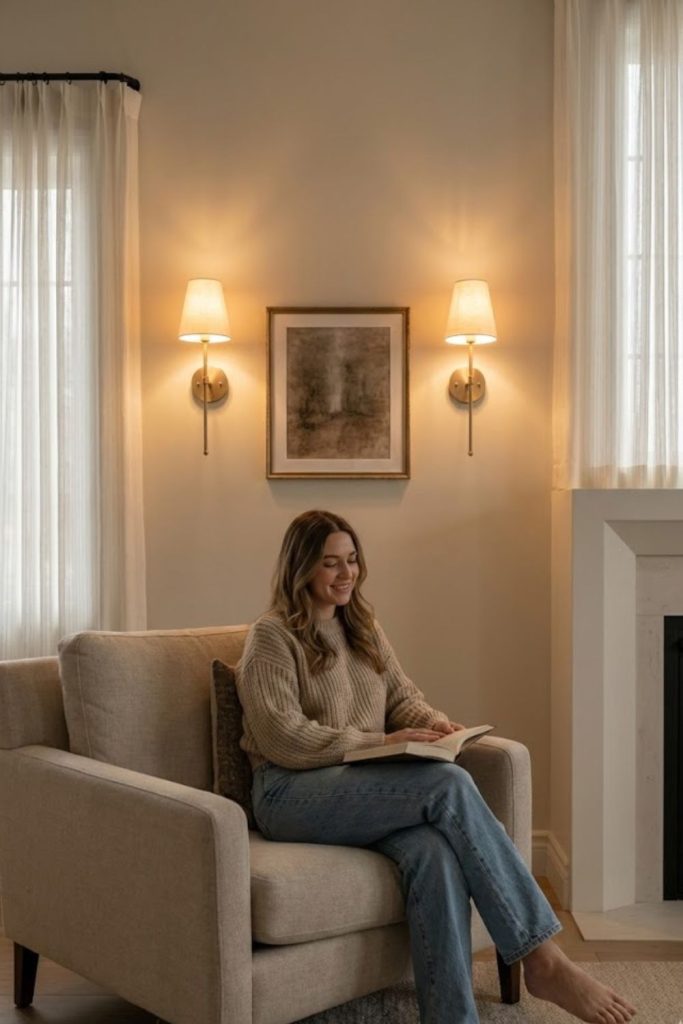
Wall sconces are ideal for creating gentle, ambient light without taking up floor space. Position them on either side of a fireplace, artwork, or window to balance the room’s illumination. Sconces with diffusers or fabric shades spread light softly, avoiding glare while adding an elegant touch. Dimmable sconces let you control intensity, perfect for transforming your living room from bright and lively to calm and serene.
4. Add LED Strip Lighting to Architectural Details
LED strip lighting highlights architectural features such as ceiling coves, floating shelves, and built-in cabinets. This subtle glow enhances depth and dimension while providing ambient illumination. Use warm white LED strips to maintain a cozy atmosphere.
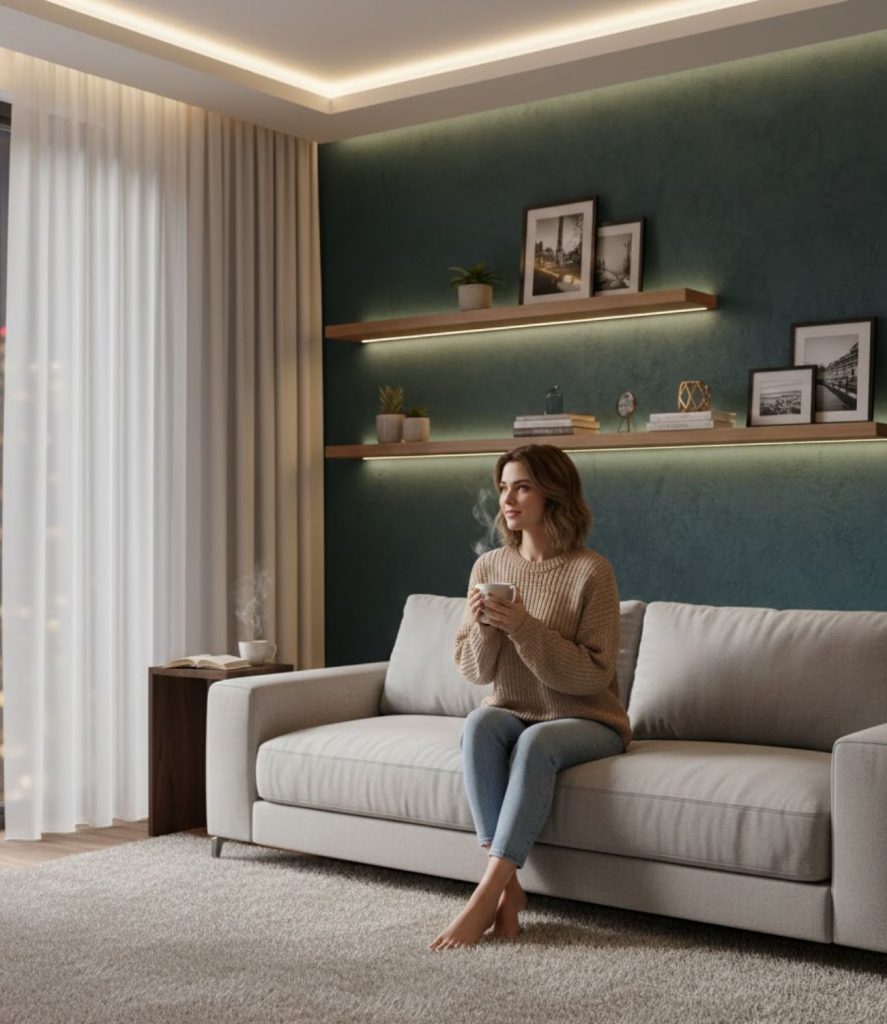
Backlighting behind entertainment units or under cabinets adds sophistication without overwhelming the room. These strips are energy-efficient, versatile, and easily customizable to suit any living room design.
5. Incorporate Table Lamps for Layered Ambience
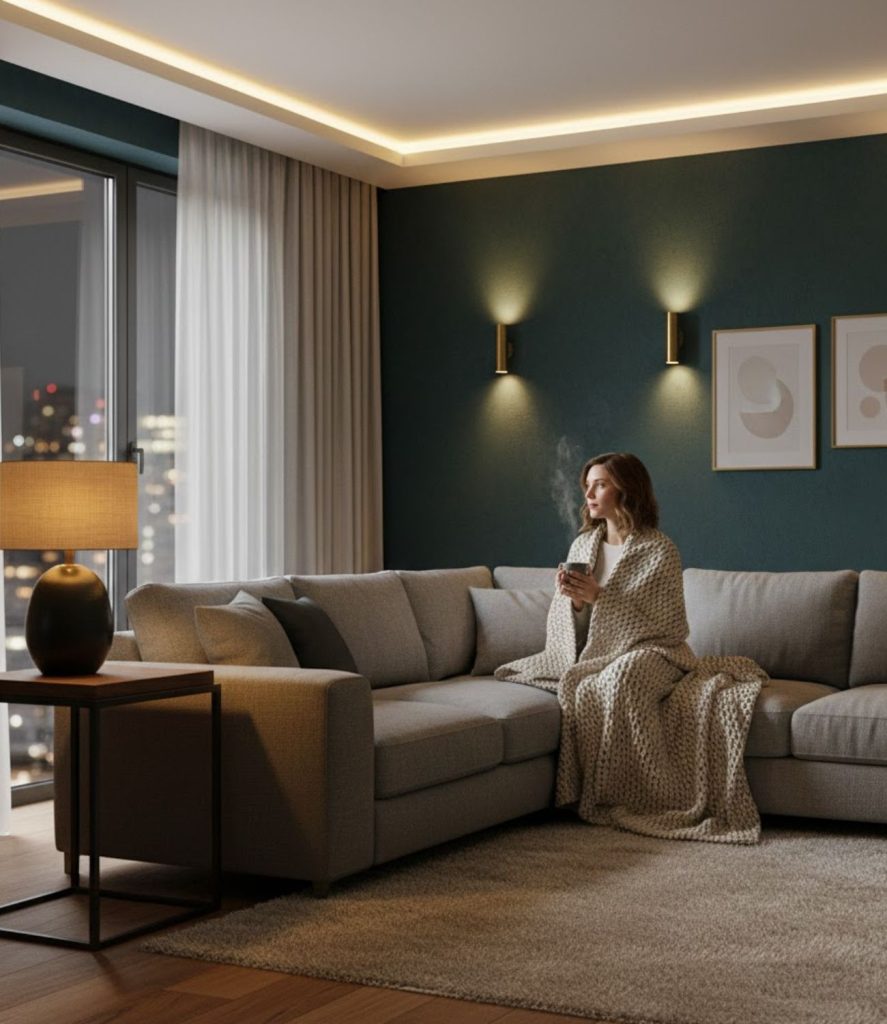
Table lamps provide both functional and ambient light. Placing them on side tables, consoles, or shelves creates pockets of soft illumination throughout the room. Choose lamps with frosted, linen, or textured shades for gentle light diffusion. Table lamps are also easy to move, allowing you to adjust the mood or brightness as needed. Combining multiple lamps with overhead and wall lighting enhances the layered ambient effect.
6. Use Pendant Lights for Focused Ambient Lighting
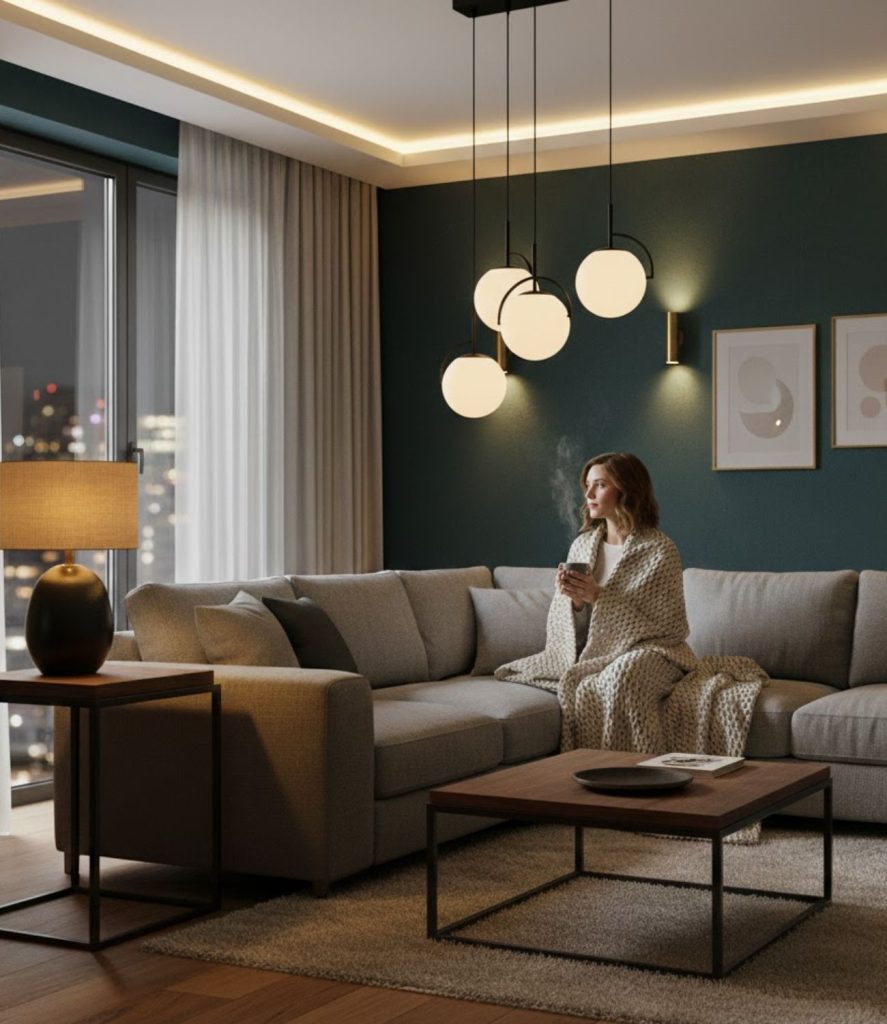
Pendant lights provide direct ambient illumination while adding style and personality. Hang them above seating areas, coffee tables, or entryways to create focal points. Choose pendants with warm-toned bulbs and diffusers to maintain a soft, welcoming glow. Multi-light pendants allow for even distribution and can illuminate larger spaces without overpowering the room. This option adds both function and aesthetic value to your living room.
7. Install Recessed Ceiling Lights
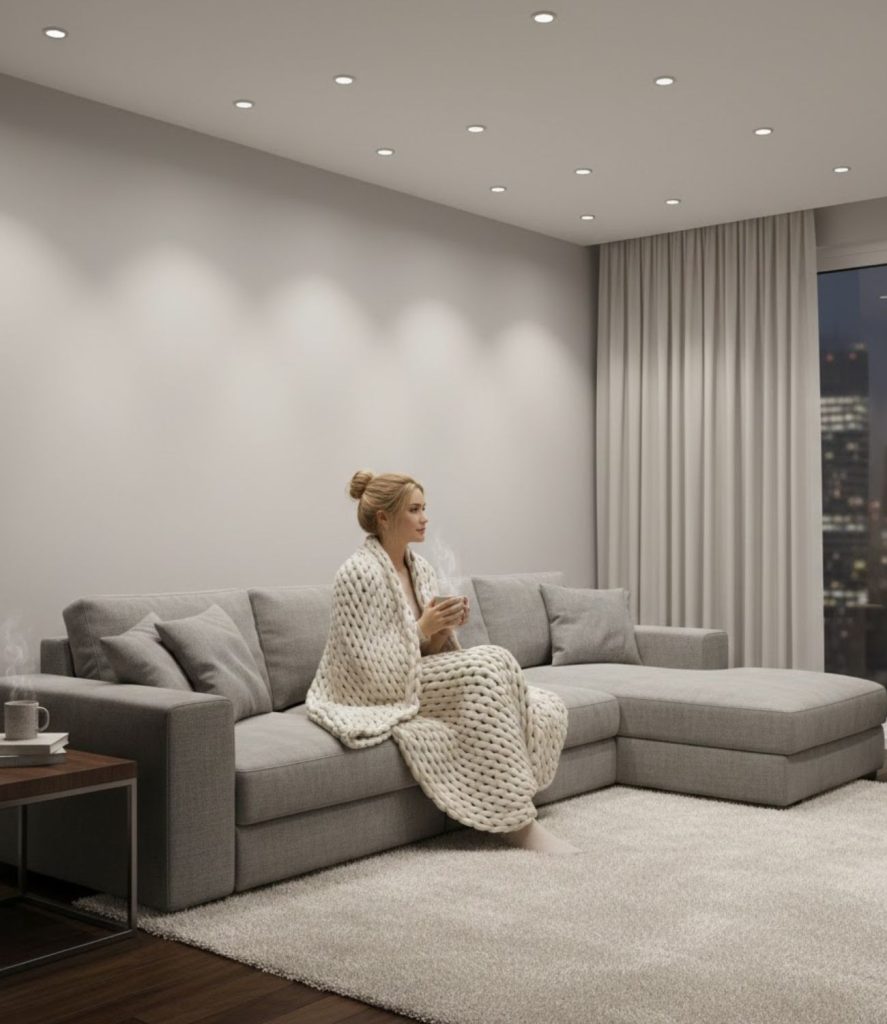
Recessed lights offer clean, unobtrusive ambient lighting. They distribute light evenly and work well in modern or minimalist living rooms. Position them strategically to eliminate dark corners and enhance uniformity. Pair them with dimmers for flexibility in controlling the atmosphere. Recessed lighting works well with additional layers, such as floor lamps or LED strips, to create a cohesive and inviting environment.
8. Introduce Uplighting Lamps
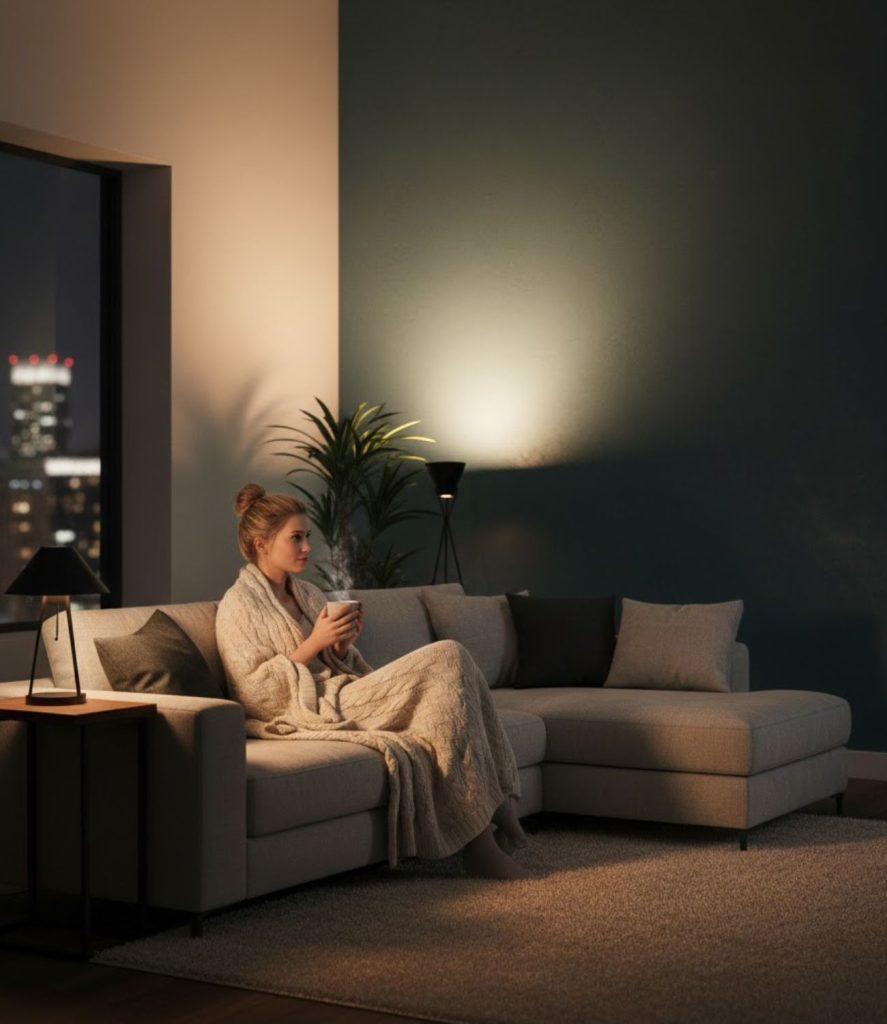
Uplighting floor or table lamps direct light towards the ceiling, reflecting it back into the room to create a soft, ambient glow. This technique adds warmth and makes rooms appear taller and more spacious. Uplighting is especially effective in spaces with high ceilings or dark walls. Combined with other layers, it softens shadows and enhances the overall ambience without direct glare.
9. Highlight Textures with Accent Lighting
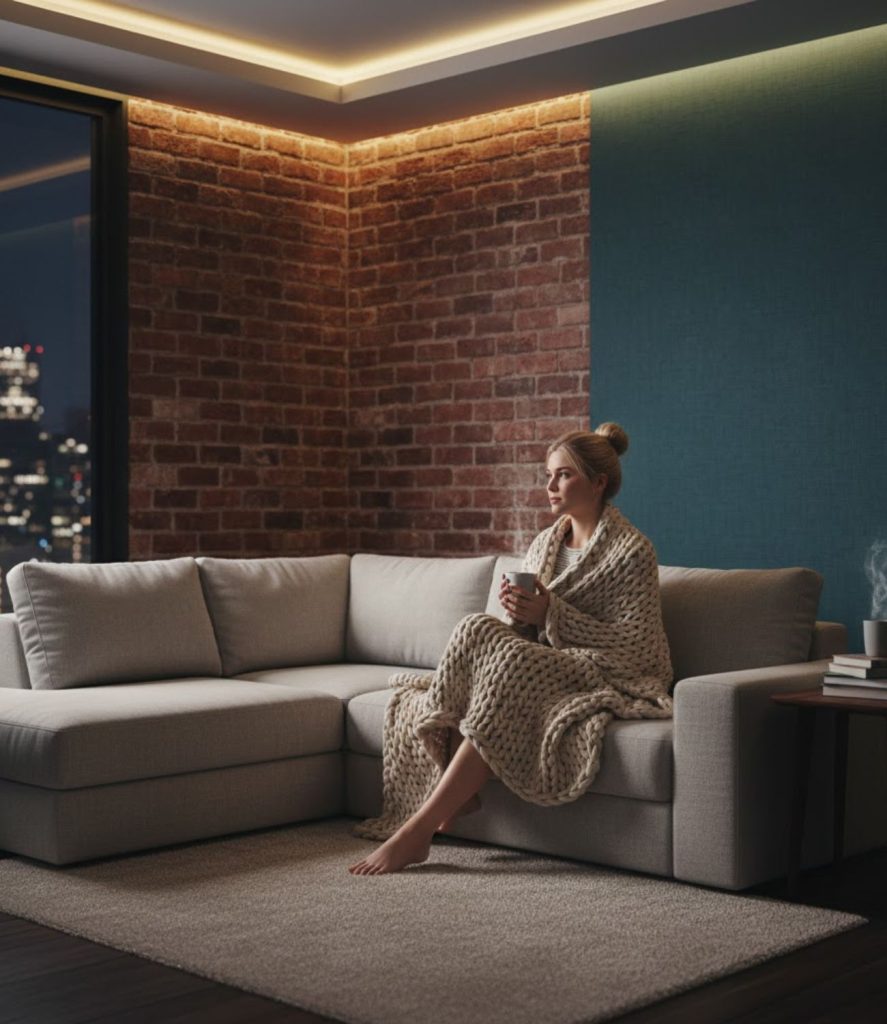
Ambient lighting can also emphasize textures like brick walls, wooden panels, or textured wallpaper. Using soft, indirect lighting directed at these surfaces creates depth and visual interest. Wall-mounted lights or LED strips along textured walls enhance the cozy atmosphere while keeping illumination gentle and balanced. Highlighting textures with ambient light brings character and warmth to your living room.
10. Use Soft Shades for All Lamps
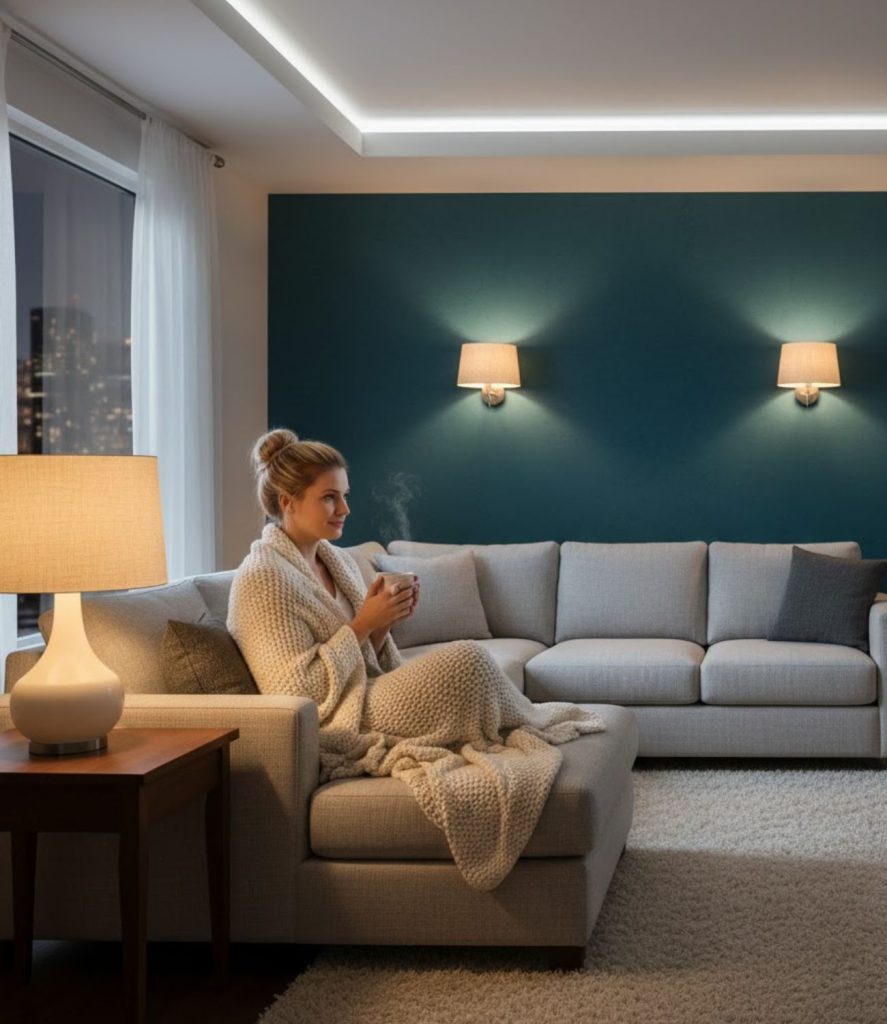
The material and color of lamp shades significantly affect ambient lighting. Fabric, frosted glass, or linen shades diffuse light evenly, producing a soft glow. Avoid clear or hard shades, as they can create harsh spots and shadows. Coordinating shade colors with your decor ensures ambient light complements your living room style. Soft shades enhance warmth and add a comforting visual softness to the space.
11. Layer Multiple Light Sources at Different Heights
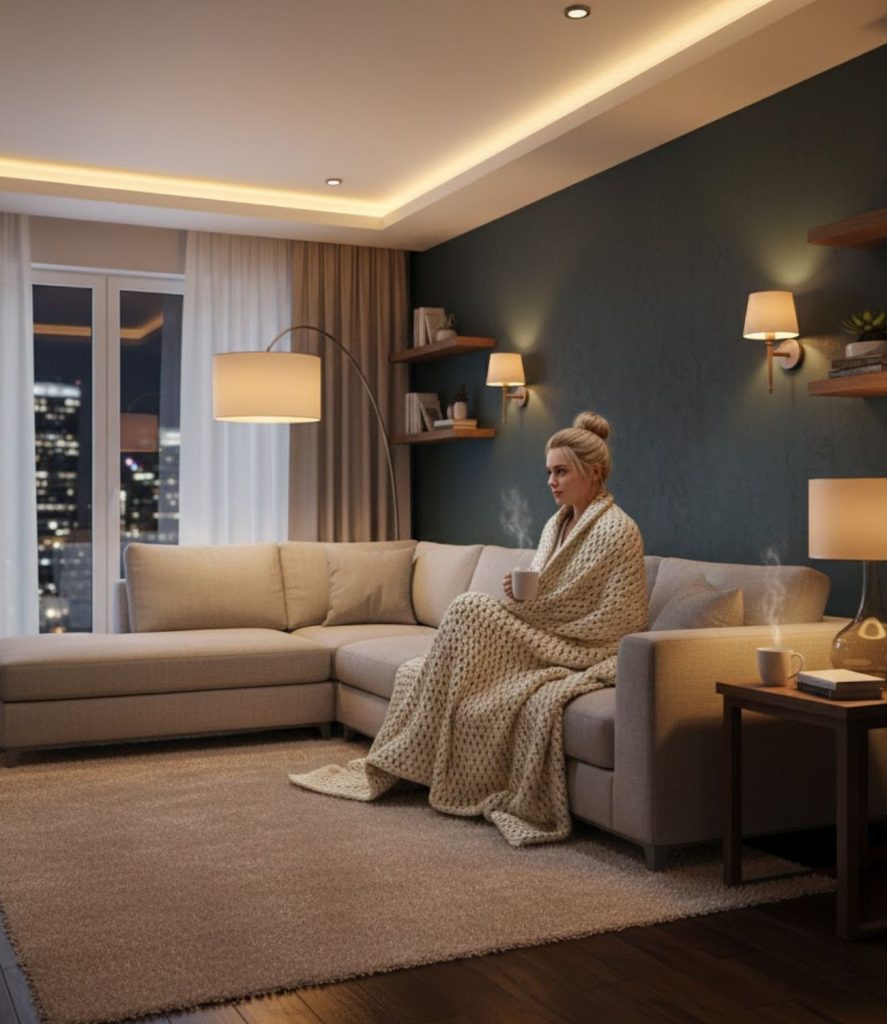
Layering ambient light is key to a cozy, balanced living room. Use ceiling fixtures for overall illumination, floor lamps for corner lighting, table lamps for accent lighting, and wall sconces to fill vertical space. This multi-level approach prevents harsh shadows, adds dimension, and creates a natural, welcoming atmosphere. Each layer complements the others, resulting in a harmonious lighting design.
12. Incorporate Natural Light Where Possible

Ambient lighting can be enhanced with natural sunlight during the day. Position furniture to maximize window light and use light curtains or sheers to diffuse sunlight. Reflective surfaces, like mirrors or metallic accents, amplify natural light, complementing artificial ambient lighting. Combining natural and artificial light ensures a balanced, comfortable atmosphere throughout the day.
13. Use Warm-Toned LED Bulbs Consistently
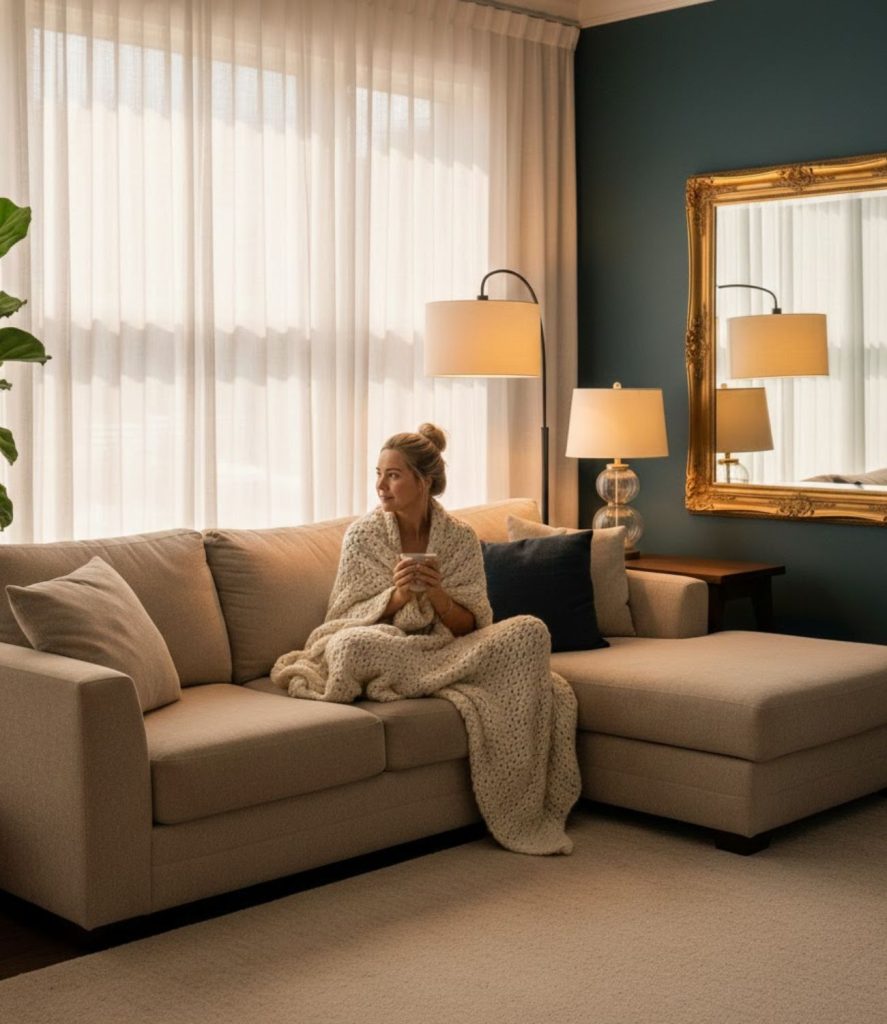
Consistency in bulb color temperature is crucial for ambient lighting. Warm-toned LEDs (2700K–3000K) provide the most comfortable, inviting atmosphere. Mixing warm and cool bulbs can create a disjointed feeling. Ensure all ceiling, table, floor, and accent lights use the same warm temperature for a seamless, cozy environment.
14. Highlight Decorative Items with Subtle Backlighting
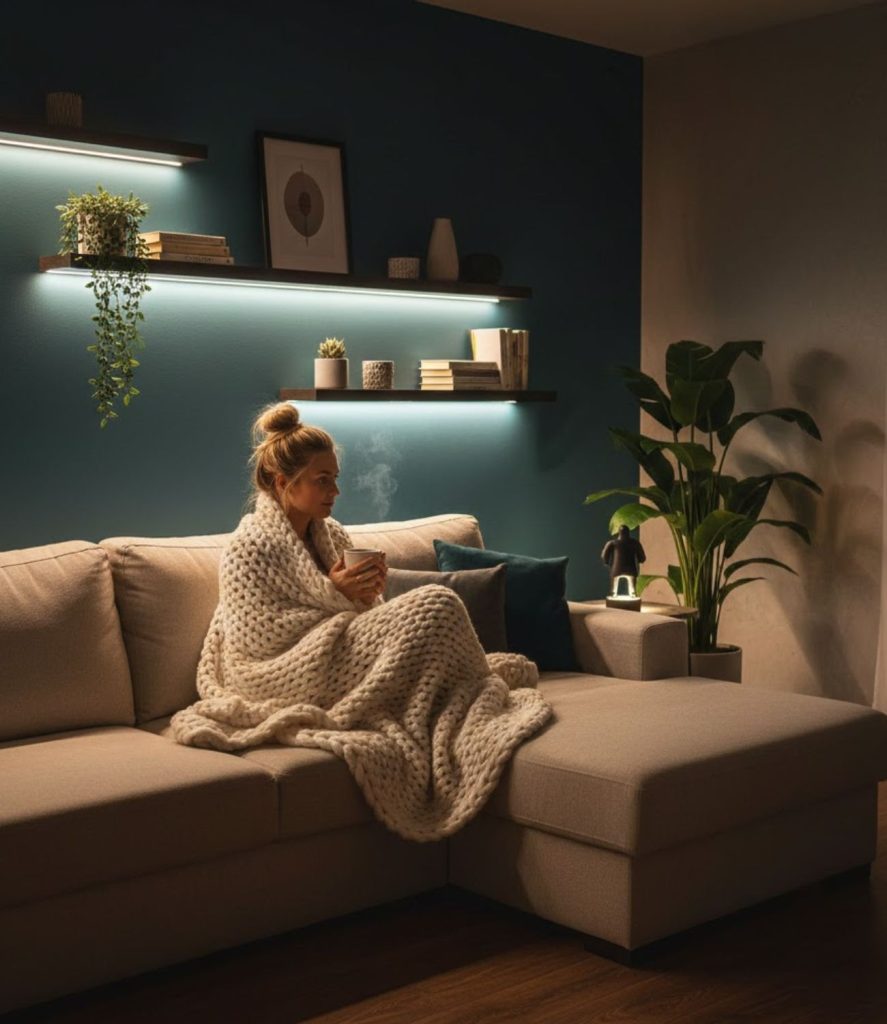
Ambient lighting can double as accent lighting when positioned behind plants, sculptures, or décor objects. Subtle backlighting adds visual interest while maintaining an even overall glow. LED strips, small wall-mounted lamps, or hidden fixtures can achieve this effect. Highlighting decor in this way adds warmth, depth, and a personalized touch to your living room.
15. Use Dimmers for Full Control of Ambience
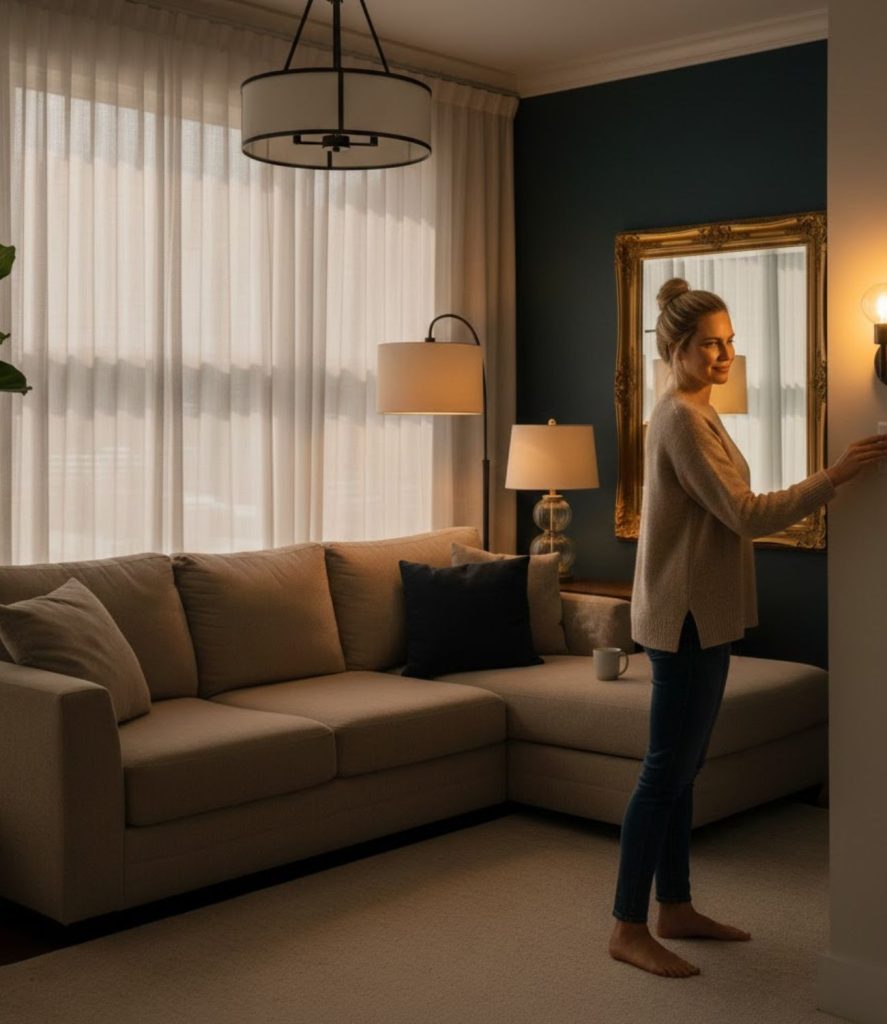
Installing dimmers on all main light sources is essential for controlling ambient lighting. Dimmed lights soften the room, reduce glare, and create an intimate atmosphere for evenings. With multiple dimmers, you can adjust individual layers independently to match your mood or activity. This level of control ensures your living room always feels inviting and balanced.
FAQ
What is ambient lighting in a living room?
Ambient lighting is general, evenly distributed light that creates a base level of illumination in a room. It ensures the space feels inviting and comfortable, without focusing on specific tasks or highlights.
How can I create ambient lighting without ceiling fixtures?
Use floor lamps, table lamps, wall sconces, LED strips, and indirect lighting. Layering these sources at different heights produces even, soft illumination.
Should ambient lighting be warm or cool?
Warm lighting (2700K–3000K) is ideal for living rooms. It produces a cozy and relaxing atmosphere, whereas cool lighting can feel harsh and sterile.
Can LED strip lights provide ambient lighting?
Yes. LED strips placed behind furniture, along ceilings, or under shelves provide soft, diffuse illumination that enhances ambient light layers.
How many layers of ambient lighting should I use?
At least three: a central ceiling light, secondary lamps (floor or table), and accent lighting (LED strips or wall sconces). More layers provide flexibility and depth.
Final Words
Ambient lighting is the foundation of a comfortable, inviting, and stylish living room. By combining ceiling fixtures, floor lamps, table lamps, wall sconces, LED strips, and dimmable bulbs, you can achieve the perfect glow for any occasion. Layering light, maintaining warmth, and highlighting textures ensures a cozy, visually appealing space. These 15 living room ambient lighting ideas provide a comprehensive blueprint for designing a luminous, balanced, and serene environment. With thoughtful planning and the right products, your living room can become a welcoming retreat for relaxation, socializing, and everyday living.